
Consultation Hotline
+1 (302) 618-8777
+1 (302) 618-8777
Current location:Home > Product > Biological Instruments > PCR
PRODUCT CATEGORY
Related Articles
Detailed Introduction
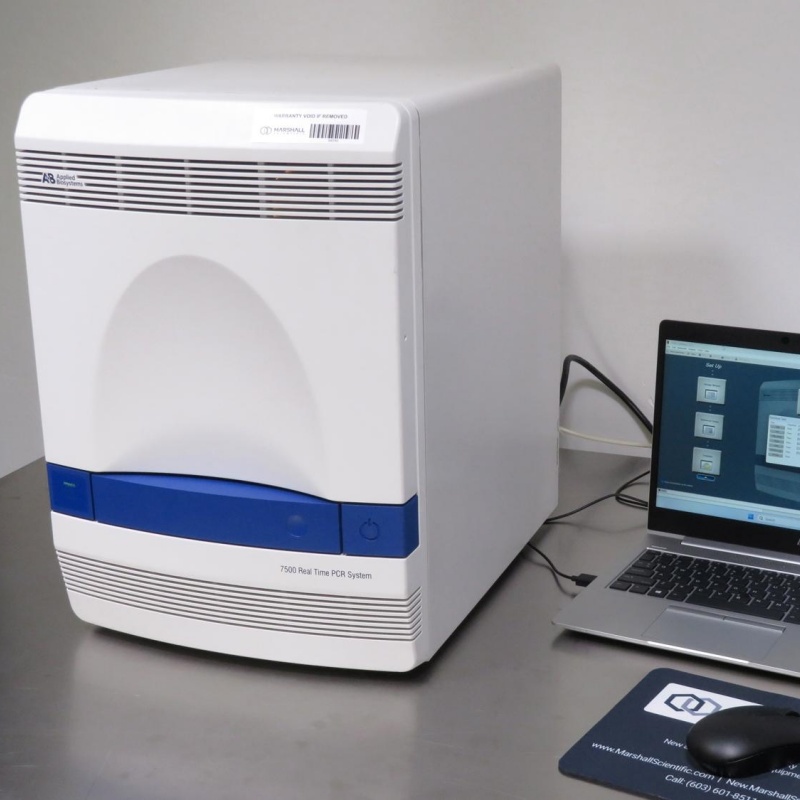
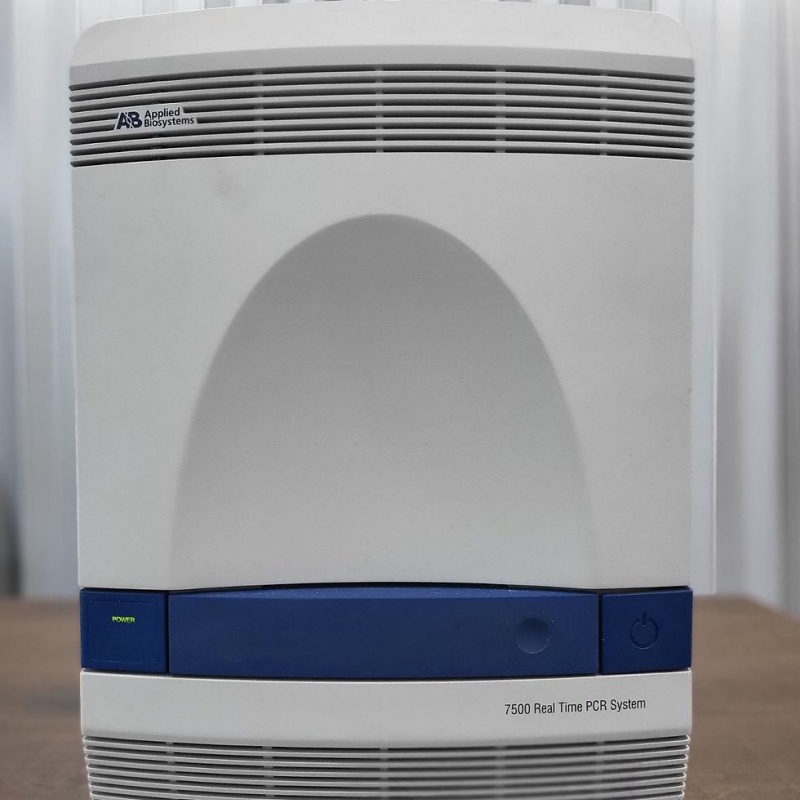
The Applied Biosystems 7500 Real-Time PCR System, commonly known as the ABI 7500 Real-Time PCR System, is a widely recognized real-time quantitative PCR platform designed for sensitive and reproducible nucleic acid detection. Developed for molecular biology and life science laboratories, the system combines Peltier-based thermal cycling with fluorescence detection to monitor PCR amplification in real time. It supports both quantitative and qualitative PCR applications and is suitable for research laboratories working in gene expression, genotyping, pathogen research, mutation analysis, and nucleic acid quantification.
The standard ABI 7500 uses a 96-well thermal cycling block and a five-color optical detection system. According to Thermo Fisher Scientific documentation, the instrument can detect targets using either SYBR dye chemistry or primer-probe-based detection and provides a linear dynamic range of up to nine orders of magnitude. Its sensitivity can reach down to a single copy under specified assay conditions.
| Specification | ABI 7500 Real-Time PCR System |
|---|---|
| Manufacturer / Brand | Applied Biosystems / Life Technologies |
| Model | 7500 Real-Time PCR System |
| Instrument Type | Real-Time PCR / Quantitative PCR System |
| Thermal Block | 96-well standard block |
| Reaction Volume | 20–100 µL |
| Thermal Cycling Technology | Peltier-based system |
| Temperature Range | 4–99.9°C / approximately 4–100°C |
| Temperature Accuracy | ±0.25°C from 35–95°C after 3 minutes |
| Temperature Uniformity | ±0.5°C after 30 seconds |
| Maximum Block Ramp Rate | Approximately 2.5°C/s |
| Optical System | Tungsten-halogen lamp, CCD camera |
| Optical Configuration | 5 excitation filters + 5 emission filters |
| Detection Chemistry | SYBR dye and primer-probe detection |
| Calibrated Dyes | FAM, SYBR Green, VIC, ROX, NED, TAMRA |
| Sensitivity | Down to 1 copy under specified conditions |
| Linear Dynamic Range | 9 logs |
| Reaction Speed | Standard |
| Typical Run Time | Less than 2 hours |
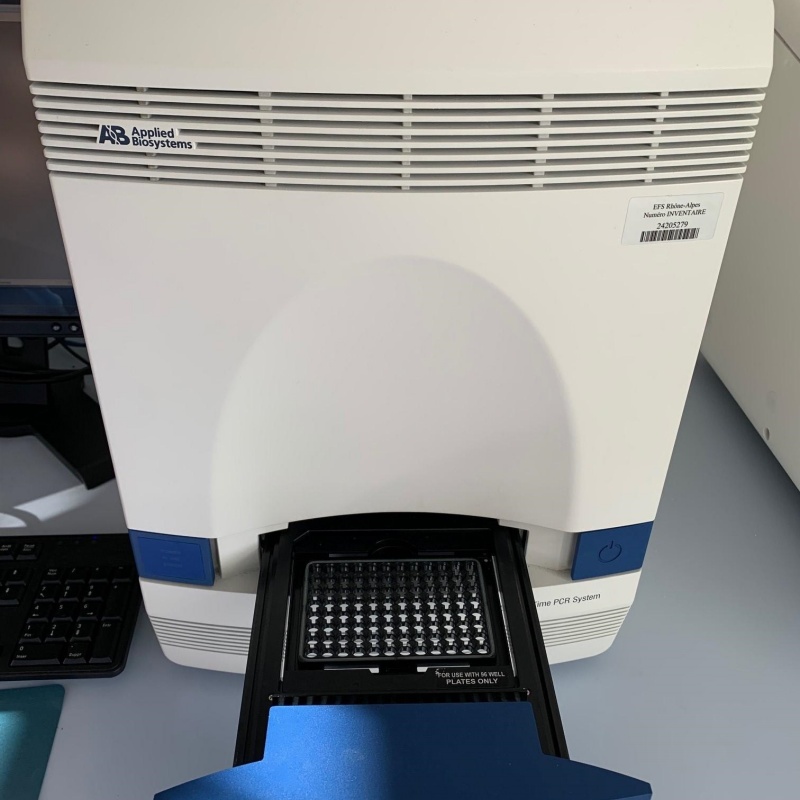
| Sample Format | 96-well PCR plate |
| Dimensions | Approx. 34 × 45 × 49 cm (W × D × H) |
| Weight | Approx. 34 kg |
| Electrical Requirement | Approx. 950 W; configuration-dependent |
| Computer Control | PC-controlled |
| Applications | Gene expression, genotyping, CNV, mutation detection, miRNA and more |
Specifications are based on Thermo Fisher/Applied Biosystems documentation; exact configuration and performance can vary by system version and accessories.
One of the major strengths of the ABI 7500 is its optical detection architecture. The system uses a tungsten-halogen excitation source, five excitation filters, five emission filters, and a CCD camera to collect fluorescence signals from the reaction plate. This configuration allows multiplex fluorescence detection and supports commonly used reporter dyes.
The instrument can work with SYBR Green-based assays as well as probe-based chemistries such as TaqMan assays. Because fluorescence is measured during the PCR process, researchers can monitor amplification curves and determine quantitative results without waiting for conventional post-PCR electrophoresis.
The 7500 employs a Peltier-based thermal cycling system to provide controlled heating and cooling of the 96-well block. Its temperature operating range is approximately 4–100°C, making it suitable for standard PCR denaturation, annealing, and extension protocols.
The standard 7500 is designed for conventional real-time PCR workflows rather than the high-speed cycling associated with the 7500 Fast model. Thermo Fisher specifies a maximum block ramp rate of approximately 2.5°C/s and a typical standard-mode run time of less than two hours, depending on the assay protocol.
Temperature accuracy and uniformity are particularly important in quantitative PCR because variations between wells can influence amplification efficiency and ultimately affect quantitative results. The manufacturer's specifications list approximately ±0.25°C temperature accuracy and ±0.5°C uniformity under defined test conditions.
The ABI 7500 can be used for a broad range of molecular biology applications. Gene expression analysis is one of its important applications, allowing researchers to compare relative expression levels between samples using real-time fluorescence measurements.
The system can also support genotyping, copy-number variation analysis, mutation detection, microRNA studies, pathogen research, and presence/absence assays. The manufacturer's documentation also lists applications including protein-related thermal studies and other specialized workflows.
For laboratories performing multiplex assays, the five-color optical system provides the ability to monitor multiple fluorescent targets in a single reaction when compatible dyes, probes, and assay designs are used.
A typical ABI 7500 workflow begins with sample and reagent preparation, followed by loading the 96-well PCR plate. The operator then defines the plate layout and thermal cycling protocol through the associated computer software.
During amplification, the system collects fluorescence data at designated points in the PCR cycle. The resulting amplification curves can be analyzed to determine threshold cycle values and quantify target nucleic acids. The platform can support standard-curve analysis, relative quantification, and comparative CT approaches, depending on the experimental design.
For laboratories using an ABI 7500 system, regular maintenance is important for obtaining consistent results. The sample block should be kept clean, and the optical area should be protected from contamination. PCR reagent spills should be addressed promptly because contamination can affect subsequent experiments and calibration procedures.
Periodic calibration and performance verification should also be considered, particularly when the instrument is used for quantitative research where reproducibility is critical. Thermo Fisher documentation provides specific procedures for instrument maintenance and calibration.
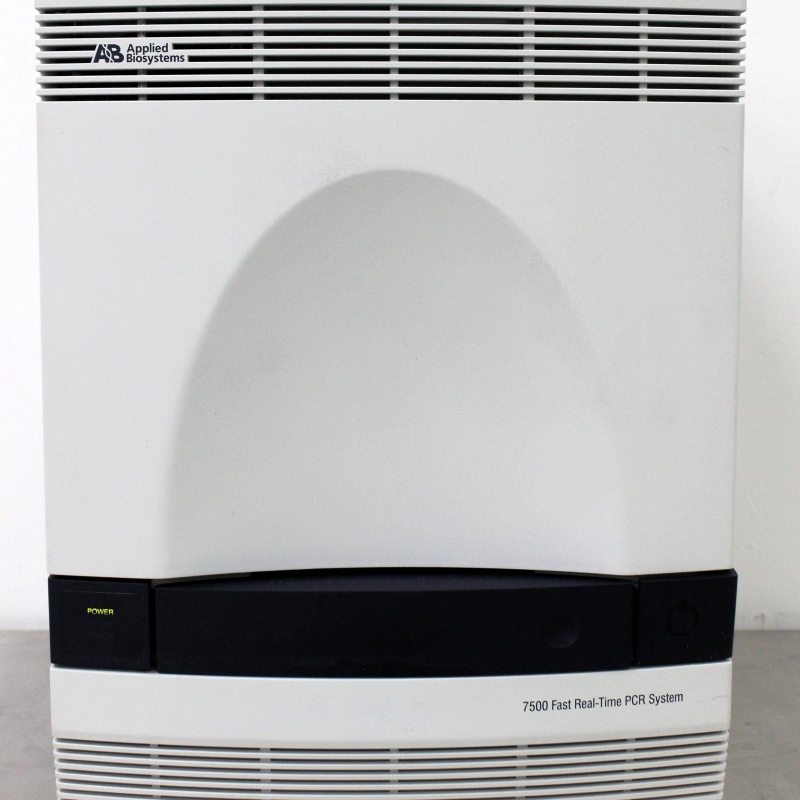
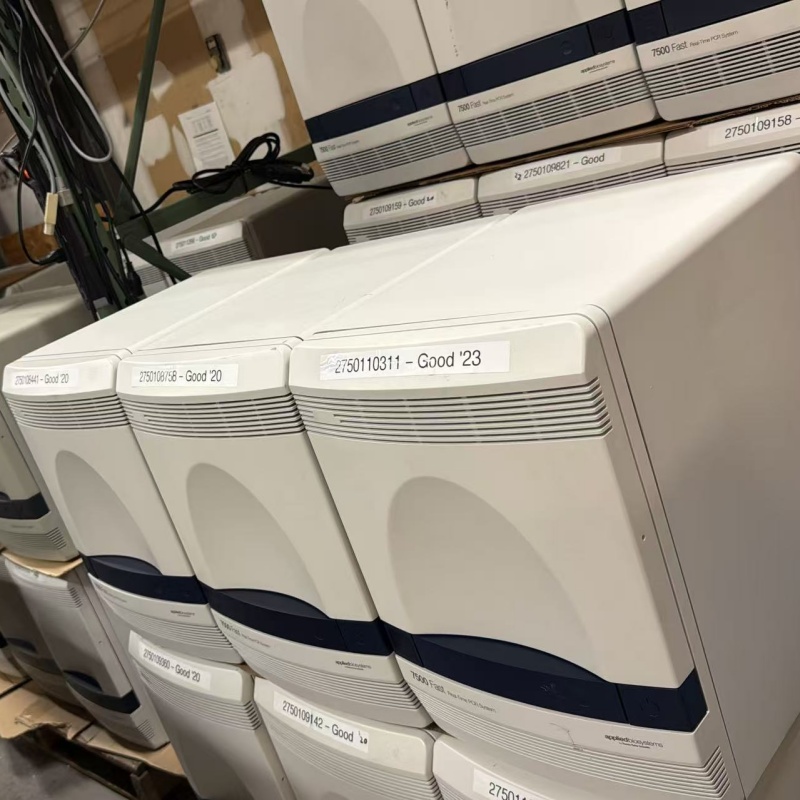
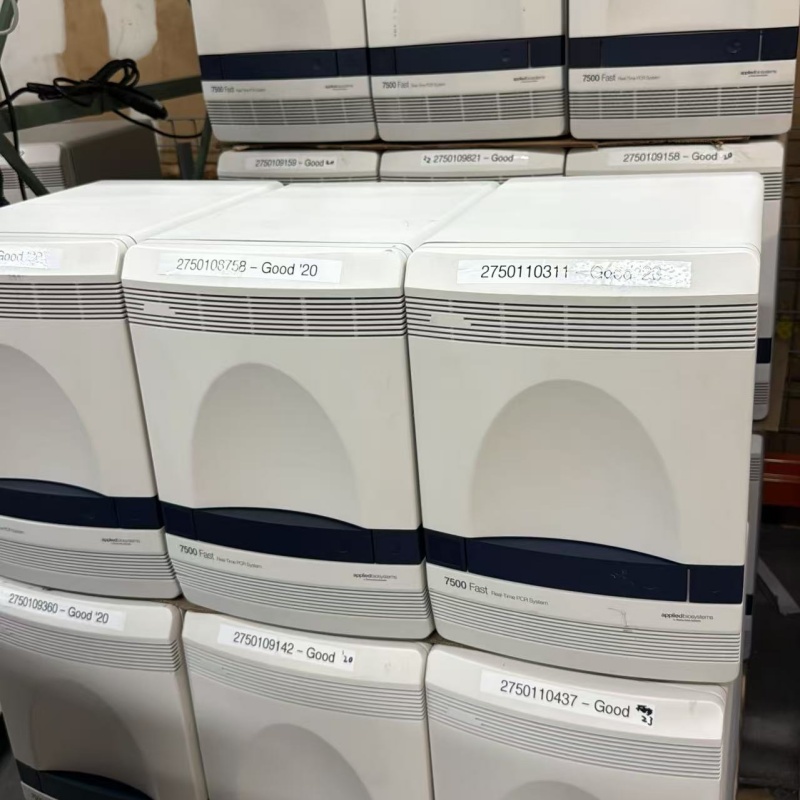
The standard 7500 should not be confused with the 7500 Fast Real-Time PCR System. Both systems use a 96-well format and five-color optical detection, but the Fast version uses a high-speed thermal cycling block and supports smaller reaction volumes, generally 10–30 µL compared with 20–100 µL for the standard 7500. The Fast system can complete appropriate protocols considerably faster.
Therefore, when purchasing a refurbished or used instrument, buyers should carefully confirm whether the system is a standard 7500 or a 7500 Fast, as their thermal blocks, compatible consumables, and performance characteristics are different.
The Applied Biosystems 7500 Real-Time PCR System remains a practical platform for laboratories requiring reliable quantitative PCR performance. Its 96-well format, five-color fluorescence detection, Peltier thermal cycling, broad application range, and nine-log dynamic range make it suitable for a variety of molecular biology workflows.
For laboratories considering a used or refurbished ABI 7500, it is particularly important to verify the thermal block, optical calibration, fluorescence performance, software compatibility, computer configuration, and overall instrument condition before purchase. A properly maintained system can provide a cost-effective solution for routine real-time PCR research while retaining the established workflow and analytical capabilities associated with the Applied Biosystems 7500 platform.
Product Inquiry