
Consultation Hotline
+1 (302) 618-8777
+1 (302) 618-8777
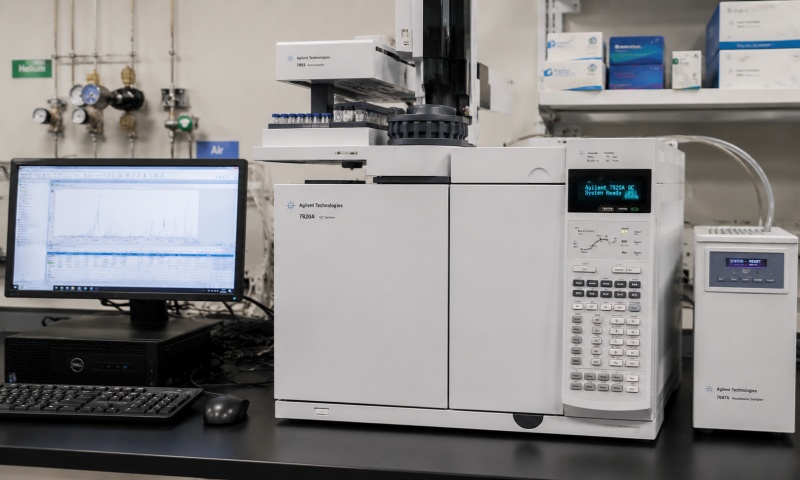
Gas chromatography (GC) is an important analytical technique widely used in pharmaceutical laboratories, environmental monitoring, food safety testing, petrochemical analysis, and chemical research. It separates volatile and thermally stable compounds according to their interactions with the stationary phase and their distribution between the mobile and stationary phases.
Although modern gas chromatographs feature automated injection, electronic flow control, and advanced data processing, proper operating techniques remain essential for obtaining accurate, reproducible results. Understanding instrument setup, sample preparation, injection, temperature programming, and routine maintenance can significantly improve analytical performance.
Before starting an analytical run, inspect the gas chromatograph and confirm that all components are functioning correctly.
First, check the carrier gas supply, typically helium, hydrogen, or nitrogen, depending on the application and instrument configuration. Ensure that the gas cylinders or generators provide sufficient pressure and that the gas purity meets the analytical requirements. Check the regulators, tubing, and fittings for leaks using an approved leak-detection method.
Next, inspect the inlet liner, septum, column connections, and detector. Replace contaminated or worn consumables when necessary. Confirm that the capillary column is installed at the correct insertion depth according to the manufacturer's instructions.
Power on the instrument and allow the inlet, oven, and detector to reach their required operating conditions. Confirm that the baseline is stable before beginning sample analysis.
Sample preparation directly affects chromatographic accuracy and column lifetime. Samples should be compatible with the selected GC method and should not contain excessive nonvolatile residues.
For liquid samples, select an appropriate solvent that is compatible with the stationary phase and does not interfere with the target compounds. Dilute samples when concentrations exceed the calibration range. If necessary, filter samples using a suitable solvent-compatible filter to remove particles.
For samples containing high-boiling substances or complex matrices, consider an appropriate cleanup procedure. Headspace sampling or solid-phase microextraction may be suitable for volatile compounds in complex samples.
Avoid introducing dirty samples directly into the instrument. Matrix contamination can cause inlet liner fouling, column degradation, detector contamination, and increased maintenance requirements.
Correct injection is essential for good peak shape and reproducibility. Before injection, ensure that the syringe is clean and free from air bubbles when using manual liquid injection.
Inject the sample smoothly and consistently. For manual injections, practice maintaining a consistent injection speed and timing. Automated liquid samplers can improve repeatability when configured and maintained properly.
Select the appropriate injection mode. Split injection is commonly used for concentrated samples because only a fraction of the vaporized sample enters the column. Splitless injection is often suitable for trace-level analysis because a greater proportion of the sample can enter the column during the transfer period.
Verify that the inlet temperature is appropriate for sample vaporization without causing thermal degradation. The split ratio, purge time, liner design, and injection volume should be optimized for the analytical method.
The oven temperature program strongly influences retention time, resolution, and total analysis time.
For mixtures containing compounds with similar boiling points, a slower temperature ramp or an appropriate initial temperature hold may improve separation. For samples containing compounds with a broad volatility range, temperature programming can separate early-eluting volatile compounds while allowing higher-boiling compounds to elute within a reasonable analysis time.
The initial oven temperature should be selected according to the column and method requirements. The final temperature must remain within the column manufacturer's specified temperature limits.
Avoid increasing the temperature ramp rate simply to shorten analysis time. Excessively rapid heating may reduce resolution or produce insufficient separation between critical peaks. Evaluate chromatograms and adjust the initial temperature, ramp rate, and holding time systematically.
Carrier gas flow affects retention time, peak efficiency, and separation quality. Use the flow rate or linear velocity recommended for the selected column dimensions and analytical method.
Electronic pressure control can help maintain stable operating conditions. Confirm that the selected gas type and control mode match the method. Check for leaks whenever retention times change unexpectedly or the baseline becomes unstable.
If peak shapes deteriorate or retention times shift, investigate gas supply pressure, column installation, flow settings, and inlet sealing components before changing the analytical method.
Common GC detectors include flame ionization detectors (FID), thermal conductivity detectors (TCD), and electron capture detectors (ECD). Each detector requires specific operating conditions and maintenance procedures.
For an FID, verify that the hydrogen, air, and makeup gas settings comply with the instrument method. Follow the manufacturer's ignition and shutdown procedures, and observe all applicable gas safety requirements.
Before sample analysis, check the baseline, signal stability, and response of the calibration standards. Use appropriate blanks and quality-control samples to identify contamination, carryover, or instrument drift.
Review retention times, peak shapes, integration settings, and calibration performance. Do not rely exclusively on automated peak integration when unexpected peaks or poor separation occur.
Peak tailing: Possible causes include active sites in the inlet or column, contamination, poor column installation, and unsuitable operating conditions. Inspect the inlet liner, trim the column if appropriate, and verify the method settings.
High baseline noise: Check detector cleanliness, gas purity, grounding, leaks, and contamination. Allow sufficient stabilization time after maintenance.
Retention time drift: Investigate carrier gas flow, leaks, oven temperature stability, and changes in column condition.
Poor resolution: Review the column selection, oven temperature program, carrier gas velocity, and sample concentration.
Ghost peaks: Check solvent purity, septum and liner contamination, carryover, and the cleanliness of the syringe or autosampler.
Reliable gas chromatography depends on careful instrument preparation, appropriate sample handling, consistent injection, optimized temperature programming, and stable carrier gas flow. Routine inspection of consumables and systematic troubleshooting can reduce downtime and improve data quality.
By following the manufacturer's operating instructions and validating method conditions for the intended application, laboratory personnel can achieve reproducible chromatographic results while extending the service life of the GC system and its analytical column.