
Consultation Hotline
+1 (302) 618-8777
+1 (302) 618-8777
Current location:Home > Product > Biological Instruments > Flow Cytometer
PRODUCT CATEGORY
Related Articles
Detailed Introduction
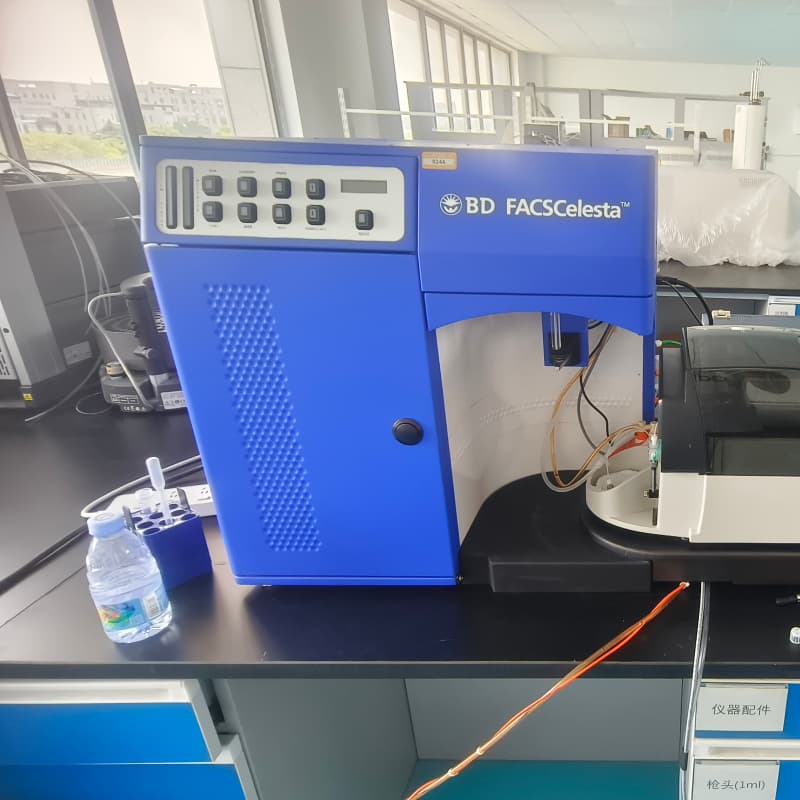
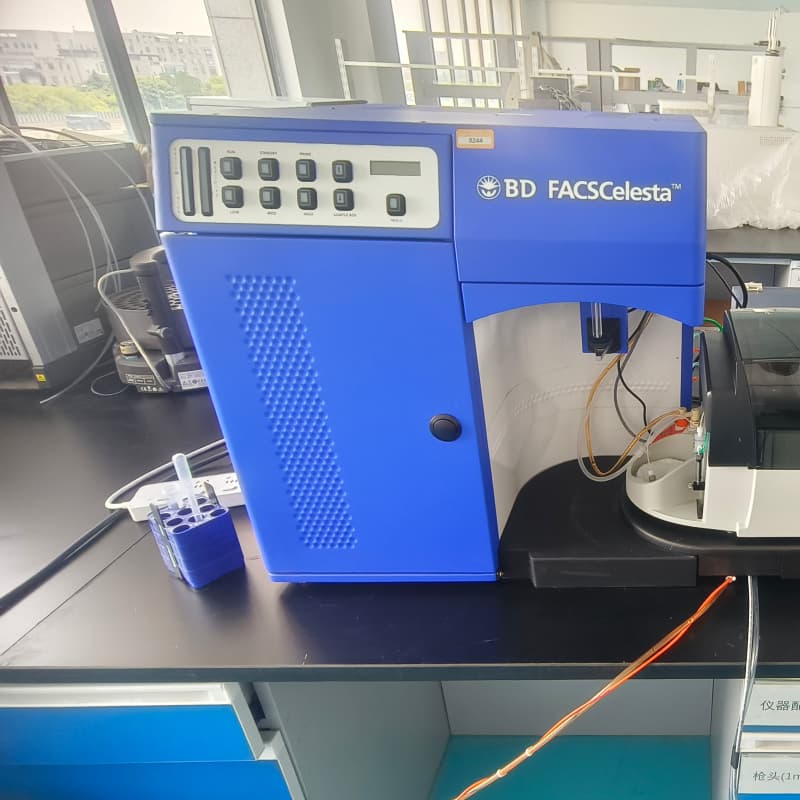
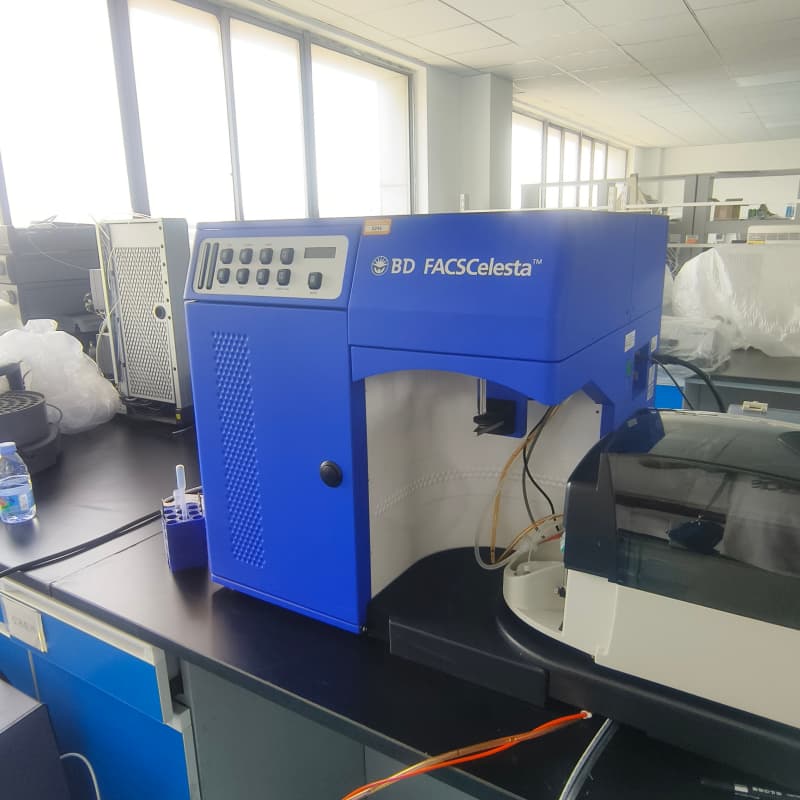
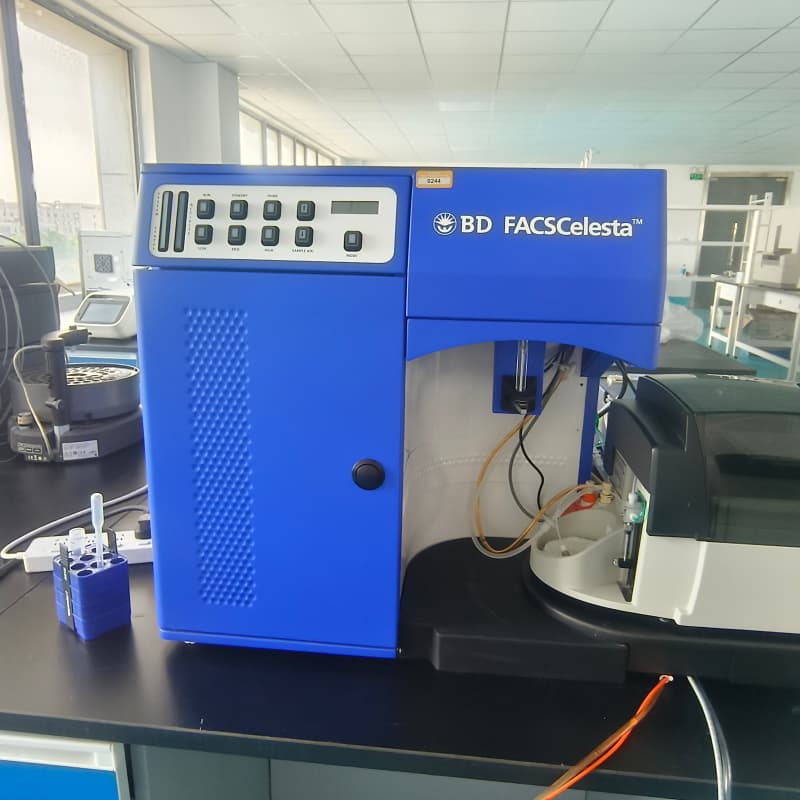
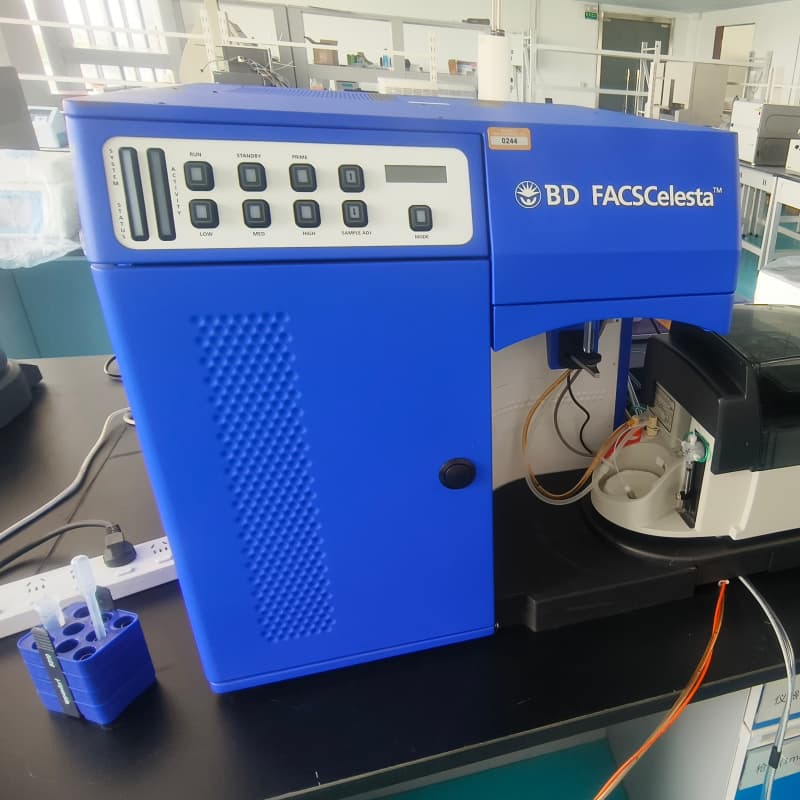
The BD FACSCelesta™ Flow Cytometer is a compact and versatile benchtop flow cytometry system developed by Becton, Dickinson and Company (BD) for multiparameter cell analysis. Designed for research laboratories, the instrument combines flexible optical configurations, automated sample handling options, and intuitive software to support a broad range of cellular analysis applications.
The BD FACSCelesta™ is particularly suitable for immunophenotyping, cell-cycle analysis, apoptosis studies, intracellular cytokine analysis, fluorescence-based protein expression studies, and other applications requiring simultaneous measurement of multiple cellular parameters. Its multicolor detection capability allows researchers to analyze complex cell populations within a single sample, reducing the need for multiple independent experiments.
| Parameter | BD FACSCelesta™ Flow Cytometer |
|---|---|
| Instrument Type | Benchtop flow cytometer |
| Manufacturer | Becton, Dickinson and Company (BD) |
| Laser Configuration | Up to 3 excitation lasers, depending on configuration |
| Typical Lasers | 405 nm violet, 488 nm blue, 640 nm red |
| Fluorescence Detection | Up to 14-color detection, configuration dependent |
| Light Scatter | Forward scatter (FSC) and side scatter (SSC) |
| Sample Introduction | Manual tube sampling and automated options depending on configuration |
| Primary Applications | Immunophenotyping, cell-cycle analysis, apoptosis, intracellular staining |
| Data Analysis | BD FACSDiva™ Software |
| Sample Type | Primarily single-cell suspensions |
| Instrument Format | Compact benchtop design |
One of the major advantages of the FACSCelesta™ is its flexible optical architecture. Depending on the configuration, violet, blue, and red lasers provide excitation at different wavelengths, enabling researchers to combine a broad selection of fluorochromes. This flexibility is particularly useful for multicolor immunophenotyping, where several cellular markers need to be evaluated simultaneously.
The system can measure forward and side scatter together with multiple fluorescence parameters. Forward scatter provides information related to cell size, while side scatter is associated with cellular internal complexity. Fluorescence measurements can then be used to identify specific proteins, cellular markers, or functional characteristics.
For laboratories performing routine flow cytometry, reproducibility is especially important. Standardized optical alignment and instrument configuration can help users obtain consistent measurements between experiments. However, proper daily quality control, compensation, staining procedures, and instrument maintenance remain essential for reliable results.
The BD FACSCelesta™ is also designed to work with BD FACSDiva™ Software, providing tools for instrument control, acquisition, compensation, gating, and data management. Researchers can create experimental templates and standardized acquisition workflows, which can help improve consistency across multiple users and experiments.
Typical applications include immune-cell phenotyping, T-cell and B-cell analysis, apoptosis detection, proliferation studies, cell-cycle analysis, and intracellular marker detection. It can therefore serve research laboratories working in immunology, oncology, cell biology, microbiology, pharmaceutical research, and biotechnology.
For laboratories considering a used or refurbished BD FACSCelesta™, it is particularly important to verify the laser configuration, detector configuration, software compatibility, fluidics performance, optical alignment, sample injection system, and maintenance history before purchase. Different configurations may provide different fluorescence capabilities, so the actual instrument configuration should always be confirmed from its serial-number-specific documentation.
Overall, the BD FACSCelesta™ Flow Cytometer provides a practical platform for multiparameter flow cytometry, combining a compact benchtop format with flexible multicolor detection capabilities. With appropriate sample preparation, quality control, calibration, and routine maintenance, it can support reliable and reproducible cell-analysis workflows across a wide range of biological research applications.
Product Inquiry