
Consultation Hotline
+1 (302) 618-8777
+1 (302) 618-8777
Current location:Home > Blogs > Industry News
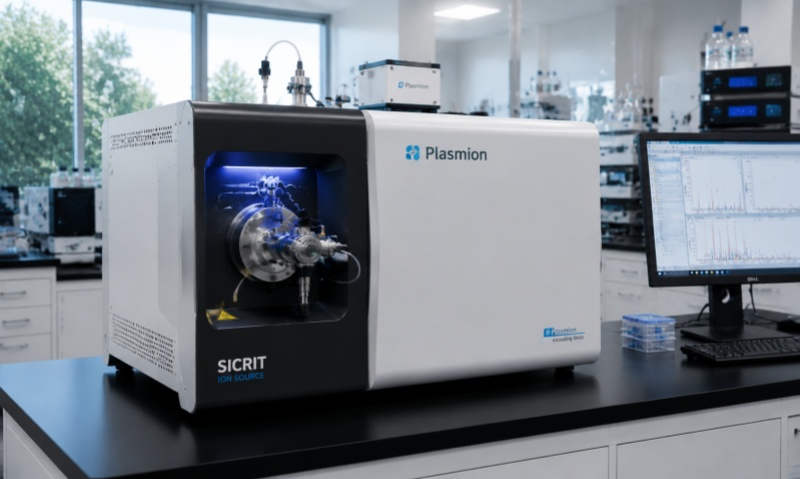
The analytical instrumentation landscape continues to evolve rapidly, with major players strengthening their portfolios through strategic acquisitions. One of the most notable recent developments is the acquisition of Shimadzu Corporation of Plasmion GmbH and its innovative SICRIT ion source technology. This move signals a deeper push into ambient ionization and real-time mass spectrometry, reshaping expectations for future workflows in chemical analysis, environmental monitoring, food safety, and clinical research.
For laboratories, instrument buyers, and analytical scientists, this acquisition is more than a corporate transaction—it represents a shift in how mass spectrometry systems may be configured, purchased, and applied in the coming years.
At the center of this acquisition is the SICRIT (Soft Ionization by Chemical Reaction In Transfer) ion source, a proprietary ambient ionization technology developed by Plasmion. Unlike traditional ionization methods that require extensive sample preparation or vacuum-based introduction, SICRIT enables direct ionization of gaseous, liquid, and surface-adhered compounds under atmospheric conditions.
This capability allows compounds to be analyzed in real time with minimal or no sample preparation, significantly reducing analysis time and operational complexity. In practical terms, SICRIT bridges the gap between laboratory-grade mass spectrometry and on-site, real-time chemical detection.
The technology is particularly attractive for applications such as volatile organic compound (VOC) detection, environmental gas analysis, breath analysis in medical diagnostics, and process monitoring in industrial manufacturing.
For Shimadzu Corporation, the acquisition of Plasmion represents a strategic expansion beyond conventional ionization techniques such as electron ionization (EI) and electrospray ionization (ESI). As demand grows for faster, more flexible analytical tools, ambient ionization technologies are becoming increasingly important.
Traditional mass spectrometry workflows often require chromatographic separation (such as GC or LC), sample preparation, and controlled laboratory environments. While these methods provide high sensitivity and resolution, they are not always suitable for rapid decision-making scenarios or field-based applications.
By integrating SICRIT technology into its portfolio, Shimadzu is positioning itself to address a growing demand for real-time, in-situ analysis—particularly in industries where speed is critical.
For current and prospective mass spectrometry users, this acquisition raises several important considerations.
One of the most immediate benefits of SICRIT integration is the expansion of potential applications. Buyers can expect future Shimadzu systems to support more direct analysis workflows, reducing dependence on complex sample preparation steps.
This opens new possibilities in:
Environmental air monitoring
Industrial emission control
Food flavor and contamination analysis
Clinical breath diagnostics
Security and forensic screening
For laboratories looking to diversify their analytical capabilities, this could significantly increase instrument utilization rates.
Speed is becoming a defining metric in analytical chemistry. SICRIT’s ambient ionization capability allows near real-time analysis, which can reduce turnaround time from hours or minutes to seconds in certain applications.
For buyers in high-throughput or time-sensitive environments, this shift could translate into improved operational efficiency and faster decision-making.
Sample preparation remains one of the most resource-intensive parts of mass spectrometry workflows. By enabling direct ionization of samples, SICRIT reduces or eliminates many of these steps.
This not only saves time but also reduces consumable costs, labor requirements, and potential sources of error. For laboratories under budget pressure, this is a significant long-term advantage.
Shimadzu already has a strong presence in GC-MS and LC-MS systems. The integration of SICRIT technology raises the possibility of hybrid systems that combine chromatographic separation with ambient ionization capabilities.
Buyers should anticipate future platforms where traditional and ambient ionization modes can be selected depending on application needs, increasing instrument flexibility.
The acquisition also reflects broader competitive dynamics in the mass spectrometry industry. Companies such as Thermo Fisher Scientific, Agilent Technologies, and SCIEX have been investing heavily in faster ionization techniques, automation, and workflow simplification.
Ambient ionization is increasingly seen as a key frontier in next-generation MS technology. Techniques such as DART, DESI, and now SICRIT are pushing the boundaries of what can be analyzed outside traditional laboratory environments.
Shimadzu’s acquisition ensures it remains competitive in this rapidly evolving segment, particularly in real-time analytical applications.
For buyers evaluating future Shimadzu systems potentially incorporating SICRIT technology, several practical considerations should be kept in mind:
Application fit: SICRIT is particularly suited for volatile and semi-volatile compounds; not all analytical needs will benefit equally.
Regulatory validation: Clinical and pharmaceutical labs may require additional validation before adopting ambient ionization methods.
Method development: New workflows may require re-optimization of analytical methods.
Integration timeline: Full commercial integration of SICRIT into Shimadzu platforms may roll out gradually.
Understanding these factors will help laboratories make informed investment decisions and avoid premature adoption risks.
The acquisition of Plasmion and its SICRIT ion source highlights a broader industry trend toward real-time, direct-analysis mass spectrometry. As analytical demands continue to shift toward speed, portability, and operational simplicity, ambient ionization technologies are expected to play a central role.
In the coming years, we may see mass spectrometry systems evolve from highly specialized laboratory instruments into more versatile, hybrid analytical platforms capable of both traditional high-resolution analysis and rapid field-based screening.
For Shimadzu Corporation, this acquisition is not just about expanding its technology portfolio—it is about redefining how and where mass spectrometry is used.
Shimadzu’s acquisition of Plasmion and its SICRIT ion source represents a significant milestone in the evolution of mass spectrometry technology. For buyers, the development signals new opportunities in real-time analysis, simplified workflows, and expanded application coverage.
However, it also requires careful consideration of application suitability, validation requirements, and integration timelines. As ambient ionization continues to gain momentum, laboratories that stay informed and strategically adapt will be best positioned to benefit from the next generation of analytical innovation.