Consultation Hotline
+1 (302) 618-8777
+1 (302) 618-8777
Current location:Home > Blogs > Industry News
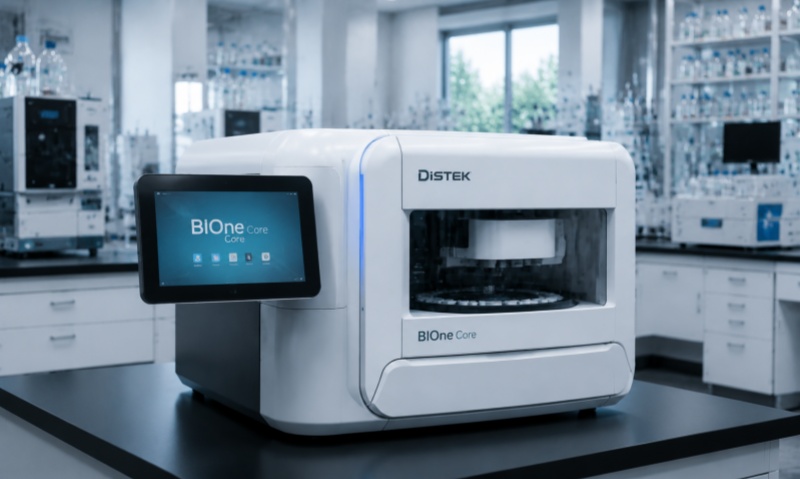
At a time when biomanufacturing is rapidly transitioning toward digitalization and connected operations, Distek, Inc. has introduced its latest innovation—BIOne Core, a cloud-based SaaS historian platform designed specifically for bioprocess controllers. The launch represents a significant step forward in enabling smarter, more integrated, and more scalable data management across upstream and downstream bioprocessing workflows.
BIOne Core is positioned to address one of the most persistent challenges in bioprocessing environments: fragmented data systems that limit real-time visibility, reduce operational efficiency, and complicate regulatory compliance. By centralizing and standardizing data collection from bioprocess controllers into a secure cloud environment, the platform aims to transform how bioprocess data is stored, accessed, and analyzed.
Modern biopharmaceutical production depends heavily on precision, reproducibility, and real-time monitoring. From cell culture development to large-scale fermentation, every parameter—pH, dissolved oxygen, temperature, agitation speed, and feed rates—must be carefully controlled and continuously recorded.
Traditional data historian systems are often installed on-premises, requiring significant IT infrastructure, maintenance, and manual configuration. These systems can create data silos that hinder collaboration between R&D, manufacturing, and quality teams.
BIOne Core eliminates many of these limitations by moving the historian function to a SaaS-based architecture. This cloud-native approach allows users to access bioprocess data securely from anywhere, enabling faster decision-making and improved cross-site collaboration.
At its core, BIOne Core is designed to integrate directly with bioprocess controllers used in laboratory and production environments. These controllers generate large volumes of time-series data during fermentation and cell culture processes.
BIOne Core captures this data continuously and organizes it into a structured, searchable format. This allows users to:
Track historical process trends
Compare batch performance across campaigns
Identify deviations in real time
Improve process reproducibility
Support regulatory documentation requirements
By consolidating data into a single platform, BIOne Core reduces the need for manual data aggregation and minimizes the risk of transcription errors or data loss.
One of the defining features of BIOne Core is its SaaS-based deployment model. Unlike traditional on-premise historian systems, BIOne Core operates entirely in the cloud, offering several key advantages:
First, scalability is significantly improved. As biomanufacturing operations grow, additional bioreactors and controllers can be integrated without major infrastructure changes.
Second, system maintenance is simplified. Software updates, security patches, and performance enhancements are managed centrally, reducing the burden on internal IT teams.
Third, accessibility is enhanced. Scientists, engineers, and quality assurance personnel can securely access process data from multiple locations, supporting global collaboration and remote operations.
This cloud-first approach aligns with the broader digital transformation trend in the life sciences industry, where flexibility and data accessibility are becoming critical competitive factors.
Beyond data storage, BIOne Core is designed to improve process understanding through advanced visualization and analytics capabilities. Users can generate real-time dashboards that display key process parameters, enabling rapid identification of trends and anomalies.
For bioprocess development teams, this means faster optimization of critical parameters such as nutrient feeding strategies, oxygen transfer rates, and pH control profiles. In production environments, it supports more consistent batch outcomes and reduced variability.
Over time, the accumulation of structured historical data enables more advanced analytics, including predictive modeling and process simulation. This can help manufacturers transition from reactive process control to proactive optimization strategies.
In the biopharmaceutical industry, regulatory compliance is a fundamental requirement. Systems must adhere to strict standards governing data integrity, traceability, and auditability.
BIOne Core is designed with these requirements in mind. The platform maintains secure, time-stamped records of all process data, ensuring full traceability from raw data acquisition to final reporting.
This capability supports compliance with regulatory frameworks such as FDA 21 CFR Part 11 and EU Annex 11, which govern electronic records and electronic signatures.
By centralizing data in a controlled environment, BIOne Core also simplifies audit preparation and reduces the administrative burden associated with regulatory inspections.
The introduction of BIOne Core reflects a broader shift toward digital transformation in biomanufacturing. As companies adopt more advanced biologics, cell therapies, and personalized medicine approaches, the complexity of production processes continues to increase.
Digital tools that unify data across systems are becoming essential for maintaining efficiency and quality. BIOne Core contributes to this transformation by bridging the gap between equipment-level control systems and enterprise-level data infrastructure.
This integration enables a more holistic view of bioprocess performance, supporting better decision-making across the entire product lifecycle.
Biomanufacturing is inherently collaborative, involving cross-functional teams spanning process development, manufacturing, quality assurance, and regulatory affairs. However, collaboration is often hindered by fragmented data systems.
BIOne Core addresses this challenge by providing a shared data environment accessible to all stakeholders. Whether teams are located in R&D labs, pilot plants, or large-scale production facilities, they can access consistent and up-to-date process information.
This unified access improves communication, reduces delays in troubleshooting, and accelerates technology transfer between development and manufacturing stages.
The launch of BIOne Core signals an important step toward fully digital and intelligent bioprocess ecosystems. As cloud computing, artificial intelligence, and advanced analytics continue to evolve, platforms like BIOne Core are expected to become foundational components of next-generation biomanufacturing infrastructure.
Future developments may include tighter integration with machine learning models for predictive process control, automated anomaly detection, and real-time optimization of bioreactor conditions.
Over time, such systems could enable autonomous or semi-autonomous bioprocessing environments, where data-driven algorithms continuously optimize production efficiency and product quality.
With the introduction of BIOne Core, Distek, Inc. is addressing a critical need in modern bioprocessing: unified, cloud-based access to high-quality, real-time process data.
By combining SaaS architecture, robust data historian functionality, and bioprocess-specific integration, BIOne Core provides a powerful tool for improving efficiency, compliance, and collaboration in biopharmaceutical manufacturing.
As the industry continues to embrace digital transformation, platforms like BIOne Core are likely to play an increasingly important role in shaping the future of bioprocess development and production.