Consultation Hotline
+1 (302) 618-8777
+1 (302) 618-8777
Current location:Home > Blogs > Industry News
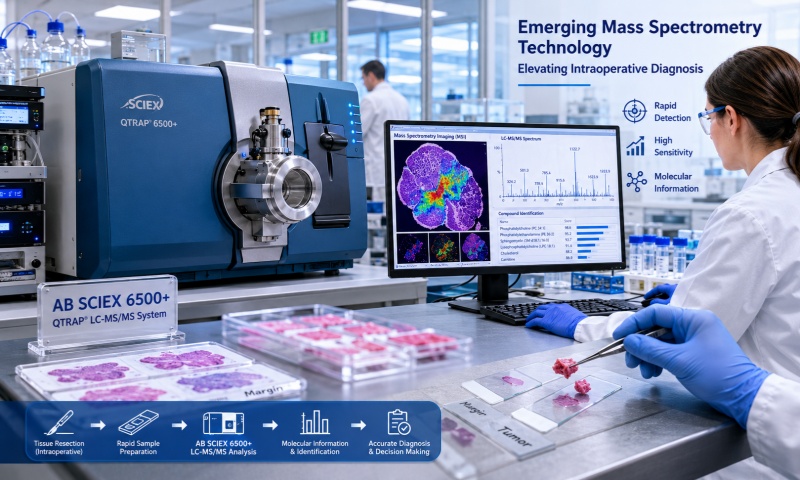
In modern medicine, surgical decision-making often depends on the rapid and accurate identification of diseased tissue. Surgeons must frequently determine whether a tumor has been completely removed, whether surgical margins are clear, or whether suspicious tissue requires further excision. Traditionally, these decisions have relied on frozen-section pathology, a process that can take 20 to 40 minutes and may be limited by sampling errors and subjective interpretation.
Recent advances in mass spectrometry (MS) technology are transforming intraoperative diagnostics by providing real-time molecular information directly in the operating room. These emerging technologies are enabling faster, more accurate tissue characterization, ultimately improving surgical outcomes and patient care.
Accurate intraoperative diagnosis is essential in many surgical specialties, including oncology, neurosurgery, breast surgery, gastrointestinal surgery, and head and neck surgery. The primary goal is to distinguish healthy tissue from diseased tissue as quickly and reliably as possible.
Conventional histopathology remains the gold standard for definitive diagnosis; however, the time required for tissue preparation, staining, and microscopic evaluation can interrupt surgical workflows. In addition, subtle molecular changes may not always be visible through traditional imaging or microscopic examination.
Mass spectrometry addresses these limitations by analyzing the molecular composition of tissues in real time, providing surgeons with immediate biochemical insights during procedures.
Mass spectrometry identifies molecules based on their mass-to-charge ratios, generating highly specific molecular fingerprints. By detecting lipids, metabolites, proteins, and other biomarkers, MS can reveal biochemical differences between normal and pathological tissues.
Unlike conventional pathology methods, mass spectrometry can analyze tissues directly with minimal sample preparation. Results are often available within seconds, allowing clinicians to make informed decisions while surgery is still underway.
The ability to perform rapid molecular profiling has created new opportunities for precision surgery and personalized treatment strategies.
One of the most significant developments in recent years is ambient ionization mass spectrometry. Unlike traditional MS techniques that require extensive sample preparation, ambient ionization methods can analyze biological samples in their native state.
Technologies such as Desorption Electrospray Ionization (DESI) and Rapid Evaporative Ionization Mass Spectrometry (REIMS) allow direct tissue analysis with minimal disruption to surgical workflows.
These approaches generate molecular profiles within seconds and can help distinguish malignant tissue from healthy tissue during surgery.
Among the most widely recognized innovations is the Intelligent Knife, commonly known as the iKnife.
The iKnife integrates electrosurgical instruments with REIMS technology. During tissue cutting, surgical smoke is generated and immediately analyzed by a mass spectrometer. The resulting molecular information is compared against reference databases to identify tissue types in real time.
This technology enables surgeons to receive immediate feedback regarding tissue characteristics without interrupting the procedure. Studies have demonstrated promising accuracy in differentiating cancerous and non-cancerous tissues across multiple tumor types.
Mass Spectrometry Imaging represents another breakthrough in surgical pathology.
MSI enables the spatial mapping of molecules directly within tissue sections, producing detailed molecular images without the need for labels or dyes. This capability allows clinicians to visualize tumor boundaries, biomarker distributions, and metabolic alterations with remarkable precision.
Recent developments in high-speed MSI are making it increasingly feasible for intraoperative applications, particularly in complex procedures involving brain tumors and other challenging malignancies.
Historically, mass spectrometers were large, expensive instruments confined to centralized laboratories. Advances in miniaturization are changing this paradigm.
Portable and compact MS systems are now being developed specifically for clinical and point-of-care environments. These instruments offer faster deployment, reduced footprint, and greater accessibility within operating rooms.
As performance continues to improve, portable MS platforms are expected to play a growing role in real-time surgical diagnostics.
The integration of emerging mass spectrometry technologies into surgical practice offers numerous benefits.
Real-time molecular analysis helps surgeons identify tumor margins more accurately, reducing the likelihood of residual disease.
Incomplete tumor removal often necessitates additional procedures. Enhanced intraoperative assessment can lower reoperation rates and improve patient outcomes.
Rapid diagnostic information enables more efficient surgical workflows and minimizes delays associated with conventional pathology consultations.
Molecular profiling provides deeper insights into disease biology, supporting individualized treatment strategies tailored to each patient's condition.
Improved diagnostic accuracy and reduced repeat procedures can lower healthcare costs while increasing overall operational efficiency.
Despite its tremendous potential, widespread adoption of intraoperative mass spectrometry faces several challenges.
Clinical validation remains essential to establish standardized protocols and demonstrate consistent performance across diverse patient populations. Regulatory approval pathways must also be navigated carefully to ensure safety and effectiveness.
In addition, successful implementation requires collaboration among surgeons, pathologists, analytical chemists, and healthcare administrators.
The future of intraoperative diagnostics will likely involve the integration of mass spectrometry with artificial intelligence, machine learning, and digital pathology platforms. AI-driven algorithms can rapidly interpret complex molecular datasets, enhancing diagnostic accuracy and providing decision support in real time.
As technology advances, mass spectrometry may become a routine component of surgical practice, delivering molecular intelligence directly at the point of care.
Emerging mass spectrometry technologies are reshaping the landscape of intraoperative diagnostics. From ambient ionization techniques and the iKnife to mass spectrometry imaging and portable MS systems, these innovations provide unprecedented access to real-time molecular information during surgery.
By improving tissue identification, enhancing surgical precision, reducing repeat procedures, and supporting personalized medicine, mass spectrometry is helping transform the operating room into a more intelligent and data-driven environment. As clinical adoption continues to expand, these technologies are poised to become indispensable tools in the future of precision surgery and patient-centered healthcare.