
Consultation Hotline
+1 (302) 618-8777
+1 (302) 618-8777
Current location:Home > Blogs > Industry News
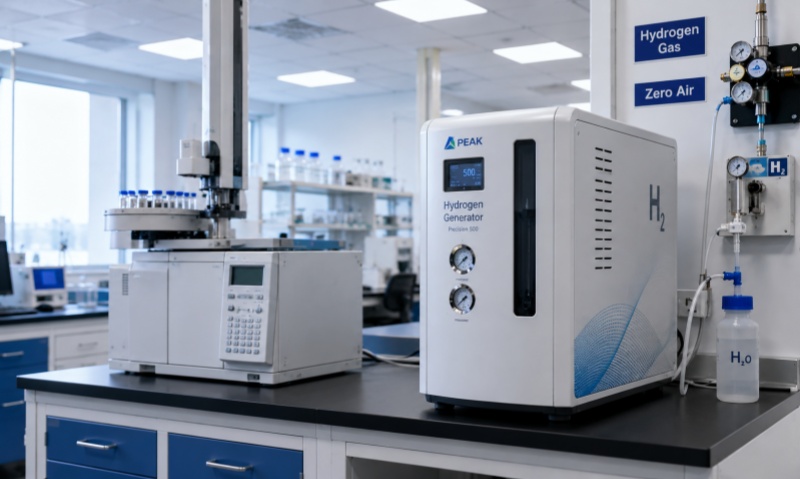
As modern analytical laboratories continue to pursue higher efficiency, improved sustainability, and enhanced safety standards, the way laboratory gases are supplied is undergoing a significant transformation. Traditionally, laboratories have relied on high-pressure gas cylinders to provide hydrogen, helium, nitrogen, and other gases required for analytical instruments. However, advances in gas generation technology have made on-site hydrogen generators an increasingly attractive alternative.
Hydrogen generators are now widely adopted in chromatography, mass spectrometry, environmental testing, pharmaceutical research, food analysis, and academic laboratories. By producing high-purity hydrogen on demand, these systems offer a safer, more economical, and environmentally responsible solution for laboratory gas supply.
Hydrogen has become an essential gas in many laboratory applications. It is commonly used as:
A carrier gas for Gas Chromatography (GC)
A fuel gas for Flame Ionization Detectors (FID)
A reaction gas in certain mass spectrometry applications
A reducing gas in specialized analytical systems
A support gas in various research and industrial processes
Historically, laboratories obtained hydrogen through compressed gas cylinders delivered by external suppliers. While effective, this approach presents numerous operational challenges, including safety risks, recurring costs, and supply chain dependencies.
Hydrogen generators address these issues by producing hydrogen directly within the laboratory using water electrolysis technology.
Most laboratory hydrogen generators operate through Proton Exchange Membrane (PEM) electrolysis.
The process is straightforward:
Purified water enters the electrolysis cell.
Electricity splits water molecules into hydrogen and oxygen.
Hydrogen is collected, purified, and delivered to laboratory instruments.
Oxygen is safely vented from the system.
Modern generators can produce hydrogen with purity levels exceeding 99.9999%, making them suitable for even the most demanding analytical applications.
Unlike gas cylinders that contain large volumes of stored hydrogen under high pressure, generators produce only the amount of gas required at a given time, significantly improving safety.
Safety is often the primary reason laboratories switch from gas cylinders to hydrogen generators.
Compressed hydrogen cylinders may contain thousands of liters of flammable gas under extremely high pressure. In the event of a leak or accident, significant hazards can arise.
Hydrogen generators produce hydrogen on demand and typically contain only a small internal gas volume at any given moment. This dramatically reduces potential risks.
Transporting and replacing heavy gas cylinders can expose laboratory personnel to physical injuries and accidents.
Hydrogen generators eliminate:
Cylinder transportation
Manual cylinder changes
Regulator installation
High-pressure gas storage
As a result, laboratories create a safer working environment while reducing operational interruptions.
Modern hydrogen generators incorporate multiple safety systems, including:
Automatic leak detection
Pressure monitoring
Flow control systems
Hydrogen concentration sensors
Automatic shutdown protection
These features provide continuous monitoring and help prevent unsafe operating conditions.
In addition to safety improvements, hydrogen generators offer substantial economic benefits.
Although the initial investment may be higher than purchasing a gas cylinder, operating costs are significantly lower over the system's lifespan.
Laboratories can reduce expenses associated with:
Cylinder rental fees
Gas deliveries
Transportation surcharges
Supplier contracts
Emergency gas orders
Many facilities achieve a return on investment within one to three years.
Unexpected gas depletion can disrupt analytical workflows and delay critical projects.
Hydrogen generators provide a continuous gas supply, ensuring that:
Instruments remain operational
Analytical schedules stay on track
Downtime is minimized
Productivity increases
Researchers no longer need to monitor cylinder inventories or schedule frequent replacements.
Sustainability has become a strategic priority across scientific organizations worldwide. Hydrogen generators align closely with laboratory environmental goals.
Traditional gas cylinder supply chains involve:
Gas production facilities
Cylinder filling operations
Transportation vehicles
Distribution networks
Each step contributes to greenhouse gas emissions.
On-site hydrogen generation significantly reduces transportation requirements and associated emissions.
Hydrogen generators reduce the need for:
Disposable cylinder packaging
Transportation materials
Cylinder refurbishment and replacement
The result is a more environmentally responsible gas supply system.
Modern PEM technology has become increasingly energy efficient, allowing laboratories to generate high-purity hydrogen while consuming relatively modest amounts of electricity.
This efficiency supports broader Environmental, Social, and Governance (ESG) initiatives and sustainability programs.
Gas chromatography users are among the strongest adopters of hydrogen generators.
Hydrogen offers several analytical advantages compared to traditional carrier gases such as helium.
Hydrogen possesses a higher optimal linear velocity than helium, allowing:
Faster chromatographic separations
Reduced run times
Increased sample throughput
Shorter analysis times enable laboratories to process more samples per day without compromising data quality.
Global helium shortages and rising prices have encouraged laboratories to seek alternative carrier gases.
Hydrogen provides a cost-effective and readily available solution while maintaining excellent chromatographic performance.
Laboratories operating under regulated environments must ensure compliance with applicable standards and quality requirements.
Modern hydrogen generators support compliance efforts through:
Consistent gas purity
Automated operation
Digital monitoring systems
Maintenance tracking
Validation support documentation
Many manufacturers offer systems designed specifically for GMP, GLP, ISO 17025, and pharmaceutical laboratory environments.
These capabilities help laboratories maintain analytical integrity while simplifying quality management procedures.
The adoption of hydrogen generators is expected to accelerate as laboratories continue modernizing their infrastructure.
Future developments may include:
Remote system monitoring
Predictive maintenance capabilities
Cloud-based performance analytics
Enhanced energy efficiency
Integration with laboratory management systems
Smart facility automation
As laboratories increasingly prioritize safety, sustainability, and operational efficiency, on-site gas generation will likely become the preferred solution for analytical gas supply.
Hydrogen generators are transforming laboratory gas management by providing a safer, more reliable, and more sustainable alternative to traditional gas cylinders. Through on-demand hydrogen production, laboratories can reduce safety risks, lower operating costs, improve analytical efficiency, and support environmental objectives.
As gas chromatography, mass spectrometry, and other analytical technologies continue to evolve, hydrogen generators will play an increasingly important role in modern laboratory operations. For organizations seeking to enhance both performance and safety, investing in hydrogen generation technology represents a forward-looking strategy that delivers long-term value and operational resilience.