Consultation Hotline
+1 (302) 618-8777
+1 (302) 618-8777
Current location:Home > Blogs > Industry News
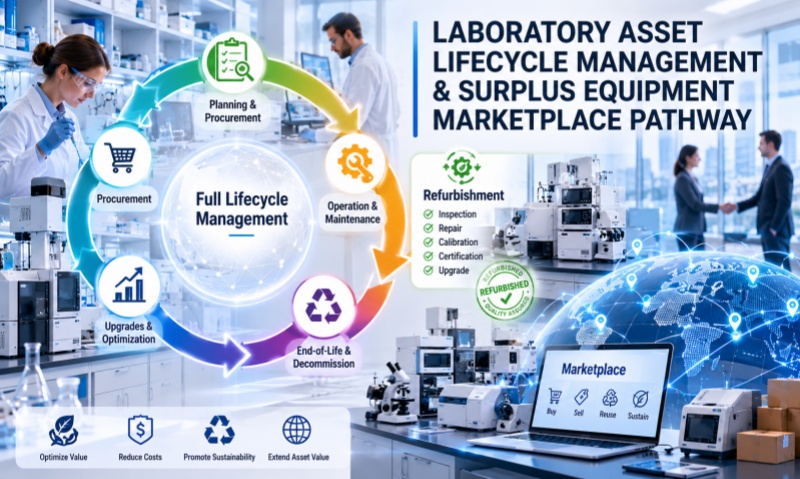
Modern laboratories face increasing pressure to optimize budgets, improve sustainability, and maximize the return on expensive scientific equipment investments. Whether operating in pharmaceutical research, biotechnology, environmental testing, clinical diagnostics, or academic research, laboratories often manage millions of dollars in analytical instruments throughout their operational lifespan. Effective laboratory asset management, combined with refurbishment and surplus equipment strategies, can significantly reduce costs while enhancing operational efficiency.
Every laboratory instrument follows a lifecycle that begins long before installation and continues beyond its active use. Proper management of this lifecycle ensures that laboratories obtain maximum value from their equipment investments.
The typical laboratory asset lifecycle includes:
Planning and Procurement
Installation and Qualification
Operation and Maintenance
Performance Optimization
Refurbishment and Upgrades
Redeployment or Resale
Decommissioning and Recycling
Each stage presents opportunities to improve efficiency, reduce expenses, and extend equipment usability.
For high-value instruments such as LC-MS/MS systems, HPLCs, GC-MS systems, ICP-MS instruments, and spectrometers, lifecycle planning should begin before purchase. Laboratories should evaluate not only acquisition costs but also maintenance requirements, consumables, software support, and future upgrade potential.
One of the most overlooked aspects of laboratory asset management is preventive maintenance. Many laboratories focus on repairing instruments only after failures occur, resulting in unexpected downtime and costly disruptions.
A proactive maintenance strategy offers several benefits:
Increased instrument uptime
Improved analytical accuracy
Extended equipment lifespan
Reduced emergency repair costs
Better regulatory compliance
Higher resale value
Routine inspections, calibration services, software updates, and replacement of wear components can often extend the life of analytical instruments by several years.
For example, an Agilent HPLC or AB Sciex mass spectrometer that receives regular maintenance may remain productive for over a decade while continuing to meet laboratory performance requirements.
As laboratories upgrade their technology, many instruments still retain substantial operational value. Refurbishment has become a practical solution for extending equipment lifecycles while supporting sustainable laboratory practices.
Professional refurbishment typically includes:
Comprehensive inspection
Replacement of worn components
System cleaning and decontamination
Performance testing
Calibration and certification
Software updates
Cosmetic restoration
Well-refurbished instruments can often deliver performance comparable to newer systems at a fraction of the original acquisition cost.
Popular instruments frequently refurbished include:
AB Sciex Triple Quad LC-MS systems
Agilent 1100 and 1260 HPLC systems
Waters Acquity UPLC platforms
Shimadzu LCMS and HPLC systems
Thermo Fisher mass spectrometers
PerkinElmer analytical instruments
For laboratories operating under budget constraints, purchasing refurbished equipment can reduce capital expenditures by 40% to 80% compared with new equipment purchases.
Environmental sustainability has become a strategic priority across the scientific industry. Refurbishment and equipment reuse directly support sustainability goals by reducing waste and minimizing the environmental impact associated with manufacturing new instruments.
Benefits of laboratory equipment reuse include:
Reduced electronic waste
Lower carbon footprint
Conservation of raw materials
Extended product lifecycles
Improved ESG performance
Many organizations now incorporate equipment reuse programs into their sustainability initiatives, recognizing that extending the life of scientific instruments is both economically and environmentally beneficial.
Instead of sending retired instruments to disposal facilities, laboratories can refurbish, redeploy, or resell equipment to organizations with different performance requirements.
Laboratories frequently accumulate surplus equipment due to:
Facility closures
Laboratory consolidations
Technology upgrades
Research project completion
Budget restructuring
Without a structured strategy, surplus assets can consume valuable storage space and rapidly lose market value.
An effective surplus equipment management program should include:
Each instrument should be assessed based on:
Operational condition
Age and service history
Market demand
Availability of parts
Upgrade potential
Not all equipment requires extensive repairs before resale. In many cases, minor refurbishment can significantly increase resale value.
Proper documentation, service records, calibration reports, and performance verification can improve buyer confidence and accelerate sales.
Professional deinstallation, packing, transportation, and reinstallation services help preserve equipment condition and maximize value recovery.
The global market for used and refurbished laboratory equipment has expanded significantly in recent years. Online marketplaces now connect buyers and sellers worldwide, creating new opportunities for laboratories to monetize surplus assets.
These platforms provide access to:
Pharmaceutical companies
Contract research organizations (CROs)
Universities
Government laboratories
Startup biotechnology firms
Environmental testing facilities
Successful marketplace strategies involve more than simply listing equipment online. Laboratories should focus on presenting assets professionally, including:
Detailed specifications
High-quality photographs
Maintenance records
Calibration certificates
Refurbishment documentation
Installation and service options
Buyers are more likely to invest in equipment that demonstrates verified performance and documented service history.
The future of laboratory asset management is increasingly focused on circular economy principles. Rather than following a traditional "purchase-use-dispose" model, laboratories are adopting strategies that maximize asset utilization throughout multiple ownership cycles.
In a circular laboratory economy:
Instruments remain productive longer.
Refurbishment extends operational life.
Surplus assets are redeployed rather than discarded.
Marketplace platforms facilitate equipment exchange.
Sustainability objectives align with financial goals.
This approach benefits laboratories of all sizes while reducing industry-wide waste and resource consumption.
Laboratory equipment represents one of the largest capital investments for scientific organizations. Effective lifecycle management, proactive maintenance, professional refurbishment, and strategic surplus equipment programs enable laboratories to maximize value while supporting sustainability objectives.
As the market for refurbished scientific instruments continues to grow, organizations that embrace comprehensive asset management strategies will be better positioned to reduce costs, improve operational efficiency, and generate additional value from surplus equipment. By viewing laboratory instruments as long-term assets rather than disposable resources, laboratories can create a more sustainable, efficient, and financially responsible future for scientific research and testing operations.