
Consultation Hotline
+1 (302) 618-8777
+1 (302) 618-8777
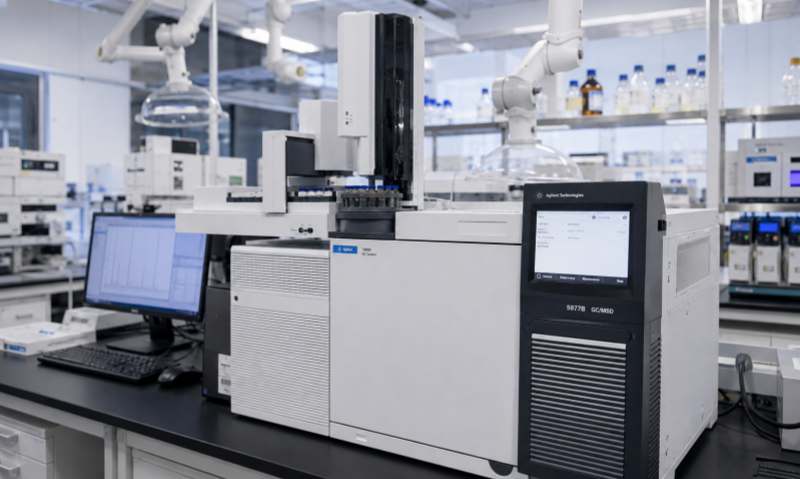
A capillary column is one of the most important components of a gas chromatograph (GC). Its stationary phase directly affects separation efficiency, peak shape, baseline stability, detection sensitivity, and overall analytical performance. A newly installed capillary column normally requires proper conditioning before routine analysis. Similarly, an older column may require conditioning after exposure to contaminated or high-boiling samples.
Proper column conditioning helps remove residual solvents, volatile substances, and some contaminants from the column. It can reduce baseline drift, ghost peaks, and background signals, allowing the column to achieve a more stable operating condition.
Capillary column conditioning is a controlled heating process performed while carrier gas is flowing through the column. The column temperature is gradually increased to an appropriate conditioning temperature and maintained for a specified period.
During this process, residual volatile compounds and some low-molecular-weight substances are released from the stationary phase and column surface. These substances are carried out of the column by the carrier gas.
New columns may contain small amounts of residual materials originating from manufacturing, packaging, or installation. If the column is used directly without adequate conditioning, these materials may enter the detector and cause elevated baseline signals, increased noise, or unexpected peaks.
Used columns can also accumulate high-boiling compounds and sample-matrix contaminants. Appropriate conditioning may help remove some of these contaminants and improve chromatographic performance.
However, conditioning does not mean simply heating the column to the highest possible temperature. Every capillary column has a specified maximum operating temperature. Exceeding this limit can cause stationary-phase degradation or excessive column bleed.
There are several situations in which column conditioning may be necessary.
The first is after installing a new capillary column. Conditioning before the first analytical run can reduce background signals and help establish a stable baseline.
The second situation is when a column has been stored for an extended period and is being returned to service. Depending on storage conditions, moisture, solvents, or other residual substances may have entered the column.
Third, conditioning may be considered when a column has experienced moderate contamination. Symptoms can include elevated baseline, increased ghost peaks, unusual background signals, and changes in peak shape.
Fourth, conditioning may be useful after analyzing samples containing high-boiling compounds or complex matrices. Such samples can leave residues inside the column that gradually affect chromatographic performance.
Before conditioning begins, identify the column model, stationary phase, length, internal diameter, and manufacturer's recommended temperature limits.
Correct installation is also essential. Both ends of the capillary column should be properly cut and installed according to the requirements of the GC inlet and detector. The insertion depth should follow the instrument manufacturer's specifications.
Carrier gas must be flowing before the column is heated. Heating a capillary column without adequate carrier-gas protection can accelerate oxidation and damage the stationary phase.
Common carrier gases include helium, hydrogen, and nitrogen. The appropriate gas depends on the GC configuration, detector, analytical method, and laboratory safety requirements.
The gas system should also be checked for leaks. Inspect the inlet connection, column fittings, detector connection, and other relevant components before starting the conditioning process.
Column conditioning is normally performed using a controlled temperature program rather than immediately applying the maximum temperature.
First, establish a stable carrier-gas flow through the column. Confirm that the gas supply and flow are normal before heating.
Next, start the column at a relatively low temperature and gradually increase the temperature at a suitable rate. Continue heating until the recommended conditioning temperature is reached, then maintain that temperature for an appropriate period.
The exact conditioning temperature and duration depend on the column type and manufacturer's specifications. Different stationary phases have different thermal stability characteristics. Some columns can tolerate relatively high temperatures, while highly polar stationary phases may require more conservative conditions.
During conditioning, the GC baseline can be monitored when appropriate. At the beginning of the process, the baseline may rise because volatile compounds and column bleed are being released. As conditioning continues, the background signal should generally become more stable.
The most important precaution is to remain within the manufacturer's temperature specifications.
Many GC columns have separate limits for maximum isothermal temperature and maximum programmed temperature. These values should not be treated as interchangeable. Always follow the specifications for the particular column.
The column should also not be held at elevated temperatures for unnecessarily long periods. Excessive temperature or conditioning time can increase stationary-phase loss and shorten column life.
Another important precaution is maintaining an appropriate carrier-gas flow. Heating a column in the presence of oxygen can accelerate oxidation of the stationary phase.
Depending on the GC design and manufacturer's instructions, technicians may need to determine whether the column should remain connected to the detector during conditioning. In some situations, precautions may be taken to prevent contaminants from entering and contaminating the detector.
Conditioning should not be judged solely by elapsed time. Baseline behavior and analytical performance should also be considered.
During conditioning, the baseline may gradually decrease and become more stable. When the column reaches a stable temperature and the background signal has significantly decreased, the conditioning process may be considered sufficiently complete according to the manufacturer's procedure.
A blank injection can then be performed to evaluate the column condition. A properly conditioned column should show a relatively stable baseline and fewer unexpected background peaks.
If significant ghost peaks, severe baseline drift, or excessive noise remain after conditioning, the problem may not be caused by the column alone.
Potential causes include gas leaks, contaminated inlet liners, degraded septa, contaminated injection ports, detector contamination, poor carrier-gas purity, or other GC system problems.
One common mistake is immediately heating a new column to its maximum temperature. Although this may appear to save time, it can increase stationary-phase loss and column bleed.
A second mistake is heating the column without carrier-gas flow.
A third mistake is ignoring the temperature limitations specified for the particular stationary phase.
A fourth mistake is assuming that longer conditioning will solve every chromatographic problem. If the stationary phase has been seriously damaged or the column has lost significant efficiency, simply extending the conditioning time may not restore its original performance.
Another common mistake is injecting complex or highly concentrated samples immediately after conditioning. It is generally better to run a blank or suitable standard first and confirm baseline stability and peak shape before beginning routine analysis.
If the baseline remains unstable after conditioning, first check the carrier-gas supply and gas purity. Oxygen and moisture contamination can have a significant effect on column performance.
Next, inspect the injection port. A contaminated liner, septum, or inlet seal can generate background peaks that may be incorrectly attributed to the column.
The column connections should also be inspected for leaks. Even a small leak can introduce oxygen into the system and cause increased column bleed at elevated temperatures.
If the column continues to produce excessive background or abnormal peaks, compare the result with a blank run. If the problem is still present, inspect the detector and other components of the GC system.
For a heavily contaminated column, trimming a small section from the inlet end may sometimes help remove contamination. However, trimming should be performed according to the column manufacturer's recommendations and with proper installation afterward.
Good daily operating practices can significantly reduce the need for frequent conditioning.
Avoid introducing unnecessary high-boiling compounds or highly contaminated matrices directly into the column. Appropriate sample preparation and inlet maintenance can reduce contamination.
The inlet liner, septum, and seals should be inspected and replaced at appropriate intervals. High-purity carrier gas should be used, and gas filters should be maintained properly.
When the GC system will be unused for an extended period, the column should be stored according to the manufacturer's recommendations. Proper storage helps prevent moisture and oxygen from entering the column.
Analytical methods should also respect the column's recommended temperature range. Operating continuously near the maximum temperature can accelerate stationary-phase loss.
Proper conditioning is an important part of capillary GC column installation, maintenance, and troubleshooting. A controlled conditioning procedure can help remove residual volatile substances, reduce background signals, stabilize the baseline, and improve analytical consistency.
However, conditioning should always be performed according to the column manufacturer's temperature and operating specifications. Excessive temperature, prolonged heating, insufficient carrier-gas protection, and improper installation can shorten column life rather than improve performance.
When chromatographic problems remain after conditioning, technicians should evaluate the entire GC system rather than focusing only on the column. The carrier-gas system, inlet, connections, detector, sample preparation, and column itself should be investigated systematically.
With correct conditioning, appropriate operating temperatures, regular inlet maintenance, high-purity carrier gas, and proper storage, capillary GC columns can maintain stable performance and provide reliable analytical results for a longer service life.