
Consultation Hotline
+1 (302) 618-8777
+1 (302) 618-8777
Laboratories routinely use or generate hazardous gases during chemical synthesis, analytical testing, sample preparation, and research activities. Toxic, corrosive, flammable, reactive, and volatile gases can pose serious risks to personnel and laboratory facilities if they are not properly captured and controlled. An effective hazardous gas collection system should therefore combine source capture, ventilation, filtration, monitoring, and safe exhaust treatment. Selecting the appropriate collection method and equipment is essential for maintaining a safe laboratory environment.
The most effective approach to hazardous gas control is to capture contaminants as close as possible to their source. Local exhaust ventilation (LEV) systems are commonly used for this purpose.
A chemical fume hood is one of the most widely used devices in laboratories. It captures gases, vapors, aerosols, and other airborne contaminants generated during experiments and directs them away from the operator. Fume hoods are particularly suitable for routine chemical operations involving volatile or toxic substances.
For smaller or localized emission sources, flexible extraction arms can be installed near instruments, reaction vessels, gas outlets, or other emission points. Their adjustable position allows the inlet to be placed close to the source, improving capture efficiency while reducing unnecessary airflow.
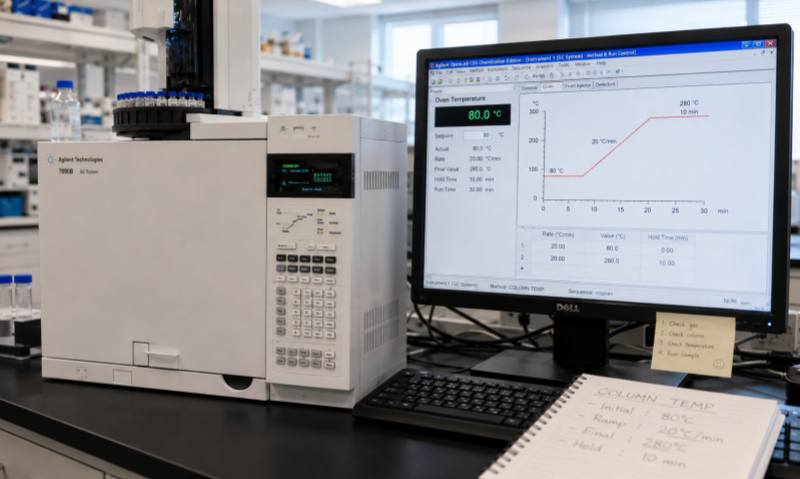
For processes involving enclosed equipment, instrument exhaust connections can provide direct extraction. Gas chromatography, mass spectrometry, chemical synthesis systems, and other analytical instruments may require dedicated exhaust lines to remove solvent vapors or reaction gases.
When hazardous gases are generated continuously or at relatively high concentrations, an enclosed collection system can provide better containment than general laboratory ventilation.
A sealed reaction system can prevent hazardous gases from escaping into the laboratory. Reaction vessels may be connected to dedicated exhaust or gas-treatment systems through compatible tubing and fittings.
Glove boxes are another option when highly toxic, reactive, oxygen-sensitive, or moisture-sensitive substances must be handled under controlled conditions. The enclosure separates the operator from the working atmosphere and can be connected to a purification or exhaust system.
For particularly hazardous gases, a closed gas-transfer system can minimize manual connections and reduce the possibility of accidental release.
Collection alone does not necessarily make hazardous gas safe. Depending on the gas, the collected stream may require treatment before discharge.
A wet scrubber uses an appropriate liquid to absorb or react with contaminants. It can be useful for water-soluble or chemically reactive gases. The scrubbing solution must be selected according to the chemical properties of the target gas, and its concentration and performance should be monitored regularly.
Dry scrubbers use solid adsorbents or reactive media to remove specific gases. Activated carbon, molecular sieves, impregnated adsorbents, and other specialized media may be used depending on the application.
For certain applications, gas filtration units can remove particulates, aerosols, and other contaminants. High-efficiency filters may be incorporated into exhaust systems where particulate control is required.
A complete hazardous gas control system may include several types of equipment:
| Equipment | Main Function |
|---|---|
| Chemical Fume Hood | Captures hazardous vapors and gases at the working area |
| Extraction Arm | Provides localized extraction near emission sources |
| Scrubber | Absorbs or chemically treats hazardous gases |
| Dry Gas Filter | Removes specific gaseous contaminants using adsorbent media |
| Activated Carbon Filter | Adsorbs many organic vapors and selected gases |
| Glove Box | Provides enclosed handling for sensitive or hazardous materials |
| Vacuum Exhaust System | Transfers contaminated gas to a treatment or exhaust system |
| Gas Detector | Monitors hazardous gas concentrations |
| Exhaust Fan | Provides the airflow required for extraction |
| Ductwork | Transports contaminated air to treatment or discharge points |
| Emergency Ventilation | Provides rapid removal during abnormal conditions |
Gas collection systems should be supported by appropriate monitoring equipment. A gas detector can continuously monitor concentrations of hazardous gases and provide visual or audible alarms when concentrations exceed predetermined limits.
Different sensors are designed for different gases. Electrochemical sensors are commonly used for gases such as carbon monoxide, chlorine, ammonia, and hydrogen sulfide. Infrared sensors can be used for certain combustible or infrared-active gases, while photoionization detectors can help monitor many volatile organic compounds.
Gas detectors should be installed according to the properties of the gas, including density, toxicity, flammability, and potential release location. Regular calibration and functional testing are essential to ensure reliable readings.
Flammable gases require additional precautions because collection equipment can become an ignition or explosion hazard if improperly designed. Exhaust fans, motors, electrical components, and monitoring systems should be compatible with the relevant hazardous environment where required.
Gas cylinders should be securely stored, and regulators, hoses, valves, and connections should be inspected regularly. Exhaust systems should prevent the accumulation of flammable gas concentrations.
Hydrogen, methane, carbon monoxide, and certain solvent vapors require particular attention to ventilation, leak detection, and ignition-source control.
An effective hazardous gas collection system should be designed around the actual laboratory process rather than relying on a single piece of equipment. Engineers should consider gas composition, generation rate, temperature, toxicity, corrosiveness, flammability, humidity, and compatibility with ductwork and filtration materials.
Routine maintenance is equally important. Fume hood airflow should be checked periodically, extraction ducts should be inspected for blockage or corrosion, filters and scrubber media should be replaced according to operating conditions, and gas detectors should be calibrated at appropriate intervals.
Any unusual odor, abnormal airflow, detector alarm, visible corrosion, or unexpected pressure change should be treated as a potential system problem and investigated promptly.
Laboratory hazardous gas collection is a comprehensive safety system rather than simply an exhaust fan or fume hood. Effective control normally combines source capture, enclosed operation, ventilation, filtration or scrubbing, gas detection, and regular maintenance. Choosing the right equipment requires an assessment of the specific gases, concentrations, operating conditions, and laboratory processes involved.
For laboratories handling toxic, corrosive, flammable, or reactive gases, professional system design and periodic inspection are particularly important. A properly designed hazardous gas collection system can significantly reduce personnel exposure, protect laboratory equipment, improve environmental safety, and support reliable laboratory operations over the long term.