
Consultation Hotline
+1 (302) 618-8777
+1 (302) 618-8777
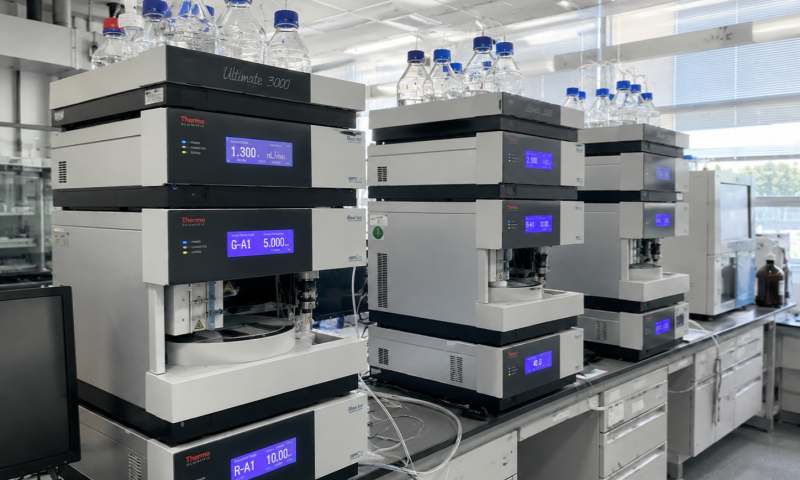
Repairing laboratory instruments — ranging from HPLC systems and thermal cyclers to spectrophotometers — is a high-stakes endeavor. Unlike consumer electronics, these precision devices demand exacting standards, and a single misstep during repair can compromise data integrity or destroy expensive components. Therefore, understanding the critical repair protocols and the professional attributes of a competent engineer is essential.
Modern analytical instruments contain high-voltage capacitors (e.g., in power supply units and X-ray generators) that retain lethal charges long after power-off. Before commencing any repair, disconnect the mains supply and allow a minimum of 5–10 minutes for passive discharge. For high-energy systems, use a certified discharge probe. Never plug or unplug internal boards while the instrument is energized, as this can induce voltage spikes that damage sensitive logic circuits.
Internal components, including CMOS chips, MOSFETs, and optical sensors, are extremely vulnerable to electrostatic damage — often invisible to the naked eye but devastating to functionality. Always wear a grounded ESD wrist strap, work on an ESD-safe mat, and use anti-static tools. Before handling any PCB, discharge your body by touching a grounded metal surface.
The "take-a-photo-before-removal" rule cannot be overemphasized. Document cable routings, connector orientations, screw lengths, and torque sequences. A surprising number of post-repair failures arise not from defective parts but from incorrect reassembly, such as reversed ribbon cables or over-tightened fasteners causing board flexure.
Always replace faulty components with manufacturer-recommended parts or rigorously verified equivalents. Pay close attention to voltage ratings, capacitance, temperature coefficients, and package types. Using "universal" substitutes may introduce parasitic effects, alter calibration curves, or create fire hazards under sustained load.
Hardware restoration is only half the job. Every repair must be followed by comprehensive functional verification — including zero-point adjustment, span calibration, and repeatability tests against certified reference standards. Never release an instrument without documented evidence that it meets its original performance specifications.
A competent engineer must be fluent in analog/digital electronics, optics, fluidics, thermodynamics, and embedded software. Reading schematics, tracing PCB layouts, and troubleshooting communication protocols (RS-232, USB, Ethernet) should be second nature.
Laboratory environments harbor hidden hazards: toxic chemical residues in tubing, high-pressure gas lines, and laser radiation. Engineers must possess intrinsic risk-assessment skills, strictly follow lockout/tagout procedures, and always wear appropriate PPE (safety goggles, cut-resistant gloves, lab coats).
Great engineers follow a disciplined diagnostic sequence: external first, internal second; simple checks before complex ones; power supply prior to signal path. Rather than resorting to part-swapping guesswork, they rely on oscilloscopes, multimeters, and signal generators to gather evidence and narrow fault boundaries systematically.
With instrument technology evolving rapidly, engineers must be adept at interpreting English-language service manuals, application notes, and firmware release notes. Active participation in technical forums and manufacturer training programs keeps their skills current.
Repairing laboratory instruments is as much an art as a science. By rigorously adhering to safety, documentation, and validation protocols — and by fostering an engineer’s interdisciplinary competence, safety mindset, analytical rigor, and learning agility — we ensure that instruments not only function again but do so with the precision and reliability that scientific work demands.