
Consultation Hotline
+1 (302) 618-8777
+1 (302) 618-8777
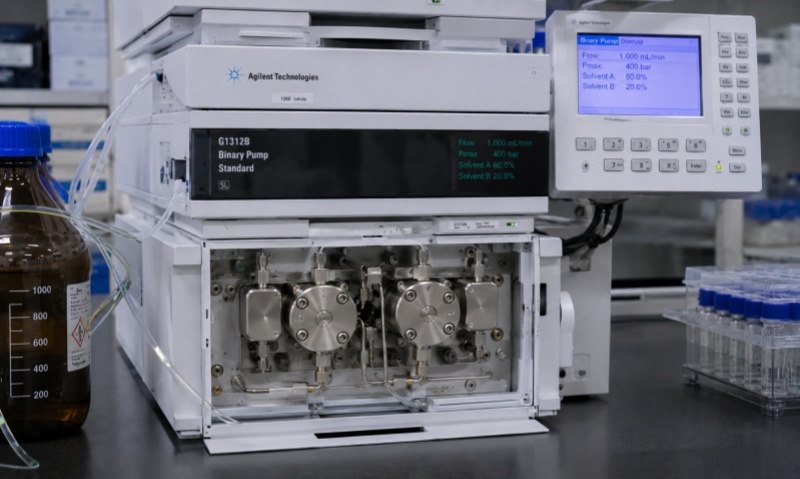
High-performance liquid chromatography (HPLC) systems rely on stable solvent flow and precise pressure control to achieve accurate separation and reliable analytical results. During routine operation, one of the most common instrument problems is excessive system pressure. When the HPLC pressure suddenly rises above the normal operating range, especially exceeding 400 bar, the most likely cause is a blockage somewhere in the fluid flow path. A restricted flow path increases resistance to solvent movement, forcing the pump to generate higher pressure to maintain the programmed flow rate. If not corrected promptly, excessive pressure can damage the pump, seals, tubing, and other critical components.
The HPLC system operates as a closed fluid circuit consisting of the solvent reservoir, degasser, pump, injector, tubing, column, detector, and waste line. Under normal conditions, each component contributes a certain amount of back pressure. The analytical column is usually the largest contributor to system pressure because solvent must pass through densely packed stationary phase particles.
When any part of the flow path becomes partially or completely blocked, solvent movement becomes restricted. The pump continues delivering solvent at the set flow rate, causing the pressure to increase rapidly.
Common symptoms of a blocked flow path include:
Pressure exceeding the instrument limit;
Sudden pressure increase during operation;
Pump shutdown due to high-pressure protection;
Unstable flow rate;
Retention time shifts;
Poor peak shape or loss of resolution.
The analytical column is one of the most common sources of excessive pressure.
Possible causes include:
If samples are not properly filtered before injection, small particles may accumulate at the column inlet frit. Over time, these particles restrict solvent flow and increase pressure.
Mobile phases containing phosphate buffers, ammonium salts, or other inorganic additives may precipitate when mixed with high organic solvent concentrations. These crystals can block the column inlet or tubing.
After long-term use, column packing materials may degrade and produce increased flow resistance. Aged columns often show gradually increasing pressure rather than sudden pressure spikes.
Troubleshooting method:
Disconnect the column from the system;
Replace it temporarily with a union;
Start the pump and observe pressure.
If pressure returns to normal, the column is likely blocked.
Small-diameter HPLC tubing is highly sensitive to contamination. Even a small particle can significantly restrict flow because the internal diameter is extremely narrow.
Common blockage locations include:
Tubing between injector and column;
Column inlet tubing;
Detector inlet tubing;
Stainless steel fittings;
PEEK tubing connectors.
Causes include:
Precipitated mobile phase components;
Dust particles;
Sample residues;
Damaged ferrules;
Improper installation.
A practical troubleshooting approach is to disconnect flow path components one by one. The blocked section can usually be identified by observing where the pressure drops.
The injection system is another frequent source of high pressure problems.
Potential blockage points include:
Injection needle;
Needle seat;
Sample loop;
Injection valve rotor seal;
Wash solvent pathway.
High-concentration samples, dirty sample containers, and insufficient sample filtration can introduce particles into the injector.
Typical symptoms include:
Normal pressure before injection but sudden pressure increase after injection;
Pressure fluctuation during sample loading;
Poor injection reproducibility.
Cleaning the injector pathway with appropriate solvents or replacing damaged components can restore normal operation.
Although most high-pressure issues are caused by downstream blockage, pump-related problems should also be considered.
Possible causes include:
Contaminated pump outlet frit;
Blocked inline filter;
Damaged check valve;
Crystallized buffer deposits inside the pump head.
A blocked pump outlet may cause:
Rapid pressure increase immediately after starting the pump;
Irregular pressure pulses;
Reduced flow accuracy.
Regular flushing with compatible solvents helps prevent salt accumulation inside the pump system.
The detector flow cell can also become blocked, especially in systems using:
UV detectors;
Fluorescence detectors;
Refractive index detectors.
Contamination from sample residues or precipitated mobile phase components may restrict the narrow flow channel inside the detector cell.
To diagnose this problem:
Disconnect the detector outlet;
Run the pump at low flow rate;
Compare the pressure before and after bypassing the detector.
If pressure decreases significantly, the detector cell or outlet tubing requires cleaning.
When HPLC pressure exceeds 400 bar, technicians should follow a systematic inspection process:
Avoid continuous operation at excessive pressure because it may damage pump seals and mechanical components.
Confirm:
Correct solvent composition;
No visible precipitation;
Proper filtration;
No air bubbles.
Replace the column with a zero-dead-volume union and test system pressure.
Disconnect and test:
Injector;
Tubing sections;
Filters;
Detector cell.
Use appropriate solvents to dissolve contamination. For example:
Water for removing salts;
Organic solvents for removing hydrophobic residues;
Manufacturer-recommended cleaning solutions for stubborn deposits.
To reduce the risk of excessive HPLC pressure:
| Maintenance Item | Recommended Action |
|---|---|
| Sample preparation | Filter samples before injection |
| Mobile phase | Use fresh, properly filtered solvents |
| Buffer usage | Avoid long-term storage of salt-containing solvents |
| Tubing inspection | Check for contamination and damage |
| Column maintenance | Flush and store columns correctly |
| System cleaning | Perform regular solvent flushing |
When HPLC pressure rises above 400 bar, flow path blockage is one of the most common and important causes. Blocked columns, contaminated tubing, injector problems, pump outlet restrictions, and detector cell contamination can all increase system resistance and force the pump to operate under excessive pressure.
A systematic troubleshooting approach—starting from the column and moving through each flow path component—can quickly locate the blockage source. Regular preventive maintenance, proper sample preparation, and correct mobile phase management are essential for maintaining stable pressure, protecting the HPLC system, and ensuring accurate analytical results.