
Consultation Hotline
+1 (302) 618-8777
+1 (302) 618-8777
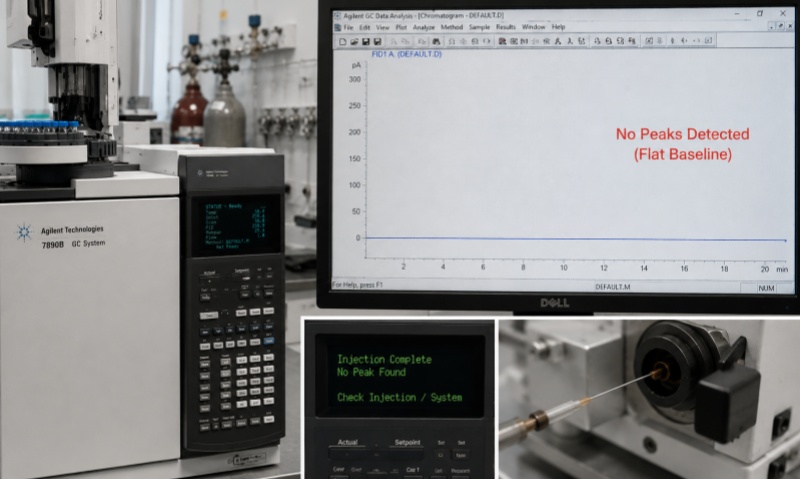
Gas chromatography-mass spectrometry (GC-MS) is widely used in environmental analysis, pharmaceutical research, food safety testing, petrochemical analysis, and life science applications. The performance of a GC-MS system depends not only on the gas chromatograph and separation column but also on the condition of the mass spectrometer ion source and ion transfer components. During continuous operation, contaminants from samples, column bleed, and inlet residues gradually accumulate on the ion source and pre-rod surfaces, resulting in reduced sensitivity, increased background noise, unstable tuning parameters, and poor quantitative accuracy. Regular cleaning of these components is therefore a critical part of preventive maintenance for GC-MS instruments.
The ion source is the area where molecules from the GC column are ionized before entering the mass analyzer. Since all compounds eluting from the GC column pass through the ion source, even small amounts of non-volatile substances can accumulate over time.
Common contamination sources include:
Samples such as biological extracts, food samples, soil extracts, and petroleum products often contain high-boiling compounds, lipids, salts, and other matrix components. These substances can deposit on ion source surfaces during electron ionization or chemical ionization processes.
Long-term operation at high temperatures can cause stationary phase degradation and column bleeding. These residues enter the mass spectrometer and form deposits on ion source electrodes and ion transfer components.
Dirty injection liners, septum fragments, sample carryover, and improper injection conditions can introduce additional contaminants into the MS system.
Laboratories performing hundreds or thousands of injections per month may experience faster contamination buildup and require more frequent cleaning.
Typical symptoms of a contaminated ion source include:
Reduced analyte response;
Lower internal standard intensity;
Increased background ions;
Poor peak shape;
Higher electron multiplier voltage requirements;
Unstable tuning results.
Before cleaning the ion source and pre-rod, proper preparation is essential to prevent damage to sensitive components.
The GC-MS system must be safely stopped, and the ion source temperature should be allowed to cool before maintenance. Depending on the instrument model, the vacuum system may need to be vented according to the manufacturer’s procedure.
Never open the MS chamber while the system is under vacuum.
Recommended cleaning materials include:
| Tool / Material | Purpose |
|---|---|
| Powder-free nitrile gloves | Prevent fingerprints and oil contamination |
| Lint-free wipes | Surface cleaning |
| High-purity alumina powder | Removing carbon deposits |
| Methanol | Removing organic residues |
| Acetone | Removing oily contaminants |
| Ultrasonic cleaner | Deep cleaning of metal parts |
| High-purity nitrogen | Drying cleaned components |
All cleaned parts should be handled with gloves to avoid recontamination.
After venting the system, carefully remove the ion source assembly. Depending on the GC-MS design, the assembly may include:
Ion source body;
Filament;
Repeller electrode;
Lens stack;
Extractor or drawout plate;
Pre-rod or ion transfer components.
During disassembly, record the position and orientation of each component to ensure correct reinstallation.
For light contamination, wipe the metal surfaces gently with lint-free wipes soaked with high-purity methanol.
For heavier carbonized deposits, alumina powder can be used for polishing.
Important cleaning areas include:
Ion source chamber surfaces;
Repeller electrode;
Lens openings;
Extractor plate;
Pre-rod entrance area.
Avoid excessive polishing because aggressive abrasion may alter the geometry of the components and affect ion transmission efficiency.
After mechanical cleaning, metal components can be placed in an ultrasonic cleaner.
A typical cleaning sequence is:
Step 1: Water Cleaning
Use ultrapure water to remove inorganic residues.
Step 2: Organic Solvent Cleaning
Use acetone or similar solvents to dissolve oily contamination.
Step 3: Final Methanol Cleaning
Methanol removes remaining organic compounds and helps prepare the surface for vacuum operation.
After cleaning, dry all components thoroughly with high-purity nitrogen.
The pre-rod is located between the ion source and the mass analyzer. It plays an important role in guiding ions into the analyzer. Contamination on the pre-rod surface can reduce ion transmission efficiency and cause sensitivity loss.
Before cleaning, inspect the pre-rod for:
Black carbon deposits;
Brown or yellow residue;
Sample-derived contamination;
Surface discoloration.
For minor contamination:
Apply methanol to a lint-free swab;
Gently wipe the pre-rod surface;
Remove visible residue without scratching the surface.
For severe contamination:
Use alumina powder carefully for polishing;
Perform solvent cleaning;
Use ultrasonic cleaning if allowed by the instrument design.
After cleaning, ensure that no abrasive particles remain on the component. Residual particles may affect vacuum stability and instrument performance.
After cleaning, reinstall all components carefully.
Key points include:
Confirm correct installation direction;
Check ceramic insulators for cracks;
Verify filament positioning;
Inspect seals and O-rings;
Avoid touching cleaned metal surfaces.
After the vacuum system reaches normal operating pressure, perform:
Vacuum leak inspection;
Instrument tuning;
Sensitivity verification;
Standard sample testing.
If tuning fails after cleaning, possible causes include incorrect assembly, remaining contamination, or vacuum leakage.
The cleaning interval depends on sample type, injection volume, and instrument workload.
| Application | Recommended Cleaning Frequency |
|---|---|
| Routine VOC analysis | Every 3–6 months |
| Environmental samples | Every 1–3 months |
| Food and biological samples | Several weeks to several months |
| High-throughput laboratories | Based on sensitivity changes |
For laboratories analyzing complex matrices, contamination may occur more rapidly. Some modern GC-MS systems provide self-cleaning ion source technologies to reduce manual maintenance frequency, but regular inspection remains important for reliable operation.
Cleaning the GC-MS ion source and pre-rod is one of the most important maintenance procedures for maintaining instrument performance. Proper cleaning can restore sensitivity, reduce background interference, improve quantitative accuracy, and extend the service life of the mass spectrometer.
A professional maintenance program should combine routine inspection, timely cleaning, correct operating procedures, and regular performance verification. By keeping the ion source and ion transfer components clean, laboratories can achieve more stable analytical results and maximize the reliability of their GC-MS systems.