
Consultation Hotline
+1 (302) 618-8777
+1 (302) 618-8777
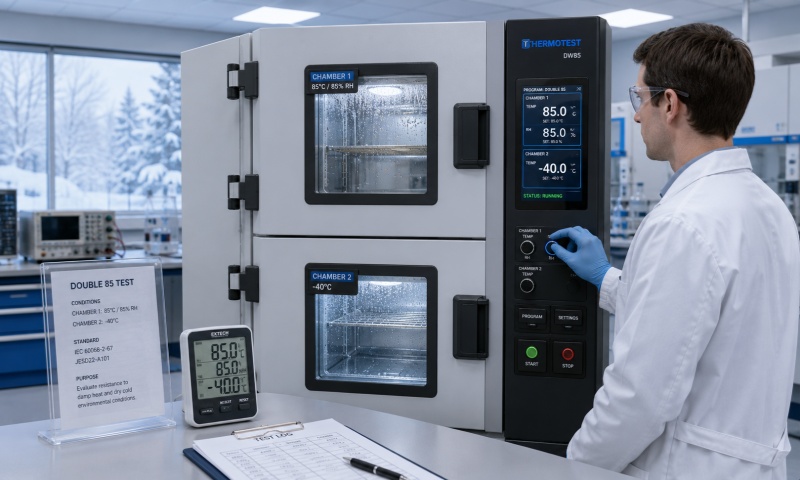
Dual 85 temperature and humidity test chambers (85°C/85%RH test chambers) are widely used in reliability testing for electronic components, semiconductor devices, automotive parts, materials, and industrial products. These chambers are designed to simulate high-temperature and high-humidity environments for long-term durability evaluation. However, during winter operation, especially in cold environments below 0°C, improper use and maintenance can significantly affect equipment performance and shorten service life. Low ambient temperatures may impact the refrigeration system, humidification system, sensors, and electrical components. Therefore, special attention should be paid to winter maintenance and operation.
The installation environment has a major influence on the performance of a dual 85 test chamber. When the surrounding temperature falls below 0°C, several risks may occur. The refrigeration system may experience abnormal startup conditions because lubricating oil viscosity increases at low temperatures, making compressor operation more difficult. In severe cases, the compressor may suffer from overload, increased starting current, or mechanical damage.
In addition, water remaining inside humidification pipes and drainage lines may freeze, causing blockages or cracks. Therefore, the test chamber should be installed in a temperature-controlled laboratory whenever possible, and direct exposure to cold environments should be avoided.
The refrigeration system is one of the most important parts of the dual 85 test chamber. Low temperatures can affect compressor efficiency, refrigerant circulation, and oil return performance.
Before starting the equipment after a long shutdown period in winter, it is recommended to allow the chamber to stand for several hours at room temperature. This allows the compressor oil and internal refrigerant pressure to stabilize.
Regular inspection should include:
Checking compressor operating noise and vibration;
Monitoring high and low pressure values;
Cleaning the condenser surface;
Ensuring cooling fans operate normally.
A dirty condenser can increase heat exchange resistance and force the compressor to operate under higher loads, especially during frequent temperature cycling.
The humidification system is highly sensitive to cold conditions. Residual water inside humidification tanks, pipes, and drainage systems may freeze when the ambient temperature drops below zero.
Frozen water can cause:
Cracked water pipes;
Damaged pumps;
Blocked drainage channels;
Incorrect humidity control.
To prevent these problems, the humidification system should be drained completely before long-term shutdown. Water quality should also be controlled because mineral deposits from impure water may accelerate blockage and damage.
Using purified water or distilled water according to manufacturer requirements can effectively reduce scale formation and improve humidification stability.
Accurate temperature and humidity control depends on reliable sensors. Winter temperature fluctuations may cause sensor response deviations, especially when equipment frequently switches between standby and operating conditions.
Maintenance personnel should regularly verify sensor accuracy using calibrated instruments. If temperature readings differ significantly from actual conditions, sensor calibration or replacement may be required.
Humidity sensors should also be kept clean because condensation, dust, or contamination can reduce measurement accuracy and cause unstable control.
The sealing performance of the chamber door directly affects temperature stability. During winter, rubber door gaskets may become harder due to low temperatures, reducing sealing effectiveness.
Poor sealing can lead to:
Heat loss;
Longer heating time;
Increased energy consumption;
Unstable humidity conditions.
Regularly inspect door gaskets for cracks, deformation, or aging. Cleaning and applying suitable maintenance products can help extend gasket service life.
A preventive maintenance program is essential for reliable winter operation. Before the cold season begins, laboratories should inspect the refrigeration system, humidification system, electrical connections, sensors, and drainage components.
Recommended maintenance actions include:
Cleaning condenser surfaces regularly;
Checking compressor operating conditions;
Removing residual water before shutdown;
Inspecting pipes and connectors for leakage;
Recording temperature and humidity performance data.
Dual 85 temperature and humidity test chambers require careful winter management, especially when operating in environments close to or below 0°C. Low temperatures can affect compressor performance, humidity control, and system reliability. Through proper installation, regular inspection, effective drainage management, and preventive maintenance, laboratories can reduce equipment failures and extend the service life of test chambers. A scientific maintenance strategy ensures stable operation and provides accurate, reliable environmental testing results throughout the year.