
Consultation Hotline
+1 (302) 618-8777
+1 (302) 618-8777
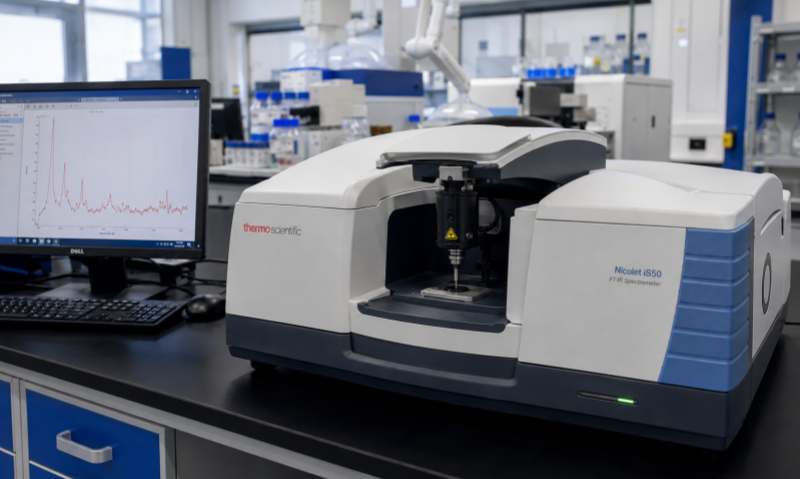
X-ray fluorescence (XRF) analysis is a powerful non-destructive analytical technique widely used in geology, metallurgy, environmental testing, cement production, electronics, and material science. It is mainly used to determine the elemental composition and concentration of solid, powder, liquid, and thin-film samples. The fundamental principle of XRF analysis is based on the characteristic X-ray emission produced when atoms are excited by high-energy X-rays.
Every element has a unique atomic structure consisting of different electron energy levels. When a sample is irradiated with primary X-rays generated by an X-ray tube, the inner-shell electrons of atoms may absorb sufficient energy and become ejected from their original positions. This process creates vacancies in the inner electron shells.
To restore a stable atomic state, electrons from higher energy levels move into the vacancies. During this transition, the difference in energy between the two electron shells is released in the form of secondary X-ray photons, which are called characteristic fluorescent X-rays.
Because each element has a specific electron energy structure, the emitted fluorescent X-ray energy is unique for each element. By measuring the energy or wavelength of these X-rays, the elements present in the sample can be identified. By measuring the intensity of characteristic X-rays, the concentration of each element can be calculated.
The energy of characteristic X-rays follows the relationship:
E = hν = hc/λ
Where:
E = energy of the X-ray photon
h = Planck’s constant
ν = frequency of the X-ray radiation
c = speed of light
λ = wavelength of the X-ray radiation
This formula shows that higher-energy X-rays have shorter wavelengths. Since different elements produce different characteristic energies, XRF instruments can identify elements by detecting their specific X-ray signals.
The intensity of fluorescent X-rays is related to the concentration of the element in the sample. A simplified relationship can be expressed as:
I = K × C × A
Where:
I = measured fluorescent X-ray intensity
K = instrument sensitivity coefficient
C = concentration of the target element
A = absorption and enhancement correction factor
In practical XRF analysis, the relationship is more complex because the emitted X-rays may be absorbed by other elements in the sample or enhanced by secondary excitation effects. Therefore, correction methods such as the fundamental parameter (FP) method or empirical calibration are commonly used.
Several factors influence XRF analytical results, including sample preparation, matrix effects, X-ray tube voltage and current, detector performance, and measurement time. A uniform and representative sample surface is essential for accurate analysis. Proper calibration using certified reference materials can significantly improve quantitative accuracy.
X-ray fluorescence analysis is based on the interaction between primary X-rays and atomic electrons. By analyzing the characteristic fluorescent X-rays emitted from elements, XRF instruments can achieve rapid and non-destructive elemental analysis. The basic equations describing X-ray energy and fluorescence intensity provide the theoretical foundation for qualitative identification and quantitative measurement. With advantages such as minimal sample preparation, high speed, and multi-element capability, XRF has become an important analytical technology in modern laboratories and industrial applications.