
Consultation Hotline
+1 (302) 618-8777
+1 (302) 618-8777
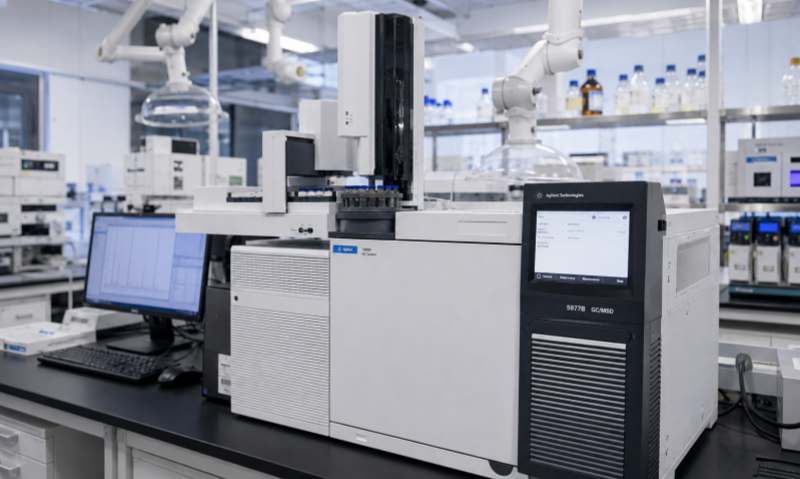
Gas chromatography-mass spectrometry (GC-MS) is a widely used analytical instrument in environmental analysis, pharmaceuticals, food safety, chemical research, and many other fields. Automatic tuning is a critical procedure that optimizes mass spectrometer parameters, including ion source conditions, lens voltages, and detector settings, to ensure accurate mass calibration and stable sensitivity. When automatic tuning fails or produces abnormal results, instrument performance may decline significantly. The following are three common causes of abnormal GC-MS automatic tuning and their corresponding solutions.
The ion source is one of the most important components affecting GC-MS tuning performance. During long-term operation, sample residues, high-boiling compounds, and column bleeding products may accumulate on the ion source components, such as the ion chamber, filaments, and lenses. These contaminants can reduce electron ionization efficiency and cause unstable ion signals.
Typical symptoms include low abundance of tuning ions, abnormal isotope ratios, poor peak shape, or failure to meet tuning criteria. To solve this problem, the ion source should be cleaned regularly according to the manufacturer’s maintenance procedures. The operator should also inspect the filament condition, replace damaged filaments when necessary, and ensure that the ion source temperature is properly set to improve ion transmission efficiency.
A stable high-vacuum environment is essential for GC-MS operation. If the vacuum system cannot maintain the required pressure level, automatic tuning may fail because ions cannot travel efficiently through the mass analyzer.
Common causes include air leakage, exhausted pump oil, contaminated vacuum lines, loose connections, or malfunctioning vacuum pumps. When vacuum performance decreases, the instrument may show unstable ion intensity, increased background noise, or delayed pump-down time.
To troubleshoot vacuum-related problems, operators should check vacuum pressure readings, inspect all seals and connections, and perform leak testing when necessary. Maintenance of mechanical pumps, replacement of pump oil, and cleaning of vacuum components can help restore proper vacuum conditions.
Automatic tuning depends on correct instrument settings and calibration conditions. Incorrect mass calibration, improper tuning file selection, unstable gas flow, or inappropriate ion source parameters can lead to abnormal tuning results.
For example, if the calibration compound supply is insufficient or the reference gas flow is unstable, the system may not obtain accurate reference ion signals. Additionally, incorrect detector voltage or lens voltage settings may affect ion transmission and tuning accuracy.
The solution is to verify calibration compound levels, check gas supply stability, confirm tuning parameters, and reload the correct tuning method. Regular calibration and performance verification should also be performed to maintain reliable instrument operation.
Abnormal GC-MS automatic tuning is usually caused by ion source contamination, vacuum system problems, or incorrect operating parameters. By systematically inspecting these three areas, technicians can quickly identify the cause and restore instrument performance. Regular maintenance, proper operating procedures, and timely troubleshooting are essential for ensuring stable GC-MS sensitivity, accuracy, and long-term reliability.