
Consultation Hotline
+1 (302) 618-8777
+1 (302) 618-8777
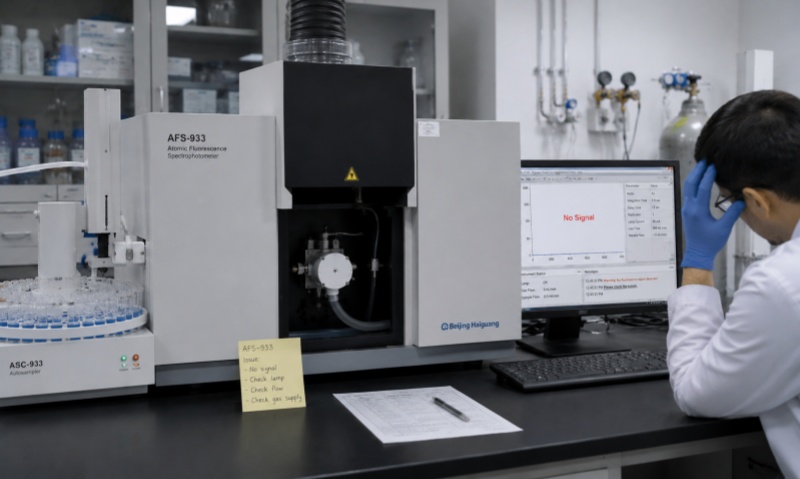
Flame Atomic Absorption Spectroscopy (FAAS) is a widely used analytical technique for the quantitative determination of metal elements in environmental, pharmaceutical, food, and industrial samples. It is based on the absorption of characteristic radiation by free atoms generated in a flame. Although FAAS is relatively robust and cost-effective, its analytical accuracy is strongly influenced by instrumental conditions and various chemical, physical, and spectral interferences. Optimizing operating parameters and effectively eliminating interference are essential for achieving reliable results.
To obtain high sensitivity and stable signals, several key operating parameters must be carefully optimized, including flame composition, burner height, lamp current, and spectral bandwidth.
The flame is the atomization medium in FAAS, and its temperature and chemical environment significantly affect atom formation efficiency.
Common flame systems include:
Air–acetylene flame (most widely used, ~2300°C)
Nitrous oxide–acetylene flame (for refractory elements, ~3000°C)
Optimal selection depends on the analyte:
Air–acetylene: Na, K, Ca, Mg, Fe, Zn
N₂O–acetylene: Al, Ti, V, Mo, rare earth elements
Fuel-to-oxidant ratio must be carefully adjusted:
Fuel-rich flame: enhances sensitivity but increases background absorption
Oxidant-rich flame: improves stability but may reduce atomization efficiency
A slightly fuel-rich condition is often preferred for maximum sensitivity.
Burner height determines the optical path through the atom cloud.
Too low: incomplete atomization, weak signal
Too high: increased ionization and scattering, unstable signal
Optimal height is typically determined experimentally by maximizing absorbance for a standard solution. Most instruments provide automatic height scanning to identify the best position.
The HCL provides element-specific radiation. Lamp current influences signal intensity and noise.
Low current: weak emission, poor sensitivity
High current: self-absorption and line broadening
Optimal lamp current is usually within the manufacturer’s recommended range, typically 3–10 mA. A balance between intensity and stability is required.
The monochromator slit width affects resolution and signal-to-noise ratio.
Narrow slit: high resolution, low signal intensity
Wide slit: higher signal but increased background noise
Typical FAAS slit widths range from 0.2 to 1.0 nm depending on the element.
FAAS measurements are affected by several types of interference that can distort analytical results.
Chemical interference occurs when analytes form stable compounds that are difficult to dissociate in the flame.
Examples:
Ca forming CaSO₄ or Ca₃(PO₄)₂
Al forming refractory oxides
Effects:
Reduced free atom population
Lower absorbance signals
At high flame temperatures, some atoms ionize:
M → M⁺ + e⁻
Ionized species do not contribute to atomic absorption, reducing signal intensity. This is particularly important for alkali and alkaline earth metals such as Na, K, and Ca.
Physical interference arises from differences in sample properties such as viscosity, surface tension, or aspiration rate.
Effects:
Uneven nebulization
Variation in sample transport efficiency
Poor reproducibility
Spectral interference occurs when:
Overlapping absorption lines exist
Flame background emission or scattering affects measurement
Although less common in FAAS than in emission techniques, it can still affect trace analysis.
Chemical modifiers are added to stabilize analytes or release them from interfering compounds.
Examples:
Lanthanum or strontium salts added to suppress phosphate interference in Ca and Mg analysis
EDTA used to complex interfering metals
Releasing agents help convert analytes into free atomic form in the flame.
To reduce ionization interference, an excess of easily ionized elements is added.
Common ionization buffers:
Potassium chloride (KCl)
Cesium chloride (CsCl)
These provide electrons in the flame, shifting equilibrium toward neutral atoms and improving signal stability.
Matrix effects can be minimized by ensuring calibration standards closely match sample composition.
Methods:
Matrix matching: preparing standards in the same chemical environment as samples
Standard addition method: spiking known analyte concentrations directly into samples
The standard addition method is particularly useful for complex matrices such as blood or wastewater.
Proper sample digestion and dilution are essential.
Common techniques:
Acid digestion using nitric acid or aqua regia
Filtration to remove particulates
Dilution to reduce viscosity differences
These steps reduce physical and chemical interferences significantly.
Adjusting flame stoichiometry can reduce interference:
Slightly fuel-rich flame enhances atomization
Stable gas flow improves reproducibility
Proper nebulizer adjustment ensures consistent aerosol formation
Modern FAAS instruments include background correction systems such as:
Deuterium lamp correction
Zeeman effect correction (less common in FAAS)
These methods compensate for non-specific absorption and scattering.
To ensure optimal analytical performance, the following practices are recommended:
Regular calibration using fresh standards
Frequent burner and nebulizer cleaning
Monitoring flame stability before analysis
Using high-purity reagents and gases
Performing routine instrument maintenance
Consistency in operating conditions is critical for reproducible results.
Flame Atomic Absorption Spectroscopy performance depends heavily on optimized instrumental parameters and effective control of interferences. Proper adjustment of flame conditions, burner height, lamp current, and slit width ensures maximum sensitivity and stability. At the same time, chemical modification, ionization suppression, matrix matching, and background correction are essential strategies for eliminating analytical errors. By integrating optimized operating conditions with robust sample preparation and interference control techniques, FAAS can deliver highly accurate and reliable elemental analysis across a wide range of applications.