
Consultation Hotline
+1 (302) 618-8777
+1 (302) 618-8777
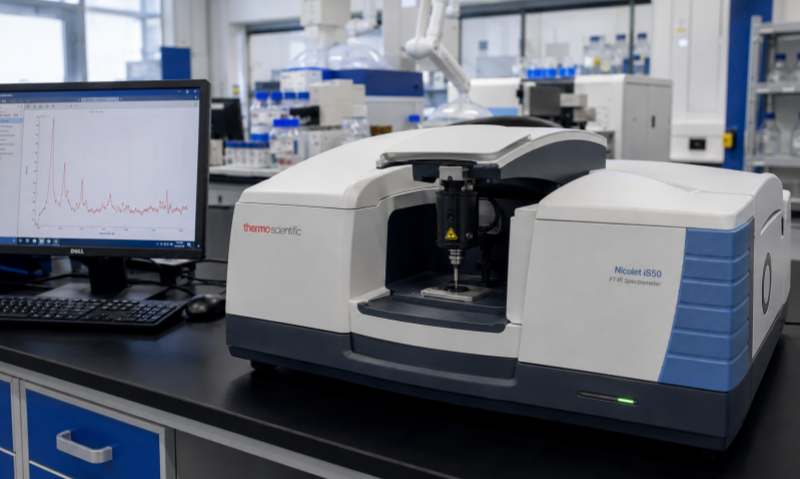
A UV-Visible Spectrophotometer (UV-Vis) is one of the most fundamental analytical instruments in laboratories, widely used for nucleic acid quantification, protein concentration analysis, chemical kinetics, and quality control testing. Because the system consists of multiple optical and electronic components—including light sources, monochromators, cuvettes, detectors, and control electronics—various types of failures may occur during long-term operation. Understanding common fault mechanisms and applying systematic troubleshooting methods is essential for ensuring measurement accuracy and instrument stability.
UV-Vis instruments typically use a deuterium lamp for UV range and a tungsten-halogen lamp for visible range. Lamp degradation or instability is one of the most common causes of instrument performance issues.
Typical symptoms include:
Reduced signal intensity
Increased noise level
Baseline instability
Failure to zero or inconsistent absorbance readings
Main causes:
Lamp aging (deuterium lamps typically last ~1000 hours)
Unstable lamp power supply
Poor electrical contact
Dust or contamination blocking the optical path
Troubleshooting methods:
Replace lamps according to usage hours or intensity decline
Check and stabilize lamp power supply voltage
Clean lamp housing and optical windows
Verify automatic lamp switching function between UV and visible modes
Regular lamp replacement is critical for maintaining signal stability and analytical accuracy.
The optical system includes slits, mirrors, lenses, and the monochromator (grating). It determines wavelength accuracy, resolution, and signal quality.
Common symptoms:
Wavelength drift
Low light intensity
Poor peak shape or noisy spectra
Main causes:
Dust, fingerprints, or vapor contamination on optical components
Misalignment of optical path
Aging or degradation of diffraction grating
Mechanical instability in monochromator drive system
Solutions:
Clean optical windows using lint-free lens tissue and ethanol
Perform regular wavelength calibration using certified standards (e.g., holmium oxide filter)
Inspect monochromator mechanical movement for smooth operation
Avoid operation in high humidity or corrosive environments
Proper optical alignment and cleanliness are essential for accurate spectral measurements.
Detectors in UV-Vis instruments are typically photodiodes or photomultiplier tubes (PMTs), responsible for converting light signals into electrical signals.
Symptoms:
No signal output
Excessive noise
Slow response or unstable readings
Main causes:
Detector aging or damage
High-voltage instability (for PMT systems)
Temperature drift affecting sensitivity
Insufficient light reaching the detector
Solutions:
Check detector power supply and voltage stability
Recalibrate dark current and baseline signal
Replace aged detectors when sensitivity drops significantly
Maintain stable operating temperature (typically 20–25°C)
For PMT detectors, prolonged exposure to high-intensity light should be avoided to prevent sensitivity degradation.
Cuvette-related problems are among the most frequent sources of measurement errors in UV-Vis analysis.
Symptoms:
Poor repeatability
Abnormally high or low absorbance
Irregular spectral curves
Main causes:
Dirty or scratched cuvettes
Mixing different cuvette materials (glass vs quartz)
Presence of bubbles or uneven sample distribution
Solutions:
Clean cuvettes using dilute acid or ethanol solutions
Use quartz cuvettes for UV measurements (<320 nm)
Remove bubbles by gentle tapping or proper pipetting
Ensure identical path length (commonly 1 cm) for all measurements
Even minor cuvette contamination can significantly affect analytical accuracy.
Modern UV-Vis instruments rely on microprocessor-based control systems and software for data acquisition and processing.
Common problems:
Instrument fails to start
Software crashes or freezes
Communication failure between instrument and computer
Data cannot be saved or exported
Main causes:
Faulty USB or communication cables
Driver incompatibility or software corruption
Power supply instability in main board
System configuration errors
Solutions:
Reconnect or replace communication cables
Restart software and computer system
Reinstall or update instrument software and drivers
Check internal power supply modules for stable output
Regular software updates help prevent compatibility and performance issues.
Baseline instability is one of the most frequently encountered performance issues in UV-Vis spectroscopy.
Symptoms:
Gradual baseline shift over time
Random noise fluctuations
Poor reproducibility of absorbance values
Main causes:
Unstable light source
Temperature fluctuations in the laboratory
Contaminated optical surfaces
Electrical interference from nearby equipment
Solutions:
Allow sufficient warm-up time (20–30 minutes) before measurements
Maintain stable room temperature (20–25°C)
Clean cuvettes and optical windows regularly
Avoid placing instrument near high-power electrical devices
A stable baseline is fundamental for reliable quantitative analysis.
A structured maintenance schedule significantly reduces instrument downtime and improves analytical reliability.
Daily:
Check lamp status and baseline stability
Weekly:
Clean cuvettes and sample compartment
Monthly:
Inspect optical path and perform wavelength calibration
Quarterly:
Evaluate lamp intensity and replace if necessary
Annually:
Perform full optical alignment and electrical system inspection
Most UV-Visible spectrophotometer failures originate from predictable sources such as lamp aging, optical contamination, detector drift, cuvette problems, and electronic instability. A systematic troubleshooting approach—starting from the light source, followed by optical system, detector, and electronics—allows efficient fault identification and resolution. Combined with routine preventive maintenance and proper calibration, these practices ensure long-term instrument stability, improved measurement accuracy, and extended service life.