
Consultation Hotline
+1 (302) 618-8777
+1 (302) 618-8777
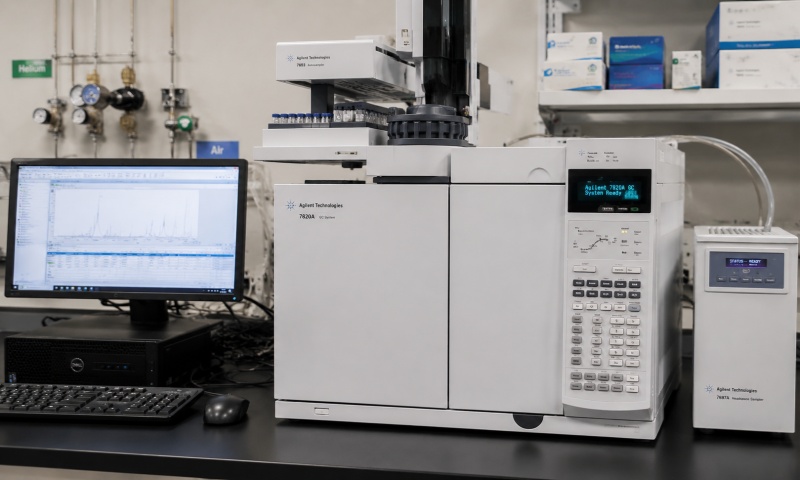
Gas Chromatography (GC) is one of the most widely used analytical techniques in chemical, environmental, pharmaceutical, and food testing laboratories. Due to its high sensitivity and complex system structure, GC instruments are prone to performance drift, baseline instability, leaks, and detector issues over long-term operation. Effective self-diagnosis and systematic maintenance are essential to ensure accuracy, reproducibility, and instrument longevity.
This article provides a structured technical overview of common GC failures, diagnostic strategies, and practical maintenance methods.
A GC system consists of several interconnected modules, including the carrier gas system, injection system, column, oven, and detector. When troubleshooting, it is important to follow a logical order from simple to complex:
Check carrier gas supply and pressure stability
Inspect inlet system condition
Evaluate column performance
Assess detector response
Verify data acquisition system
This hierarchy helps isolate the root cause efficiently without unnecessary disassembly.
Carrier gas instability is one of the most common sources of GC failure. Symptoms include fluctuating baseline, poor reproducibility, and abnormal retention times.
Gas cylinder depletion or low pressure
Contaminated gas supply
Leaks in tubing or fittings
Failure of pressure regulators
Check cylinder pressure gauge
Perform leak test using electronic leak detector or soap solution
Monitor baseline stability at constant temperature
Inspect septa and ferrules for wear
Replace gas cylinders when pressure is low
Tighten or replace leaking fittings
Install high-purity gas filters and moisture traps
Regularly replace inlet septa and ferrules
High-purity carrier gas (99.999%) is essential to prevent column degradation and detector contamination.
The injection port is a high-stress area prone to contamination, septum bleed, and sample discrimination issues.
Peak tailing or broadening
Poor reproducibility
Ghost peaks or carryover
Reduced sensitivity
Worn septum
Dirty liner
Incorrect injection technique
Septum particles entering inlet
Replace septum regularly (recommended every 50–100 injections in high-use labs)
Clean or replace inlet liner and wool
Check syringe integrity and replace if bent or leaking
Optimize injection temperature and split ratio
Proper inlet maintenance significantly improves peak shape and quantitative accuracy.
The GC column is the most sensitive and expensive component of the system. Many performance problems originate from column contamination or degradation.
Increased column backpressure
Poor resolution or peak separation
Peak tailing
Baseline drift or noise
Column contamination by non-volatile residues
Oxygen or moisture exposure
Thermal degradation of stationary phase
Improper conditioning
Trim 10–30 cm of the column inlet regularly
Bake column at high temperature (within manufacturer limits)
Ensure oxygen-free carrier gas environment
Replace column if efficiency is permanently reduced
Column conditioning after installation is critical for stable performance.
Different detectors (FID, TCD, ECD, MS) exhibit different failure modes.
Flame instability
Low sensitivity
No signal output
Causes include hydrogen/air imbalance, clogged jet, or dirty collector electrode.
Maintenance:
Clean jet with solvent or replace if clogged
Adjust gas flow ratios (H₂/air/make-up gas)
Ensure stable ignition system
Baseline drift
Low response
Maintenance:
Check filament condition
Ensure reference gas purity
Avoid contamination of detector cell
High noise
Sensitivity loss
Maintenance:
Avoid contamination with halogenated compounds
Bake detector under controlled conditions
Vacuum instability
High background noise
Maintenance:
Clean ion source regularly
Replace vacuum pump oil or maintain turbo pump
Check for air leaks in interface
The oven ensures stable chromatographic separation. Temperature instability directly affects retention time and resolution.
Shifting retention times
Poor reproducibility
Baseline instability during temperature ramps
Faulty temperature sensor
Heating element degradation
Fan malfunction
Calibrate temperature sensors regularly
Check oven fan operation
Inspect heating coils for continuity
Modern GC systems rely heavily on electronic control and data processing systems.
No signal acquisition
Software freezing
Incorrect integration results
Restart acquisition software
Check communication cables (USB/Ethernet)
Reinstall drivers or firmware updates
Verify detector signal output connections
Preventive maintenance is more effective than reactive repair. A structured schedule should include:
Daily:
Check gas pressures
Monitor baseline stability
Weekly:
Inspect inlet septa
Verify leak-free operation
Monthly:
Replace inlet liners
Clean detector components
Quarterly:
Perform full system leak check
Trim or replace column if necessary
Annually:
Service pump systems (for GC-MS)
Calibrate detectors and temperature systems
GC instrument reliability depends on systematic troubleshooting and disciplined maintenance. Most failures originate from gas supply issues, inlet contamination, column degradation, or detector instability. By following a structured diagnostic workflow—from gas system to data system—users can quickly identify problems and restore instrument performance. Regular preventive maintenance not only reduces downtime but also extends instrument lifespan and ensures high-quality analytical results.