
Consultation Hotline
+1 (302) 618-8777
+1 (302) 618-8777
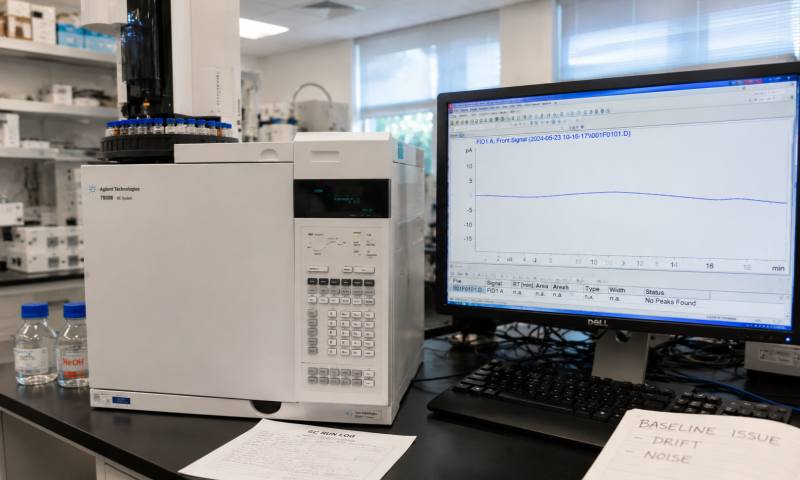
In high-performance liquid chromatography (HPLC), abnormal system behavior such as high column backpressure, unstable pressure profiles, and peak splitting are common operational issues that significantly degrade analytical performance. These problems can arise from column blockage, mobile phase contamination, instrument malfunction, or improper method setup. This article provides a systematic troubleshooting guide focused on Agilent Technologies liquid chromatography systems, covering root causes, diagnostic strategies, and practical corrective actions.
HPLC is widely used in pharmaceutical, environmental, and biochemical analysis due to its high resolution and reproducibility. However, even minor system irregularities can lead to significant chromatographic distortion. Three frequently encountered symptoms include:
Abnormally high column pressure
Unstable or fluctuating system pressure
Peak splitting or peak distortion
These issues often occur simultaneously and may share overlapping root causes. A structured diagnostic approach is essential for efficient resolution.
(1) Column blockage or contamination
Particulate matter from samples or mobile phases can accumulate at the column inlet frit, increasing resistance.
(2) Mobile phase contamination
Improper filtration or microbial growth in aqueous phases can introduce particulates.
(3) Guard column saturation
A saturated guard column often becomes the first restriction point.
(4) Pre-column or inline filter clogging
Filters designed to protect the column can become blocked over time.
(5) Viscosity mismatch
Using high-viscosity solvents (e.g., high organic content or low temperature) increases backpressure.
Remove the column and measure system pressure:
If pressure drops significantly → column issue
If pressure remains high → instrument issue
Bypass guard column and inline filter for isolation
Flush system with strong solvent (e.g., 100% acetonitrile or water depending on compatibility)
Reverse-flush the column (if manufacturer allows)
Replace or clean guard column
Replace inlet frit if accessible
Use 0.22 µm filtration for all solvents and samples
Implement periodic column washing protocols
Maintain mobile phase degassing to prevent particulate formation
(1) Pump check valve malfunction
Contaminated or worn check valves cause inconsistent flow delivery.
(2) Air bubbles in pump or tubing
Poor degassing or leaks introduce compressible gas, causing pulsation.
(3) Damaged pump seals
Seal wear leads to inconsistent solvent delivery.
(4) Blocked solvent inlet filters
Restriction causes intermittent flow starvation.
(5) Degasser failure
Inefficient degassing leads to bubble formation.
Observe pressure trace in real time:
Sinusoidal fluctuation → pump-related
Random spikes → air bubbles or blockage
Purge each pump channel individually
Inspect solvent lines for visible bubbles
Test each solvent reservoir independently
Clean or replace pump check valves
Replace pump seals regularly (preventive maintenance cycle recommended every 6–12 months depending on usage)
Fully purge system before analysis
Degas solvents using vacuum degassing or helium sparging
Replace solvent inlet filters periodically
Inspect for microleaks at fittings and ferrules
Peak splitting is often one of the most diagnostically challenging issues, as it may originate from both instrument and column-related factors.
(1) Column void formation
Physical voids at the column inlet cause partial analyte separation pathways.
(2) Column contamination or degradation
Strongly retained compounds can alter stationary phase uniformity.
(3) Incompatible mobile phase pH or composition
Silica-based columns are sensitive to extreme pH conditions.
(1) Injector problems
Poor injection technique
Partially blocked injection needle or seat
(2) Sample solvent mismatch
Injecting a strong solvent into a weak mobile phase leads to distorted band focusing.
(3) Extra-column effects
Excess dead volume in tubing or fittings broadens peaks.
Inject standard compound to isolate sample-related issues
Replace column temporarily with a known-good column
Reduce injection volume to test overloading effects
Check injector reproducibility
Replace damaged column if voiding is confirmed
Optimize sample solvent strength (match or weaker than mobile phase)
Reduce injection volume or concentration
Minimize tubing length and internal diameter
Replace injector rotor seal or needle seat if worn
Perform column conditioning with appropriate solvent gradients
A systematic approach is recommended:
Check pressure baseline without column
Isolate column vs instrument issues
Inspect pump performance and degassing system
Test injector and sample loop integrity
Evaluate column health and history
Analyze mobile phase quality and preparation protocol
This stepwise method significantly reduces diagnostic time and prevents unnecessary component replacement.
To minimize recurrence of these issues:
Always filter and degas mobile phases
Use high-quality HPLC-grade solvents
Replace pump seals and check valves regularly
Maintain a log of column usage and pressure history
Store columns properly with appropriate solvent
Avoid abrupt changes in mobile phase composition
Use guard columns for complex sample matrices
Periodically flush system with strong solvents
Preventive maintenance is often more cost-effective than reactive repairs, especially in high-throughput laboratories.
High pressure, unstable pressure, and peak splitting in HPLC systems are interrelated symptoms that often originate from a combination of column aging, pump instability, and mobile phase contamination. In Agilent Technologies liquid chromatography systems, systematic troubleshooting—beginning with pressure isolation and followed by component-level inspection—provides the most efficient resolution pathway.
By integrating proper sample preparation, routine maintenance, and careful method optimization, laboratories can significantly improve chromatographic stability, extend column lifetime, and ensure high analytical reproducibility.