
Consultation Hotline
+1 (302) 618-8777
+1 (302) 618-8777
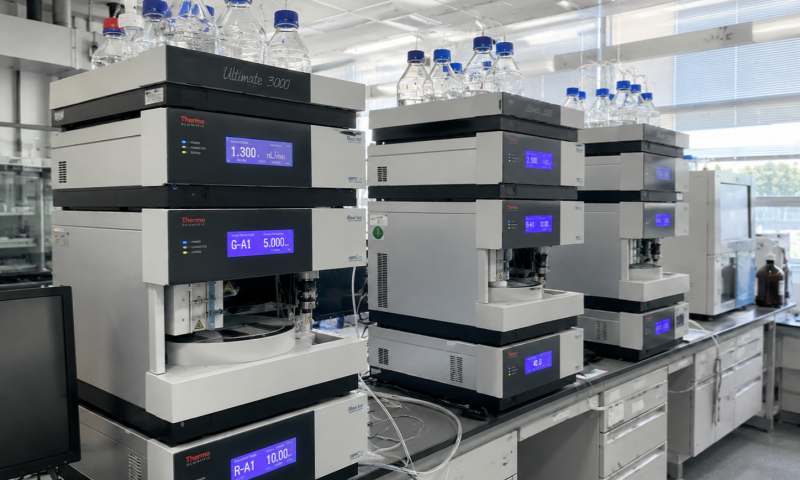
In High Performance Liquid Chromatography (HPLC), stable mobile phase (MP) delivery is essential for maintaining constant flow rate, pressure stability, and reproducible chromatographic performance. Inadequate or interrupted MP supply can lead to pressure fluctuations, baseline drift, poor peak shape, or even system shutdown. This article systematically analyzes the major causes of MP delivery failure from key LC modules, including the pump (PMP), degasser (DG), mobile phase system (MP), fluidic lines (FL), injector (INJ), and column (COL).
The pump (PMP) is the core driving unit responsible for delivering mobile phase at a constant flow rate. Any malfunction directly affects system stability.
The inlet and outlet check valves ensure unidirectional solvent flow. When contaminated by particulates or salt crystals, they may:
Stick or fail to seal properly
Cause backflow of solvent
Reduce suction efficiency
Typical symptoms include irregular pressure pulses and reduced flow consistency.
Pump seals are subject to long-term high-pressure friction. Seal damage leads to:
Internal leakage
Loss of pump efficiency
Inability to maintain stable pressure
This is especially common in high-pressure operation (>300 bar) or with aggressive solvents.
When air enters the pump head, cavitation occurs, resulting in:
Compressible flow behavior
Pressure instability (sawtooth pattern)
Intermittent flow interruption
The degasser (DG) removes dissolved gases from mobile phases to prevent bubble formation in the LC system.
Aged or contaminated vacuum membrane DG systems may fail to remove dissolved gases effectively.
Residual dissolved gases can form microbubbles under pressure changes, leading to:
Flow instability
Baseline noise increase
Pump pulsation
Air accumulation in low-pressure lines disrupts continuous solvent suction into the pump.
The mobile phase itself is a major source of delivery problems.
If MP is not filtered through 0.22 µm or 0.45 µm membranes, particulates may:
Block inlet frits
Damage check valves
Increase system backpressure
In gradient LC systems, poor mixing can cause:
Local viscosity changes
Flow resistance instability
Pressure oscillation
Long-term storage of aqueous MP can lead to bacterial or algal growth, causing:
Tubing blockage
Filter fouling
Gradual flow reduction
Deposits or precipitated salts inside stainless steel or PEEK tubing increase flow resistance.
Improperly seated fittings (ferrules) may:
Introduce air leaks
Create pressure instability
Trap bubbles in dead volumes
Excessively long or narrow ID tubing increases hydraulic resistance, overloading the pump.
Particulate-laden samples may partially clog the injection pathway, restricting solvent flow.
A damaged rotor seal can cause:
Flow path leakage
Incomplete switching
Temporary flow interruption
Although the column is primarily responsible for separation, it significantly affects system flow behavior.
Accumulated particulates at the column inlet increase backpressure, reducing effective flow delivery.
Strongly retained compounds can gradually restrict internal flow channels.
Degradation of stationary phase increases hydraulic resistance over time.
Lower temperature increases solvent viscosity, resulting in:
Higher backpressure
Reduced flow rate efficiency
Increased pump load
Poor gradient mixing can introduce pressure ripple and unstable flow profiles.
Even micro-leaks disrupt suction efficiency at the pump inlet, leading to flow starvation.
A systematic troubleshooting workflow is recommended:
Check mobile phase quality (MP) and filtration status
Verify degasser (DG) operation and bubble presence
Isolate pump (PMP) by removing the column
Inspect fluidic lines (FL) for blockage or leakage
Test injector (INJ) performance
Evaluate column (COL) backpressure separately
This approach helps distinguish between system-side and column-side issues efficiently.
To ensure stable mobile phase delivery:
Always use HPLC-grade solvents and proper filtration
Replace pump seals and check valves regularly
Maintain degasser performance and vacuum integrity
Prevent microbial growth in aqueous mobile phases
Use in-line filters to protect system components
Avoid long, narrow, or poorly connected tubing
Monitor system pressure trends for early warning signs
Inadequate mobile phase delivery in HPLC systems is typically caused by a combination of mechanical, chemical, and fluidic factors involving the PMP, DG, MP, FL, INJ, and COL modules. A structured diagnostic approach allows rapid identification of the root cause and minimizes instrument downtime. Proper maintenance and high-quality mobile phase preparation are essential for ensuring long-term system stability and analytical reproducibility.