
Consultation Hotline
+1 (302) 618-8777
+1 (302) 618-8777
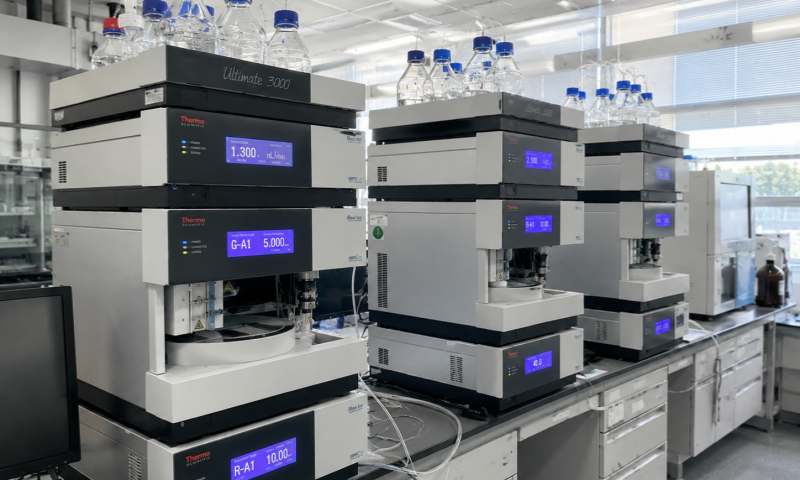
The performance of a gas chromatography (GC) column depends heavily on the uniformity and reproducibility of its stationary phase packing. Different filling techniques influence column efficiency, pressure stability, and analyte resolution. This article systematically discusses three commonly used packing methods for GC columns: pressurized packing, reduced-pressure (vacuum-assisted) packing, and manual packing. Their principles, procedures, advantages, limitations, and application scenarios are analyzed in detail.
In packed gas chromatography columns, the stationary phase is typically supported on an inert solid such as diatomaceous earth or porous polymer particles. Achieving a homogeneous and tightly packed bed is critical to minimize channeling, reduce band broadening, and ensure consistent carrier gas flow.
Depending on laboratory equipment and application requirements, three primary filling strategies are widely used:
Pressurized packing method
Reduced-pressure (vacuum-assisted) packing method
Manual packing method
Each method reflects a balance between efficiency, equipment cost, and packing quality.
The pressurized packing method uses inert gas pressure (usually nitrogen or helium) or mechanical gas pressure to force the stationary phase particles into the column tube. The continuous pressure stream ensures dense and uniform filling.
The column is vertically fixed with the outlet end sealed using a frit or glass wool plug.
The packing material is loaded into a reservoir connected to the column inlet.
Carrier gas pressure (typically 0.2–0.6 MPa) is applied.
The stationary phase is gradually pushed into the column while vibration may be applied to improve settling.
After reaching the desired packing density, pressure is slowly released to avoid backflow or void formation.
High packing density and reproducibility
Reduced void formation and channeling
Suitable for high-performance packed GC columns
Efficient for large-scale or industrial preparation
Requires specialized pressure equipment
Risk of over-compression if pressure is not well controlled
Higher operational complexity compared with manual methods
This method is widely used in analytical and preparative GC columns where high efficiency and reproducibility are required, particularly in petrochemical and environmental analysis.
The reduced-pressure method relies on creating a vacuum at the outlet end of the column, which draws the stationary phase particles into the column under negative pressure. This approach promotes uniform particle distribution driven by airflow rather than mechanical force.
One end of the column is connected to a vacuum system, typically maintaining a pressure of −0.05 to −0.09 MPa.
The packing material is introduced at the inlet side.
The vacuum draws the particles through the column, allowing gradual and even deposition.
The column is gently tapped or vibrated during packing to improve uniformity.
After packing, the system is slowly returned to atmospheric pressure.
Gentle packing process reduces particle damage
Improved uniformity in long columns
Lower risk of over-compaction compared to pressurized methods
Suitable for heat-sensitive or fragile stationary phases
Requires stable vacuum system
Slower than pressurized packing
Not ideal for very fine or irregular particles that may clog
This method is commonly used in research laboratories and for specialty GC columns where stationary phase integrity is critical, such as in biochemical or pharmaceutical separations.
The manual packing method relies on mechanical vibration, tapping, or gravity-assisted filling without the use of external pressure or vacuum systems. The stationary phase is gradually introduced into the column while physically compacting it.
The column is fixed vertically with one end loosely plugged with glass wool.
Small portions of stationary phase are introduced step by step.
The column is gently tapped or vibrated to allow settling.
A packing rod may be used to lightly compress the material.
The process continues until the required column length is filled.
Simple and low-cost method
No need for specialized equipment
Easy to perform in basic laboratory settings
Flexible and suitable for small-scale preparation
Lower packing uniformity compared to other methods
Higher risk of channeling and dead volume formation
Time-consuming for long columns
Operator-dependent reproducibility
Manual packing is mainly used for educational purposes, preliminary experiments, or simple GC applications where ultra-high resolution is not required.
| Method | Packing Quality | Equipment Requirement | Speed | Reproducibility | Best Use Case |
|---|---|---|---|---|---|
| Pressurized | Excellent | High | Fast | High | Industrial/analytical GC |
| Reduced-pressure | Very good | Medium | Moderate | High | Research/sensitive phases |
| Manual | Moderate | Low | Slow | Low | Teaching/basic experiments |
From a performance perspective, pressurized packing offers the best overall efficiency and reproducibility, while reduced-pressure packing provides a balance between gentleness and uniformity. Manual packing remains valuable for simplicity and accessibility.
The choice of stationary phase packing method in gas chromatography significantly affects column efficiency, separation performance, and long-term stability. Pressurized packing is preferred for high-performance and industrial applications due to its density and reproducibility. Reduced-pressure packing is ideal for delicate or research-oriented columns where material integrity is critical. Manual packing, while less precise, remains useful for low-cost and educational purposes.
Understanding the strengths and limitations of each method enables analysts and engineers to optimize GC column preparation according to specific experimental requirements.