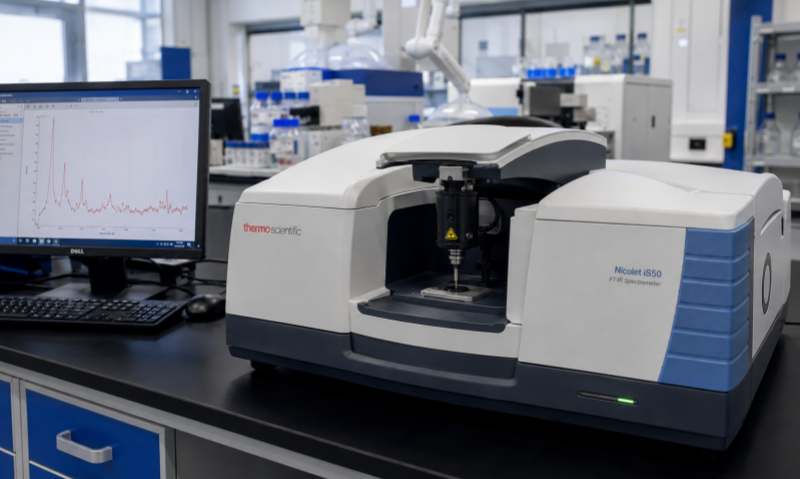
The ultraviolet-visible (UV-Vis) spectrophotometer is a fundamental analytical instrument widely applied in chemical analysis, pharmaceutical testing, environmental monitoring, food safety, and biochemical research. It relies on the selective absorption of ultraviolet and visible light by substances to achieve qualitative identification and quantitative detection of samples. The accuracy of experimental data is directly determined by the optical performance and operating stability of the instrument. Affected by long-term operation, environmental changes, component aging and frequent sample detection, the instrument is prone to wavelength deviation, absorbance error, stray light interference and baseline instability. Regular standardized calibration is essential to ensure detection precision, experimental repeatability and data validity. This article systematically introduces the standard calibration items, detailed operating methods and quality control requirements of UV-Vis spectrophotometers, providing standardized technical references for laboratory daily calibration and performance verification.
Before formal calibration, complete pre-calibration preparation and environmental condition confirmation to eliminate external interference factors. The calibration environment requires a clean, dust-free laboratory with stable temperature and humidity. The ambient temperature shall be controlled within 20℃±5℃, and the relative humidity shall be maintained at 45% to 75%. Excessively high humidity will cause lens and circuit component moisture, while drastic temperature fluctuation will lead to optical system thermal drift. Place the instrument on a stable horizontal workbench, keep away from strong light irradiation, electromagnetic interference and airflow impact. Turn on the instrument power supply and preheat it for 30 minutes to ensure stable operation of the light source, optical path and detector. Prepare national standard calibration solutions including potassium dichromate solution, potassium chloride solution and sodium iodide solution, as well as standard quartz cuvettes, which are required to be clean, scratch-free and dry to avoid affecting calibration results.
Wavelength accuracy calibration is the core item to ensure the correctness of spectral detection, which verifies the deviation between the instrument’s displayed wavelength and the standard characteristic wavelength. The most commonly used standard method adopts potassium dichromate acidic solution and characteristic absorption peaks of rare earth glass for verification. Under the specified wavelength scanning range, test the maximum absorption wavelength of the standard solution. For UV band calibration, scan the standard potassium dichromate solution in the range of 220 nm to 400 nm, record the measured peak wavelength, and compare it with the national standard characteristic wavelength. The allowable wavelength deviation of conventional UV-Vis spectrophotometers is within ±2 nm. Excessive wavelength error will cause serious deviation of sample qualitative analysis and inaccurate quantitative calculation. If the deviation exceeds the standard range, adjust the instrument’s wavelength calibration parameters through the system menu to correct optical path offset and eliminate wavelength drift error.
Absorbance accuracy calibration is a key indicator to judge quantitative detection performance, which aims to verify the accuracy and linearity of the instrument’s absorbance response. Prepare a series of potassium dichromate standard solutions with fixed concentration and sulfuric acid solvent according to national standard specifications. Set the instrument to the specified standard wavelength, take pure solvent as the blank reference for zero adjustment, and sequentially detect the absorbance values of standard solutions with different concentrations. Compare the measured absorbance with the standard theoretical value, calculate the relative error, and control the error within the national allowable range. Meanwhile, complete absorbance linearity calibration by detecting multiple concentration gradients to verify whether the instrument conforms to Lambert-Beer law. Poor absorbance accuracy and linearity will directly lead to inaccurate sample quantitative results, which is the main cause of experimental data deviation in routine detection.
Stray light calibration is an essential calibration item to eliminate detection interference. Stray light refers to abnormal light signals outside the test wavelength band, which is generated by optical component scattering, light source leakage and environmental reflected light, seriously affecting the linear range and detection accuracy of the instrument. The standard calibration method uses high-concentration sodium iodide solution and potassium chloride solution for testing. Detect the absorbance of the standard blocking solution at the specified characteristic wavelength. The higher the absorbance of the blocking solution, the lower the stray light ratio and the better the instrument optical performance. Qualified instruments need to ensure that the stray light value is lower than the industry standard threshold. Regular stray light calibration can effectively avoid baseline noise, high-concentration sample detection distortion and low-sensitivity data failure.
Cuvette matching and baseline flatness calibration cannot be ignored in daily calibration. Quartz cuvettes are prone to light transmission deviation after long-term use and cleaning, so matching calibration must be carried out before batch experiments. Fill the paired cuvettes with pure water, set blank zero adjustment, and detect the absorbance difference of each cuvette at different wavelengths. Cuvettes with excessive difference should be eliminated or marked separately to avoid cross-use. Baseline flatness calibration requires full-band scanning with pure solvent blank to confirm no baseline drift, irregular fluctuation and miscellaneous peak interference, ensuring stable and consistent instrument baseline in the full spectral range.
After completing all calibration items, conduct overall performance verification and calibration record filing. Randomly select standard solutions for repeated testing to verify the repeatability and stability of calibration results. All calibration data, including wavelength deviation, absorbance error, stray light value and calibration time, shall be completely recorded in the laboratory equipment ledger. For unqualified calibration items, troubleshoot faults such as light source aging, optical path offset and lens contamination first, and perform recalibration after maintenance to ensure the instrument meets standard detection requirements.
In conclusion, standardized periodic calibration of UV-Vis spectrophotometer covers wavelength accuracy, absorbance performance, stray light index and baseline stability, which is the fundamental guarantee for reliable experimental data. Scientific calibration operations can effectively eliminate instrument system errors, compensate for component aging and optical drift, and maintain the long-term precision and stability of the instrument. Strictly implementing calibration specifications in daily laboratory work can effectively reduce experimental errors, ensure the authenticity and traceability of detection data, and provide accurate technical support for various analytical and testing work.