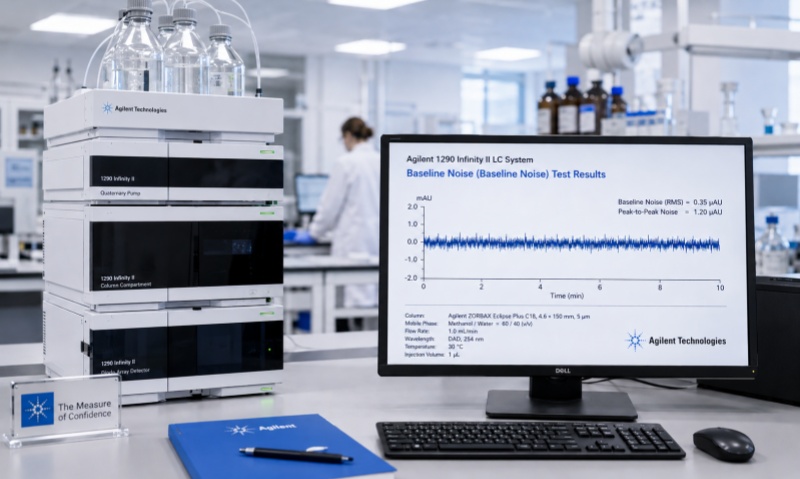
The pump is universally regarded as the heart of Agilent high-performance liquid chromatography (HPLC) systems, responsible for delivering stable, precise, and pulse-free mobile phase flow throughout chromatographic analysis. As the core power component, it maintains consistent system pressure, ensures accurate sample separation, and directly determines the repeatability, resolution, and reliability of experimental data. Agilent HPLC pumps, including binary, quaternary, and Infinity II series models, operate under continuous high-pressure circulation. Long-term exposure to diverse solvents, particulate impurities, and pressure fluctuations makes standardized maintenance essential. Scientific routine upkeep and periodic professional maintenance can effectively minimize baseline noise, pressure fluctuations, and retention time drift, while extending pump service life and reducing instrument downtime and maintenance costs.
Daily preventive maintenance is the most fundamental measure to sustain stable pump operation and avoid common operational faults. Before initiating each HPLC test, operators must conduct a comprehensive pre-run inspection focusing on system pressure, solvent status, and pipeline tightness. First, verify the purity and miscibility of mobile phase solvents. Only HPLC-grade solvents and ultrapure water are permitted, and solvents must be freshly prepared and regularly replaced to prevent microbial growth, particle precipitation, or component degradation that may block pump check valves and pipelines. When switching between different solvents, especially between aqueous and organic solutions, an intermediate miscible solvent must be used for gradual flushing to avoid phase separation and internal pipeline blockage.
Seal wash system maintenance is a critical daily procedure for Agilent HPLC pumps, particularly mandatory for systems using volatile buffers or high-concentration salt solutions. The standard seal wash solution, consisting of 90% ultrapure water and 10% isopropanol, continuously cleans the back of piston seals to prevent salt crystallization and particulate accumulation that cause seal wear and liquid leakage. Operators should check the seal wash liquid level and flow status daily, ensuring smooth circulation and no pipeline blockage. Additionally, observe real-time system pressure baseline; stable pressure fluctuations within ±2 bar indicate normal pump operation, while sudden pressure spikes or drastic fluctuations usually signal internal air bubbles, blocked pipelines, or aging check valves.
In-operation standardized management further guarantees continuous and stable pump performance. During sample testing, operators must avoid over-pressure operation beyond the pump’s rated range and strictly follow programmed flow rate and pressure parameters. Frequent start-stop operations and sudden flow rate changes should be minimized to reduce mechanical wear on piston rods and seals. If air bubbles enter the pump chamber, online purging must be performed timely by opening the purge valve, setting a moderate flow rate, and flushing continuously until pressure stabilizes and no bubble outflow is observed. It is forbidden to run the pump with air inside, as dry operation will severely abrade piston seals and permanently damage the pump head precision structure.
Post-experiment shutdown maintenance effectively eliminates potential long-term hidden dangers. After daily analysis completes, the pump system must be thoroughly flushed according to solvent characteristics. If salt buffers or acidic/alkaline mobile phases are used, the system must be flushed with pure water first to completely remove residual salts and corrosive components, followed by organic solvent flushing to prevent water residue-induced microbial growth and pipeline rusting. For long-term instrument standby, store the pump system in pure methanol or acetonitrile to maintain internal pipeline activity and prevent seal aging and pipeline dry cracking. After flushing, cut off the flow phase supply and power strictly in accordance with the shutdown sequence to avoid sudden pressure loss damaging internal precision components.
Regular periodic professional maintenance is essential to sustain long-term pump accuracy and operational stability. Weekly maintenance focuses on cleaning solvent filters, replacing deteriorated filter membranes, and checking pipeline joints for micro-leakage, which are primary causes of pressure instability. Monthly maintenance includes inspecting piston rod wear, verifying the flexibility of inlet and outlet check valves, and calibrating flow rate accuracy to ensure consistent mobile phase delivery. Quarterly professional maintenance requires replacing vulnerable consumables such as piston seals and rotor seals, which are prone to fatigue wear after long-term high-pressure operation and directly affect pumping precision.
Annual systematic inspection and calibration must be conducted by professional technicians using Agilent Lab Advisor diagnostic software. The inspection covers pump head tightness, motor operating status, pressure sensor accuracy, and internal component wear. Timely replacement of aging pump heads, worn check valve balls, and failed sealing components eliminates latent mechanical failures. Meanwhile, complete maintenance records should be established to track consumable replacement cycles and equipment operating status, forming a standardized and traceable maintenance management system.
In summary, the Agilent HPLC pump’s operational stability relies on standardized full-cycle maintenance covering daily inspection, in-operation monitoring, post-test cleaning, and regular professional upkeep. Strict adherence to maintenance specifications can effectively reduce common faults such as pressure fluctuation, liquid leakage, and flow rate deviation, ensuring high-precision and repeatable chromatographic analysis results. Reasonable maintenance practices not only extend the service life of the HPLC pump but also guarantee the accuracy and credibility of laboratory testing data, providing solid technical support for daily analytical experiments and scientific research.