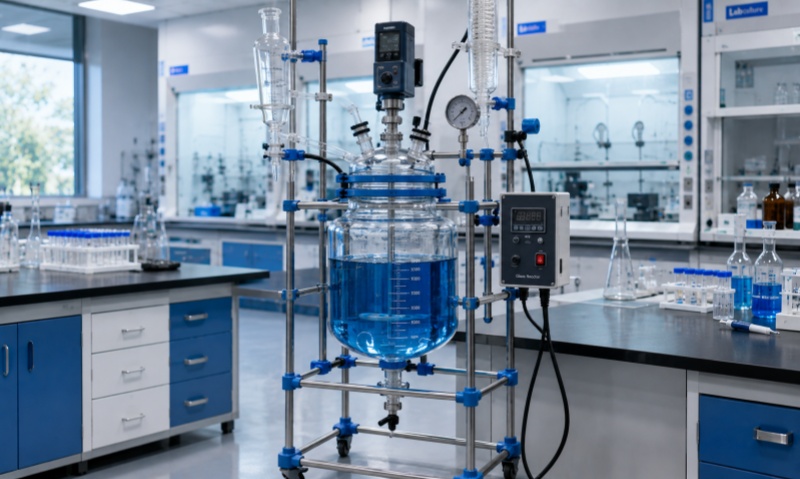
Laboratory reaction kettles are core pressure-bearing and heat-exchange equipment widely used in chemical synthesis, material preparation, pharmaceutical research and other experimental fields. They operate under complex working conditions involving high temperature, high pressure, corrosive media and sealed reactions, so standardized safety maintenance is the key to eliminating equipment failures, preventing safety accidents and ensuring stable experimental operation. Scientific and systematic daily maintenance and regular inspection management can effectively extend the service life of reaction kettles, maintain experimental accuracy, and protect the personal safety of laboratory staff.
Daily routine inspection and maintenance are the foundation of long-term safe operation of reaction kettles, which must be implemented strictly before, during and after each experiment. Before starting the equipment, operators shall first check the overall integrity of the reaction kettle, including the kettle body, sealing cover, flange connections and pipeline interfaces. It is necessary to confirm that there is no crack, deformation, corrosion or leakage on the surface of the kettle body, and the sealing gaskets are complete, elastic and free of aging, damage or dislocation. Then, inspect the supporting systems such as temperature control system, pressure gauge, safety valve and stirring device. The pressure gauge shall display zero accurately in the static state, the safety valve shall be free from blockage and failure, and the stirring motor and transmission parts shall operate flexibly without abnormal noise or jamming. In addition, the cooling and heating circulation pipelines shall be checked for smooth flow and no leakage to avoid medium overflow during operation.
During the operation of the reaction kettle, real-time monitoring and standardized operation maintenance shall be adhered to. Operators shall strictly follow the experimental parameters, and prohibit over-temperature, over-pressure and over-load operation, which are the main causes of reaction kettle burst and leakage accidents. It is necessary to continuously monitor the temperature and pressure changes inside the kettle, ensure the parameters fluctuate within the rated range, and record the operating data truthfully. If abnormal phenomena such as sudden pressure rise, temperature drift, pipeline vibration or medium leakage are found, the heating and stirring system shall be shut down immediately, and the equipment shall be depressurized and cooled down in a standardized manner for troubleshooting. It is forbidden to disassemble or adjust the equipment arbitrarily during operation. Meanwhile, keep the laboratory environment ventilated and clean to prevent flammable, explosive and corrosive gases from accumulating around the reaction kettle.
After the completion of the experiment, thorough cleaning and shutdown maintenance are essential to avoid residual medium corrosion and hidden dangers. First, after the kettle body is completely cooled and depressurized, discharge the residual reaction medium in the kettle and pipelines completely, and clean the inner wall of the kettle, stirring paddles and pipelines with corresponding cleaning solvents according to the characteristics of the medium. Ensure no residual reactants, sediments or scaling exist inside the equipment to prevent long-term corrosion of the kettle body and blockage of pipelines. After cleaning, dry the equipment to avoid moisture-induced rust and mildew. Then, check and tidy up the sealing parts, reset the loose bolts and connectors, and turn off all power and air supply switches. For equipment that is not used for a long time, regular drying treatment and anti-rust maintenance shall be carried out, and the kettle body shall be sealed and stored to prevent dust and moisture intrusion.
Regular professional maintenance and calibration are crucial to ensure the stability and safety of reaction kettles. Laboratories shall formulate a monthly and quarterly maintenance plan. Monthly maintenance focuses on inspecting the wear of stirring bearings, the tightness of transmission belts, the sensitivity of temperature and pressure sensors, and cleaning the dust and oil stains on the equipment surface and electrical control box. Quarterly professional inspection includes checking the corrosion degree of the inner wall of the kettle body, testing the sealing performance of the whole machine, and calibrating pressure gauges, temperature controllers and safety valves to ensure the accuracy of measurement data and the effectiveness of safety protection devices. Worn sealing gaskets and aging pipeline parts shall be replaced regularly in a timely manner. In addition, annual professional safety inspection shall be carried out by special personnel to assess the overall performance of the reaction kettle and eliminate potential equipment failures fundamentally.
Standardized personnel management and emergency maintenance awareness are also indispensable parts of reaction kettle safety maintenance. All operators must receive professional safety training and master the equipment operation specifications, maintenance methods and emergency disposal measures. It is forbidden for untrained personnel to operate the equipment independently. Laboratories shall establish complete equipment maintenance records, truthfully recording daily inspection, cleaning, component replacement and regular calibration conditions, to form a traceable maintenance management system. In case of equipment failure or potential safety hazards, stop using the equipment immediately, post warning signs, and arrange professional maintenance. It is forbidden to operate the equipment with faults to avoid secondary accidents.
In conclusion, the safety maintenance of laboratory reaction kettles is a systematic and long-term work covering daily inspection, standardized operation, post-experiment cleaning and regular professional maintenance. Only by implementing full-cycle maintenance management, strictly abiding by operation and maintenance specifications, and eliminating unsafe hidden dangers in a timely manner, can the safe and stable operation of reaction kettles be guaranteed, effectively prevent laboratory safety accidents, and provide a reliable equipment guarantee for smooth scientific research and experimental work.