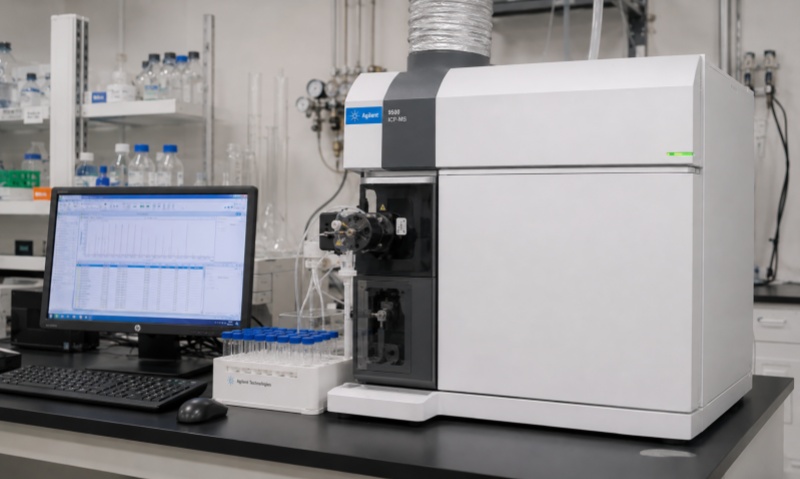
Atomic Fluorescence Spectrometer (AFS) is a highly sensitive analytical instrument widely utilized for the trace detection of heavy metal elements such as arsenic, mercury, selenium, and lead in environmental water, soil, food, and pharmaceutical samples. Compared with other analytical devices, AFS features ultra-low detection limits and extremely high sensitivity to trace impurities. Even micro residual contaminants on sample tubes and sample trays can cause severe baseline elevation, fluorescence signal interference, false positive results and poor test repeatability. In daily laboratory operations, standardized cleaning of sample tubes and sample trays is the most basic and critical maintenance procedure to eliminate cross-contamination and ensure accurate trace element detection. This article systematically elaborates on the contamination risks, standardized cleaning procedures and daily maintenance precautions for AFS sample tubes and sample trays.
Sample tubes are direct containers for holding test solutions, standard solutions and blank reagents, and residual heavy metal ions, acid residues and organic impurities are the main causes of detection deviation. During batch sample testing, unwashed or incompletely cleaned sample tubes will retain trace target elements from the previous sample. These residual impurities will dissolve into the subsequent test solution, resulting in higher detected values than the actual content, seriously affecting the accuracy of quantitative analysis. In addition, long-term unremoved acid corrosion residues and dried sample sediments will adhere to the inner wall of the sample tube, forming stubborn contamination layers that continuously release impurity ions and lead to unstable blank values and fluctuating instrument baseline.
The standardized cleaning process for AFS sample tubes follows the principles of acid soaking, gradient rinsing and dust-free drying to ensure no residual metal ions remain. Firstly, discard the waste liquid in the used sample tubes completely, and preliminarily rinse the inner and outer tube walls with tap water to remove surface floating dirt and suspended sediments. Secondly, soak the sample tubes in dilute nitric acid solution for 2 to 4 hours; dilute nitric acid can effectively dissolve residual heavy metal complexes and neutralize acidic or alkaline sample residues, which is the core step to eliminate trace metal contamination. After soaking, take out the sample tubes and repeatedly rinse them with ultrapure water for more than three times to thoroughly wash away acid liquid and dissolved impurities. Finally, place the cleaned sample tubes in a dust-free drying oven for low-temperature drying or hang them in a clean drying rack for natural air drying, and store them in a sealed dust-free container to prevent secondary pollution.
The sample tray is the carrier for placing sample tubes during automatic sampling, and its cleaning vulnerability is often ignored in routine maintenance. Long-term operation will lead to spilled sample solution, residual acid droplets, dust and crystalline salts accumulating on the surface and gaps of the sample tray. These contaminants may splash into sample tubes during instrument operation or volatilize to interfere with the atomic fluorescence reaction environment, causing unstable test signals and inconsistent blank backgrounds. Especially in batch detection of high-concentration heavy metal samples, tiny residual sediments on the tray will form long-term pollution sources, severely reducing the precision of low-concentration trace sample detection.
The cleaning operation of the AFS sample tray focuses on surface decontamination, gap cleaning and regular deep maintenance. After each batch of detection, power off the instrument and wait for the sampling system to stop running steadily. Wipe the surface of the sample tray gently with a dust-free soft cloth dipped in a small amount of dilute nitric acid to remove residual crystalline salts and sample stains. For tiny gaps and dead corners that are difficult to wipe, use a soft fine brush to clean thoroughly, avoiding the use of hard tools to prevent scratching the tray surface. After acid wiping, clean the entire tray with ultrapure water to eliminate residual acid liquid, and dry it with a clean soft cloth. For long-term accumulated stubborn dirt, conduct regular overall disassembly and deep cleaning every one to two weeks to ensure the sample tray is completely free of contamination.
In daily laboratory management, standardized cleaning and maintenance habits are essential to maintain stable AFS detection performance. It is necessary to implement dedicated use of sample tubes and regular replacement to avoid long-term repeated use causing irreversible wall contamination. Meanwhile, strictly separate clean and contaminated consumables to prevent cross-contact pollution. After all cleaning operations, blank verification tests must be carried out. Only when the blank fluorescence value is stable and within the standard range can the formal sample detection be carried out.
In conclusion, the cleaning quality of sample tubes and sample trays directly determines the accuracy and stability of atomic fluorescence spectrometry detection results. Scientific and standardized cleaning procedures can effectively eliminate trace impurity interference, avoid cross-contamination between samples, and reduce instrument baseline noise and data deviation. Strict daily cleaning and regular deep maintenance are indispensable basic work for AFS laboratory quality control, which can effectively guarantee the reliability of trace heavy metal detection data and extend the service life of instrument auxiliary components.