
Consultation Hotline
+1 (302) 618-8777
+1 (302) 618-8777
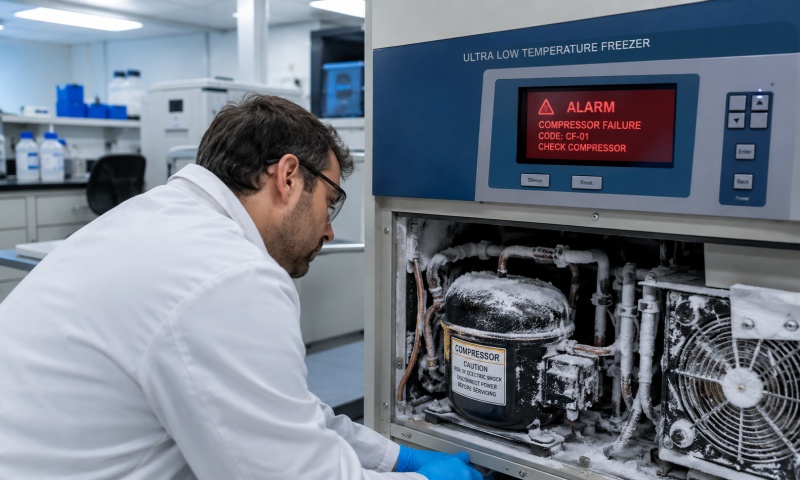
Ultra-low temperature (ULT) freezers are critical laboratory devices used for the long-term storage of biological samples, reagents, vaccines, enzymes, and other temperature-sensitive materials. Operating typically between –40°C and –86°C, these systems rely heavily on a stable refrigeration cycle. At the core of this system is the compressor, which functions as the driving force of cooling performance. When compressor failure occurs, the entire storage system is at risk, potentially leading to irreversible sample loss.
Understanding the causes, symptoms, and troubleshooting methods for compressor failure is essential for laboratory technicians, facility managers, and equipment maintenance engineers.
Compressor failure in ultra-low temperature freezers is usually the result of multiple contributing factors rather than a single issue. One of the most common causes is electrical instability, including voltage fluctuations, damaged relays, or capacitor failure. These issues can prevent the compressor from starting or cause it to shut down unexpectedly.
Mechanical wear is another significant factor. Over time, internal components such as pistons, valves, and bearings experience fatigue due to continuous operation under high pressure and extreme temperature differentials. This can result in reduced efficiency, abnormal noise, or complete mechanical breakdown.
Refrigerant-related issues also play an important role. Refrigerant leakage, insufficient charge, or blockages in the system can force the compressor to work under abnormal load conditions. This often leads to overheating and eventual shutdown.
Environmental conditions are frequently overlooked. Poor ventilation, high ambient temperatures, or dust accumulation around condenser coils can significantly increase compressor strain. In laboratory environments where multiple instruments operate simultaneously, heat buildup can further exacerbate the problem.
Early detection of compressor failure is crucial for preventing sample damage. Common warning signs include:
Freezer temperature rising above set limits
Continuous compressor running without cooling improvement
Repeated high-pressure or low-pressure alarm triggers
Unusual vibration, clicking, or grinding noise
Frequent circuit breaker trips
Compressor not starting at all
Recognizing these symptoms early allows for timely intervention before complete system failure occurs.
When a compressor issue is suspected, a structured diagnostic approach should be followed.
First, verify the electrical supply. Ensure the unit is receiving stable voltage and that circuit breakers, fuses, and power cords are intact. Electrical faults are often the simplest and most overlooked cause of compressor malfunction.
Next, inspect the control system. Modern ULT freezers are equipped with digital controllers that display error codes. These codes should be checked against the manufacturer’s service manual to identify whether the issue relates to pressure imbalance, sensor failure, or compressor overload protection.
Then, evaluate the physical condition of the compressor. Listen for abnormal sounds such as knocking or humming without startup. Check for overheating or visible oil leakage around compressor joints, which may indicate internal failure.
After that, examine the condenser system. Dirty or blocked condenser coils reduce heat dissipation efficiency, causing the compressor to overwork. Cleaning the condenser regularly can often restore normal operation or prevent further damage.
Finally, assess refrigerant status. Low refrigerant levels or leakage require professional servicing. Refrigerant handling should always be performed by certified technicians due to safety and regulatory requirements.
In cases of severe compressor damage, replacement may be necessary. If the compressor shows signs of internal seizure, repeated failure after restart, or insulation breakdown in motor windings, repair is usually not cost-effective.
When replacing a compressor, it is essential to ensure compatibility with the freezer model, refrigerant type, and system pressure requirements. Improper replacement can lead to reduced efficiency or system instability.
Preventing compressor failure is far more effective than repairing it after breakdown. Laboratories should implement a structured maintenance schedule that includes regular condenser cleaning, airflow inspection, and electrical system checks.
Maintaining proper room conditions is also essential. ULT freezers should be installed in well-ventilated environments with stable ambient temperatures. Avoid placing equipment near heat sources or direct sunlight exposure.
Operational discipline is equally important. Minimizing door opening frequency, avoiding overloading warm samples, and ensuring proper sample organization all reduce compressor workload.
Continuous monitoring of temperature logs can help detect gradual performance degradation, allowing proactive servicing before critical failure occurs.
Compressor failure in ultra-low temperature laboratory freezers is a serious issue that can lead to significant sample loss and operational disruption. However, with proper understanding of failure causes, early symptom recognition, and systematic troubleshooting, many problems can be identified and resolved before catastrophic damage occurs.
Routine maintenance, controlled environmental conditions, and proper operational practices are key to extending compressor lifespan and ensuring long-term freezer reliability. For laboratories handling valuable biological or chemical materials, proactive compressor care is not optional—it is essential for safeguarding research integrity and operational continuity.