
Consultation Hotline
+1 (302) 618-8777
+1 (302) 618-8777
Meta Description:
Learn the most effective GC-FID cleaning methods for maintaining flame ionization detector performance. Discover step-by-step procedures, best practices, and preventive maintenance tips for reliable gas chromatography results.
Gas chromatography (GC) is a cornerstone analytical technique in laboratories for separating and quantifying volatile organic compounds. Among the various types of detectors, the flame ionization detector (FID) is widely used due to its sensitivity, wide linear range, and robustness. However, the accuracy and stability of GC-FID measurements rely heavily on proper maintenance, particularly routine cleaning of the detector components. Contaminants, residue buildup, and carbon deposits can compromise detector response, baseline stability, and overall performance. This article provides an in-depth overview of GC-FID cleaning methods, practical tips, and preventive strategies to ensure long-term detector reliability.
The FID works by combusting analytes in a hydrogen-air flame and measuring the resulting ions generated in the flame. Over time, non-volatile residues from samples, column bleed, or carrier gas impurities accumulate on the detector jet, burner, and sampling components. These deposits can cause a noisy baseline, reduced sensitivity, inconsistent peak areas, or even detector shutdown. Regular cleaning and preventive maintenance are essential to maintain optimal FID performance and extend the life of the detector.
Cleaning methods for GC-FID can be categorized based on the component being cleaned and the nature of contamination. The most common cleaning types include:
Routine External Cleaning:
This involves wiping the detector exterior, gas connections, and surrounding area with lint-free cloths and solvents such as ethanol or isopropanol. Regular external cleaning prevents dust and solvent residue from entering sensitive components and affecting the flame stability.
Burner and Jet Cleaning:
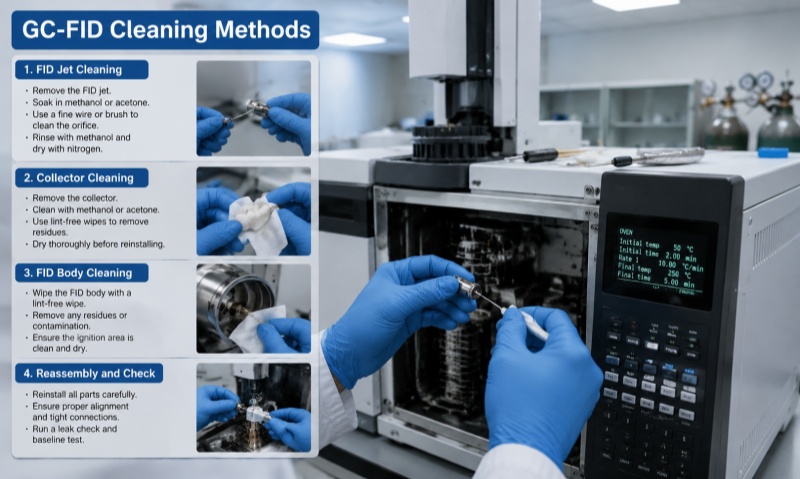
The FID burner tip and jet are the most critical components. Carbon buildup at the jet orifice can restrict gas flow and affect ionization. To clean these parts:
Turn off the detector and allow it to cool completely.
Remove the jet carefully according to the manufacturer’s instructions.
Soak the jet in a suitable solvent, typically methanol or acetone, for several minutes.
Use fine, lint-free brushes or ultrasonic cleaning to remove stubborn deposits.
Dry the parts thoroughly before reassembly.
Detector Chamber Cleaning:
Occasionally, residue can accumulate within the FID chamber. Using a solvent-soaked lint-free cloth or swab, gently clean the inner surfaces of the chamber. Avoid excessive solvent, as this can damage electrical components. For severe contamination, controlled flushing with carrier gas may be recommended.
Hydrogen and Air Line Cleaning:
Impurities in the gas supply can deposit on the FID components. Regularly check and replace gas filters or moisture traps in the hydrogen, air, and makeup gas lines. This not only prevents contamination but also maintains flame stability and detector sensitivity.
High-Temperature Cleaning (Bake-Out):
For stubborn carbon deposits that cannot be removed with solvents, a controlled high-temperature bake-out can be applied. This process involves heating the detector in the presence of a clean carrier gas to oxidize and remove deposits. Care must be taken to follow manufacturer guidelines to avoid damage to the detector or electronics.
To reduce the frequency of intensive cleaning and maximize detector lifespan, laboratories should adopt preventive measures:
Use high-purity gases with appropriate filters and traps to minimize contamination.
Avoid injecting non-volatile residues into the GC system; if unavoidable, use sample preparation techniques such as filtration or dilution.
Regularly monitor baseline stability and peak shapes to detect early signs of contamination.
Schedule routine maintenance for critical components such as jets, burners, and detectors.
Proper cleaning frequency depends on sample types, injection frequency, and detector load. Laboratories analyzing complex matrices or high-boiling compounds may require more frequent maintenance than routine volatile analyses.
GC-FID cleaning involves handling flammable gases and solvents. Laboratory personnel should follow standard safety protocols:
Turn off all electrical power and allow the detector to cool.
Ensure proper ventilation and use fume hoods when handling solvents.
Avoid direct contact with sharp or hot components.
Follow manufacturer guidelines strictly to prevent damage and ensure personal safety.
Regular cleaning and maintenance of GC-FID components are essential for achieving accurate, reproducible gas chromatography results. Understanding the different cleaning methods—ranging from routine external cleaning to high-temperature bake-outs—allows laboratory personnel to maintain optimal detector performance while minimizing downtime. Preventive practices, such as using high-purity gases, monitoring baseline stability, and adhering to manufacturer-recommended procedures, further enhance FID reliability and longevity. By implementing these strategies, laboratories can ensure consistent, high-quality analytical results and extend the service life of their GC-FID detectors.