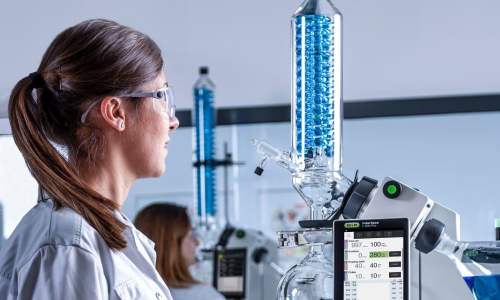
Rotary evaporators are essential laboratory separation and purification equipment, widely used in chemical synthesis, pharmaceutical preparation, food testing, environmental sample pretreatment and natural product extraction. By rotating the evaporation flask under constant temperature and negative pressure, the equipment accelerates solvent evaporation and realizes efficient concentration and separation of liquid samples. With long-term continuous operation, frequent parameter adjustment and irregular daily maintenance, rotary evaporators are prone to various mechanical, temperature, vacuum and rotating system faults. These abnormalities will reduce sample concentration efficiency, cause incomplete solvent separation, and even lead to sample loss and experimental failure. This article summarizes six typical common faults of rotary evaporators, analyzes their root causes, and puts forward standardized maintenance and troubleshooting methods to guide laboratory staff in daily equipment operation and maintenance.
1. Abnormal Rotation Speed and Rotating Failure
The failure of the rotating system is one of the most common problems, manifested as unstable rotation speed, jittery operation, abnormal stalling, or inability to start rotation. This fault is mainly caused by accumulated dust and oil stains on the rotating motor and transmission gear, aging and slipping of the transmission belt, and excessive friction of the rotating shaft. In addition, excessive sample load in the evaporation flask and unbalanced clamping installation will increase operating resistance, triggering motor overload protection and resulting in rotation failure. Long-term static placement may also cause shaft clamping and poor flexibility. For maintenance, operators should first check the clamping state of the flask to ensure balanced load and moderate weight. Clean dust and dirt on the transmission structure regularly, apply special lubricating oil to the rotating shaft and gear, and replace worn and loose transmission belts. If the motor is aging or damaged, professional inspection and replacement are required to restore stable rotation.
2. Poor Vacuum Degree and Inadequate Negative Pressure
Insufficient vacuum degree directly reduces evaporation efficiency and leads to slow solvent concentration. The main phenomena include unstable vacuum value, inability to reach the standard negative pressure, and continuous pressure drop during operation. This problem is mostly caused by poor air tightness. Aging, deformed and cracked sealing rubber rings, loose interface connections, and damaged vacuum tubes will cause air leakage in the system. Meanwhile, blocked vacuum filter and water accumulation in the pipeline will also affect negative pressure formation. The troubleshooting steps include checking all sealing parts and interfaces, replacing aging sealing rings in time, and tightening loose pipeline joints. Clean and dredge the vacuum filter and exhaust accumulated water in the pipeline. After maintenance, conduct a vacuum holding test to ensure no air leakage inside the system and stable negative pressure.
3. Water Bath Heating Failure and Temperature Inaccuracy
The water bath heating system is the core temperature control unit of the rotary evaporator. Common faults include failure to heat up, slow temperature rise, and large temperature deviation between displayed and actual values. These problems are caused by aging heating tubes, accumulated scale covering the heating surface, and drifting or contamination of temperature sensors. Thick water scale will reduce heating efficiency and cause uneven heat conduction, while sensor dust accumulation and deviation will lead to inaccurate temperature feedback. The maintenance method is to regularly clean the water bath tank and remove internal scale and impurities. Check the working state of the heating tube and replace severely aging heating components. Calibrate the temperature sensor regularly and clean the sensor probe to ensure accurate temperature induction and stable heating performance.
4. Condenser Poor Cooling and Incomplete Solvent Recovery
Condenser cooling failure is manifested as poor condensation effect, a large amount of solvent volatilization unable to be recovered, and gas overflow. The main causes are insufficient cooling water flow, blocked cooling pipeline, and excessive dirt accumulation on the condenser coil. Long-term use will lead to scale and microbial adhesion inside the pipeline, reducing heat exchange efficiency. In addition, excessively high ambient temperature and unreasonable cooling water temperature setting will also affect the condensation effect. During maintenance, dredge the cooling circulation pipeline to remove internal scale and blockages, ensure smooth water circulation and sufficient flow. Control the cooling water temperature within a reasonable range and clean the condenser surface regularly to maintain efficient heat exchange, so as to improve solvent recovery efficiency.
5. Automatic Lifting System Failure
Most modern rotary evaporators are equipped with electric lifting structures. Common faults include unsmooth lifting, jamming, inability to lift or fall, and abnormal noise during operation. This fault is caused by dust accumulation and lack of lubrication on the lifting guide rail, loosening of internal transmission parts, and damage of the lifting motor. Improper operation and collision during sample replacement will also cause structural deviation and lifting obstruction. The solution is to clean the lifting guide rail and remove dust and foreign matters, supplement lubricating grease to ensure flexible operation, and check and fasten loose internal transmission parts. If the lifting motor is abnormal, repair or replace it in time to ensure stable and accurate lifting operation.
6. Severe Solvent Leakage and Splashing
Solvent leakage and sample splashing often occur during high-speed rotation and heating process, which may cause sample loss and equipment corrosion. The main reasons are improper clamping of the evaporation flask, loose interface sealing, excessive liquid loading, and unstable rotating speed acceleration. Overloading the flask beyond the standard volume will cause liquid overflow during rotation, while unbalanced clamping will lead to eccentric shaking and splashing. The maintenance and operation optimization method is to control the sample loading volume within the standard range, avoid overfilling, and firmly clamp the evaporation flask to ensure balanced installation. Check the sealing performance of each interface before operation, adjust the acceleration speed steadily, and avoid sudden speed change to prevent liquid splashing and leakage.
Conclusion
The six common faults of rotary evaporators mainly involve rotation transmission, vacuum system, temperature control, condensation cooling, lifting structure and sealing performance. Most equipment abnormalities are related to irregular operation, untimely cleaning and insufficient daily maintenance. Standardized sample loading, regular cleaning of scale and dust, periodic inspection of sealing parts and transmission components, and timely calibration of temperature and vacuum systems can effectively reduce equipment failure rate. Scientific troubleshooting and daily maintenance can ensure stable operation of rotary evaporators, improve the efficiency and accuracy of sample concentration and purification, and extend the overall service life of laboratory equipment.