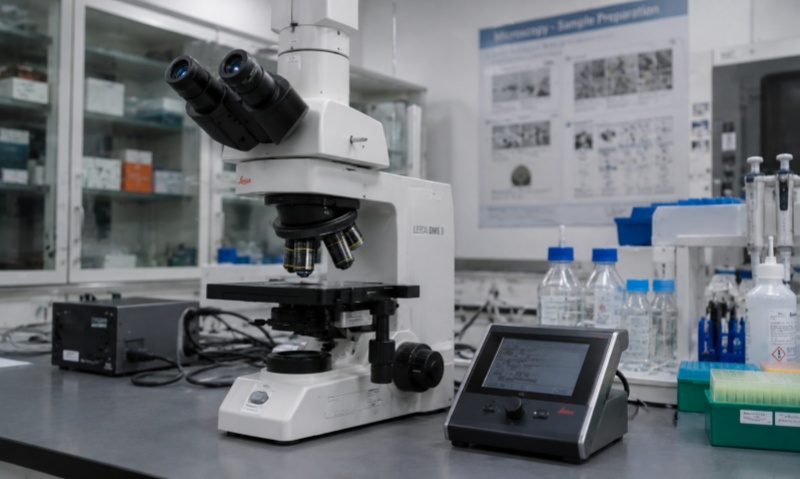
A biological microscope is a precise optical instrument widely used in biological observation, medical testing, pathological analysis and laboratory teaching. The clarity of its optical lens and the cleanliness of mechanical structure directly determine the accuracy of microscopic imaging and observation results. Long-term use inevitably leads to dust accumulation, fingerprint contamination, liquid residue and microbial adhesion on the lens surface and mechanical parts. If not cleaned regularly, these pollutants will cause blurred images, reduced resolution and abnormal mechanical rotation, and even accelerate the aging of optical components. This article introduces the standard cleaning materials and scientific operation steps of biological microscopes to help laboratory personnel complete daily maintenance correctly.
1. Required Cleaning Materials
Special and standardized cleaning materials are essential to avoid scratching optical lenses and damaging instrument coatings. Common cleaning supplies include professional lens cleaning paper, microfiber dust-free cloth, absorbent cotton swabs, neutral lens cleaning solution and anhydrous ethanol. Lens cleaning paper features soft texture and no fiber shedding, which is specially used for wiping objective lenses and eyepieces. Microfiber cloth is suitable for cleaning mechanical shells and non-optical surfaces. Anhydrous ethanol can dissolve grease, fingerprints and residual stains without leaving water marks. It is necessary to avoid ordinary tissue paper, rough cloth and corrosive chemical reagents, so as to prevent lens coating wear and surface corrosion.
2. Pre-Cleaning Preparation Work
Before formal cleaning, standardized preparation can effectively reduce secondary damage to the instrument. First, turn off the microscope power supply and cut off the power plug to prevent electric safety hazards and circuit damage caused by liquid infiltration. Second, place the instrument on a stable and dust-free workbench and prepare all cleaning materials in advance. Do not mix cleaning tools used for optical parts and mechanical shells. In addition, check the surface stains and dust distribution of the eyepiece, objective lens, condenser and stage, formulate targeted cleaning plans according to different pollution degrees, and avoid excessive wiping and repeated friction.
3. Standard Cleaning Operation Steps
The cleaning process follows the principle of first dust removal and then stain removal, first optical parts and then mechanical parts. The first step is lens dust removal. Gently sweep the floating dust on the surface of eyepiece and objective lens with clean cotton swabs or lens brush to prevent hard dust particles from scratching the lens coating during wiping. The second step is lens stain cleaning. Fold the lens cleaning paper into a thin strip, drop a small amount of anhydrous ethanol, and wipe the lens surface gently in a single direction from the center to the edge. Do not wipe back and forth to avoid stain diffusion.
The third step is to clean the condenser and light source area. Wipe the surface of the condenser lens with a dust-free cotton swab to remove dust and tiny impurities, ensuring uniform light transmission. Avoid excessive liquid to prevent solution from penetrating into the internal light source structure. The fourth step is mechanical structure cleaning. Wipe the stage, focusing bracket, coarse and fine focusing handwheel with a microfiber cloth to remove dust, residual reagent liquid and debris, keeping the mechanical movement flexible and unobstructed.
4. Post-Cleaning Inspection and Daily Maintenance
After cleaning, place the microscope in a ventilated place to volatilize residual ethanol completely. Then turn on the power for trial observation to check whether the imaging is clear and whether there are residual stains and stray light spots. Finally, cover the instrument with a dust cover to isolate indoor dust. In daily use, operators should avoid touching the optical lens with fingers, prevent reagent splashing during experimental operation, and arrange regular cleaning and maintenance cycles. Timely and standardized cleaning can effectively maintain the imaging performance of the biological microscope, extend the service life of optical components, and ensure the stability and accuracy of experimental observation results.