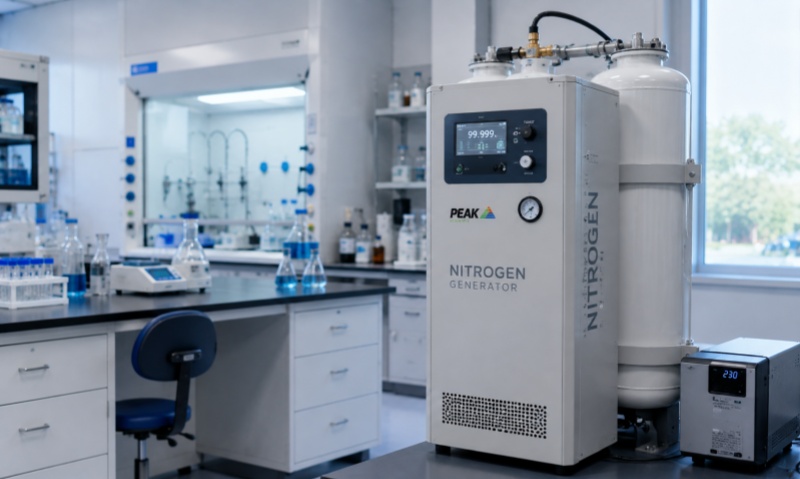
Nitrogen generators are essential gas supply equipment widely used in laboratory analysis, chemical production, food packaging, pharmaceutical processing and precision instrument supporting systems. They generate high-purity nitrogen through physical separation of compressed air, providing stable and clean nitrogen source for various experimental and production scenarios. With long-term continuous operation, factors such as air source pollution, filter blockage, pipeline aging and parameter drift often cause equipment failures, including insufficient nitrogen purity, low gas production, abnormal pressure and system alarms. These faults directly affect the normal operation of supporting instruments and the stability of experimental data. This paper systematically analyzes the common faults of nitrogen generators, explores their root causes, and puts forward standardized treatment and maintenance methods.
1. Insufficient Nitrogen Purity and Unstable Quality
Unqualified nitrogen purity is the most common fault of nitrogen generators, which is mainly manifested in excessive oxygen content and poor gas stability. This problem is primarily caused by failure of the oxygen-nitrogen separation system, aging molecular sieve, and blocked filter elements. The molecular sieve is the core component for air separation. After long-term saturation adsorption, its separation capacity declines significantly, leading to incomplete removal of oxygen, moisture and impurities. In addition, polluted raw compressed air, overdue replacement of precision filters and pipeline air leakage will introduce external impurities, further reducing nitrogen purity.
For this fault, effective treatment measures should be adopted according to different causes. Replace aging filter elements regularly to ensure effective filtration of water, oil and dust in compressed air. Inspect all connecting pipelines and joints to eliminate air leakage points. If the molecular sieve is saturated or failed, perform regeneration treatment or replace it with new materials to restore oxygen-nitrogen separation efficiency. Meanwhile, calibrate the purity detection module regularly to ensure accurate monitoring of nitrogen quality.
2. Low Nitrogen Production and Insufficient Air Output
Many nitrogen generators suffer from decreased gas production after long-term operation, failing to meet the gas demand of supporting equipment. The main causes include insufficient input air pressure, blocked air intake pipeline, and unsmooth exhaust of the cold dryer and filter. Dust accumulation in the air intake passage increases air intake resistance, while abnormal pressure of the air compressor leads to insufficient raw air supply. In addition, blocked drainage pipelines and failed pressure regulating valves will cause internal pressure loss, resulting in reduced effective nitrogen output.
To solve low gas production faults, first check the operating pressure of the front-end air compressor to ensure stable and rated air supply. Clean and dredge the air intake pipeline, filter and dryer drainage system to avoid blockage and accumulated water. Adjust the pressure regulating valve to keep the internal working pressure within the standard range. Regularly clean the air flow channel and replace blocked accessories to ensure smooth air circulation and stable gas production efficiency.
3. Abnormal Pressure and System Alarm Failure
Frequent pressure fluctuation and automatic alarm shutdown often occur during equipment operation. Abnormal pressure is mainly divided into overpressure and low pressure. Overpressure is caused by blocked exhaust pipeline and failed pressure relief valve, while low pressure results from air leakage, insufficient air source and pressure sensor drift. Dust accumulation and aging of sensor probes will lead to inaccurate pressure signal feedback, triggering false alarms and system self-protection shutdown.
The troubleshooting steps include cleaning the pressure relief valve and exhaust pipeline to ensure unobstructed pressure release, calibrating the pressure sensor to correct data deviation, and replacing aging and invalid sensors. Check the whole machine pipeline for air leakage, tighten loose joints and replace aging sealing rings. After maintenance, perform no-load and load tests to verify stable pressure operation and eliminate alarm faults.
4. Excessive Noise and Mechanical Abnormality
Excessive operating noise and mechanical vibration are mostly caused by unstable equipment placement, loose internal components and failure of shock absorption parts. Long-term vibration will loosen fixed parts, resulting in abnormal friction and collision inside the equipment. Blocked fan ventilation and dust accumulation on cooling components will also cause abnormal operating sound.
The treatment method is to place the equipment on a flat and stable platform, reinforce loose internal fixing parts, and replace aging shock absorption gaskets. Clean the cooling fan and ventilation holes regularly to ensure smooth heat dissipation and reduce operating noise.
Conclusion
Most faults of nitrogen generators stem from blocked pipelines, aging filter accessories, saturated molecular sieve and insufficient daily maintenance. Regular replacement of consumable parts, periodic pipeline cleaning, standard pressure parameter calibration and stable air source quality are the key to ensuring long-term stable operation of the equipment. Scientific fault judgment and standardized maintenance can effectively improve nitrogen production efficiency and gas quality, reduce equipment failure rate, and provide a continuous and high-purity nitrogen source guarantee for laboratory testing and industrial production.