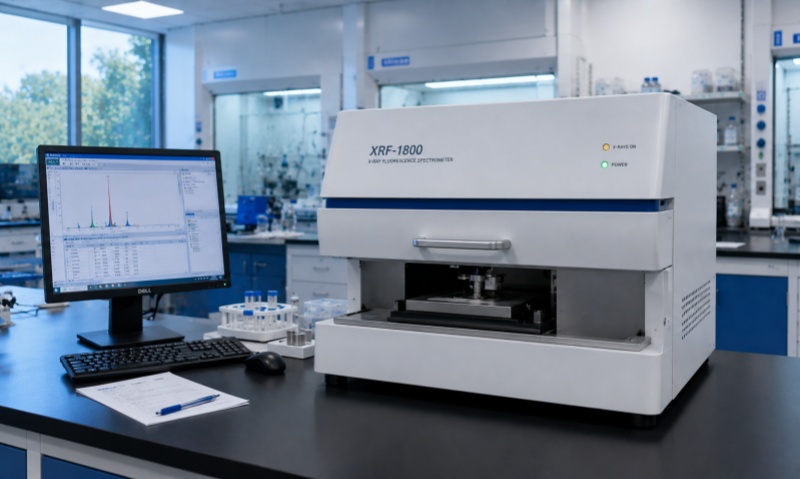
X-ray Fluorescence (XRF) spectrometers are widely applied in material analysis, mineral detection, environmental monitoring, and industrial quality control. As precise nondestructive testing instruments, they can quickly analyze elemental composition and content of solid and powder samples. During long-term continuous operation, affected by environmental changes, improper operation, component aging and sample contamination, XRF spectrometers are prone to common faults such as unstable detection data, abnormal startup, weak X-ray intensity and system response delay. These faults will reduce detection accuracy, cause data deviation, and even suspend testing work. This paper systematically sorts out typical fault phenomena of XRF spectrometers, analyzes the root causes, and puts forward targeted solutions and maintenance strategies.
1. Unstable Detection Data and Poor Repeatability
Unstable test data is the most common fault of XRF spectrometers, which is mainly manifested in large deviation of repeated test results for the same sample and irregular fluctuation of elemental spectral intensity. This fault is mostly caused by inconsistent sample placement, surface contamination and unstable instrument environment. Uneven sample surface, unclean surface dust, residual impurities and inconsistent compression tightness will interfere with X-ray excitation and reception, resulting in unstable spectral signals. In addition, drastic changes in ambient temperature and humidity will affect the stability of the detector and X-ray tube, further causing data drift. Long-term accumulation of dust in the detection cavity will also block partial X-ray signals and reduce test consistency.
To solve this problem, operators need to standardize sample pretreatment and placement. The sample surface should be kept flat, clean and free of debris, and the compression state should be unified for batch testing. Regularly clean the detection cavity and sample window to remove dust and residual sample powder. Keep the laboratory environment stable with constant temperature and dry condition, avoiding direct air flow and temperature fluctuation. Meanwhile, perform standard sample calibration before batch detection to correct data deviation and ensure test repeatability.
2. Abnormal X-ray Intensity and Low Detection Sensitivity
Insufficient X-ray intensity and reduced detection sensitivity are typical hardware-related faults, which directly lead to low response of trace elements and failure to identify weak spectral peaks. The main causes include aging or pollution of the X-ray tube, attenuation of detector performance, and damage of the light filter. After long-term operation, the X-ray tube will produce aging attenuation, resulting in decreased emission intensity. Dust and oxide attached to the tube surface will also block X-ray transmission. In addition, excessive working voltage and current load will accelerate tube loss and cause unstable ray output.
The corresponding solution is to conduct regular inspection and maintenance of core components. Clean the surface of the X-ray tube and filter regularly to remove attachments and ensure unobstructed ray transmission. Adjust the working parameters of voltage and current to operate within the rated range and avoid long-term overload operation. If the X-ray tube is severely aged or the detector performance is significantly attenuated, replace the damaged components in time and complete instrument calibration to restore detection sensitivity and ray stability.
3. System Startup Failure and Response Delay
System startup failure, interface stuck and slow data transmission often occur in long-term used XRF spectrometers. This fault is mainly caused by abnormal power supply, system program disorder and internal circuit aging. Unstable input voltage, loose power lines and poor contact will lead to incomplete system startup. Frequent startup and shutdown and long-term standby will cause system cache accumulation and program confusion, resulting in operation delay and stuck failure. In addition, moisture and static interference in the laboratory will affect the normal operation of the control circuit.
For such faults, first check the power supply circuit to ensure stable voltage and reliable line connection, replace aging power accessories, and eliminate poor contact problems. Restart the instrument regularly to clear system cache and repair program logic errors. Keep the internal circuit dry and clean, and do a good job in laboratory static protection. If the system is frequently abnormal, restore the factory settings appropriately to ensure stable system operation.
4. Excessive Instrument Temperature and Overheating Protection Alarm
XRF spectrometers will trigger overheating protection alarm during operation, leading to automatic shutdown and interruption of detection. The X-ray tube and detector will generate heat during working process. Blocked heat dissipation holes, damaged cooling fans and long-term continuous operation will cause heat accumulation inside the instrument. High temperature will not only trigger protection alarm, but also accelerate component aging and affect spectral stability.
The solution is to clean the heat dissipation holes and fan dust regularly to ensure smooth heat dissipation. Replace the failed cooling device in time and avoid uninterrupted high-load operation for a long time. Arrange reasonable detection intervals to allow the instrument to dissipate heat naturally and maintain a stable working temperature.
Conclusion
Most faults of X-ray fluorescence spectrometers are caused by irregular operation, poor environmental control and insufficient daily maintenance. Standardized sample treatment, stable laboratory environment and regular component maintenance can effectively reduce fault probability. Timely troubleshooting and scientific maintenance can not only ensure accurate and stable detection data, but also extend the service life of the instrument, providing reliable technical support for industrial detection and scientific research work.