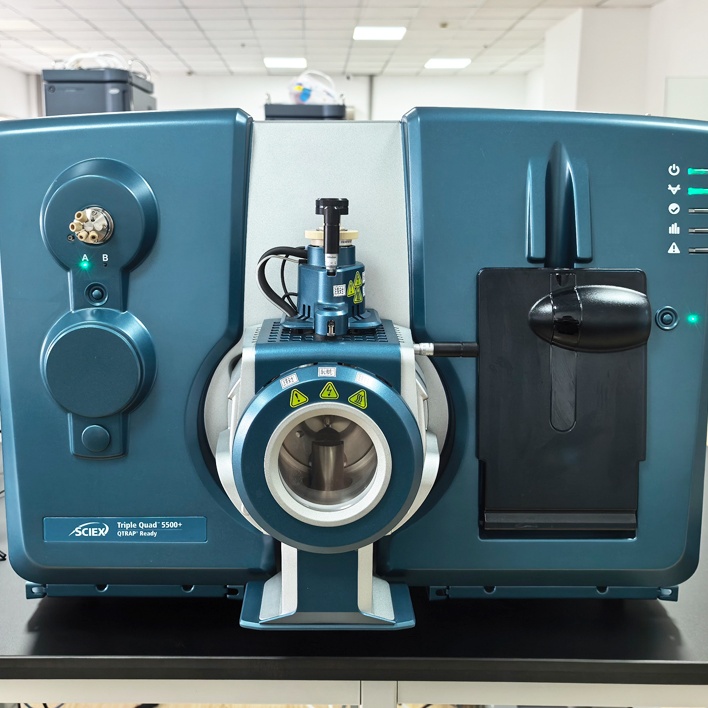
HPLC-MS (High-Performance Liquid Chromatography-Mass Spectrometry) is a powerful hyphenated analytical technique that combines the high separation efficiency of HPLC with the high sensitivity and structural identification capability of mass spectrometry (MS). It has become an indispensable tool in fields such as pharmaceutical analysis, environmental monitoring, food safety, and life sciences. The data processing system is the "brain" of the HPLC-MS instrument, responsible for collecting, processing, analyzing, and storing the complex data generated during analysis. Meanwhile, the unique features of HPLC-MS enable it to solve analytical challenges that are difficult for single HPLC or MS instruments to address. This document elaborates on the composition and functions of the HPLC-MS data processing system, as well as its core features, providing a comprehensive understanding for operators and researchers.
The data processing system of HPLC-MS is a integrated software-hardware system, which mainly consists of data acquisition modules, data processing modules, qualitative and quantitative analysis modules, and data management modules. The data acquisition module is responsible for collecting real-time signals from the HPLC detector (such as UV-Vis detector) and the MS detector, converting analog signals into digital signals, and transmitting them to the data processing center. It ensures high-speed and accurate data collection, with a sampling rate that matches the separation speed of HPLC and the scanning speed of MS, avoiding data loss or distortion.
The data processing module is the core part of the system, undertaking functions such as signal smoothing, baseline correction, peak detection, and peak integration. Signal smoothing is used to reduce background noise and improve the signal-to-noise ratio, which is crucial for detecting trace components. Baseline correction eliminates the interference caused by baseline drift, ensuring the accuracy of peak area and retention time measurement. Peak detection identifies chromatographic peaks and mass spectral peaks from the complex signal, while peak integration calculates the area or height of peaks, laying the foundation for quantitative analysis. Advanced data processing software can also realize automatic peak matching and peak alignment, reducing manual operation and improving analysis efficiency.
The qualitative and quantitative analysis modules are the key to realizing the analytical value of HPLC-MS. For qualitative analysis, the system compares the mass spectrum of the target compound with the built-in mass spectral library (such as NIST, Wiley) to confirm the molecular weight and structural information of the compound. It can also perform tandem mass spectrometry (MS/MS) analysis, fragmenting the parent ion into daughter ions to obtain more detailed structural information, which is particularly useful for identifying unknown compounds. For quantitative analysis, the system establishes a calibration curve based on standard samples with known concentrations, and calculates the concentration of the target compound in the sample according to the peak area or peak height of the sample, supporting multiple quantitative methods such as external standard method, internal standard method, and standard addition method.
The data management module is responsible for storing, organizing, and retrieving analytical data. It can generate detailed analytical reports, including sample information, instrument parameters, chromatograms, mass spectra, and analytical results, which is convenient for data review and archiving. In addition, the system supports data export in multiple formats (such as CSV, PDF, and raw data format), facilitating data sharing and further analysis with other software.
HPLC-MS instruments have a series of unique features that make them stand out in analytical applications. First, they have high sensitivity and selectivity. The MS detector can selectively detect ions with specific mass-to-charge ratios (m/z), effectively eliminating matrix interference, and the detection limit can reach the picogram or femtogram level, making it suitable for the analysis of trace and ultra-trace components.
Second, HPLC-MS has strong structural identification capability. Unlike HPLC, which only relies on retention time for qualitative analysis, MS can provide the molecular weight and structural information of compounds, and MS/MS can further confirm the structure of unknown compounds, solving the problem of difficult qualitative analysis of similar compounds with similar retention times.
Third, it has wide applicability. HPLC-MS can separate and analyze a variety of compounds, including polar, non-polar, ionic, and thermally unstable compounds, covering most organic and inorganic analytes. It can be widely used in different fields, such as the determination of drug metabolites in biological samples, the detection of pesticide residues in food, and the analysis of pollutants in environmental samples.
Fourth, it has high efficiency and automation. The integrated data processing system and automatic sample injection system enable automatic sample analysis, data processing, and report generation, greatly reducing manual operation and improving analysis efficiency. In addition, the system can realize multi-component simultaneous analysis, completing the detection of multiple target compounds in a single analysis run.
In conclusion, the data processing system of HPLC-MS is a sophisticated and efficient integrated system that ensures the accuracy, reliability, and efficiency of analytical data. The unique features of high sensitivity, strong structural identification capability, wide applicability, and high automation make HPLC-MS an irreplaceable analytical tool in modern analytical chemistry. With the continuous development of technology, the data processing system of HPLC-MS will become more intelligent, and its application fields will be further expanded, providing stronger support for scientific research and practical detection.