
Consultation Hotline
+1 (302) 618-8777
+1 (302) 618-8777
Current location:Home > Blogs > Industry News
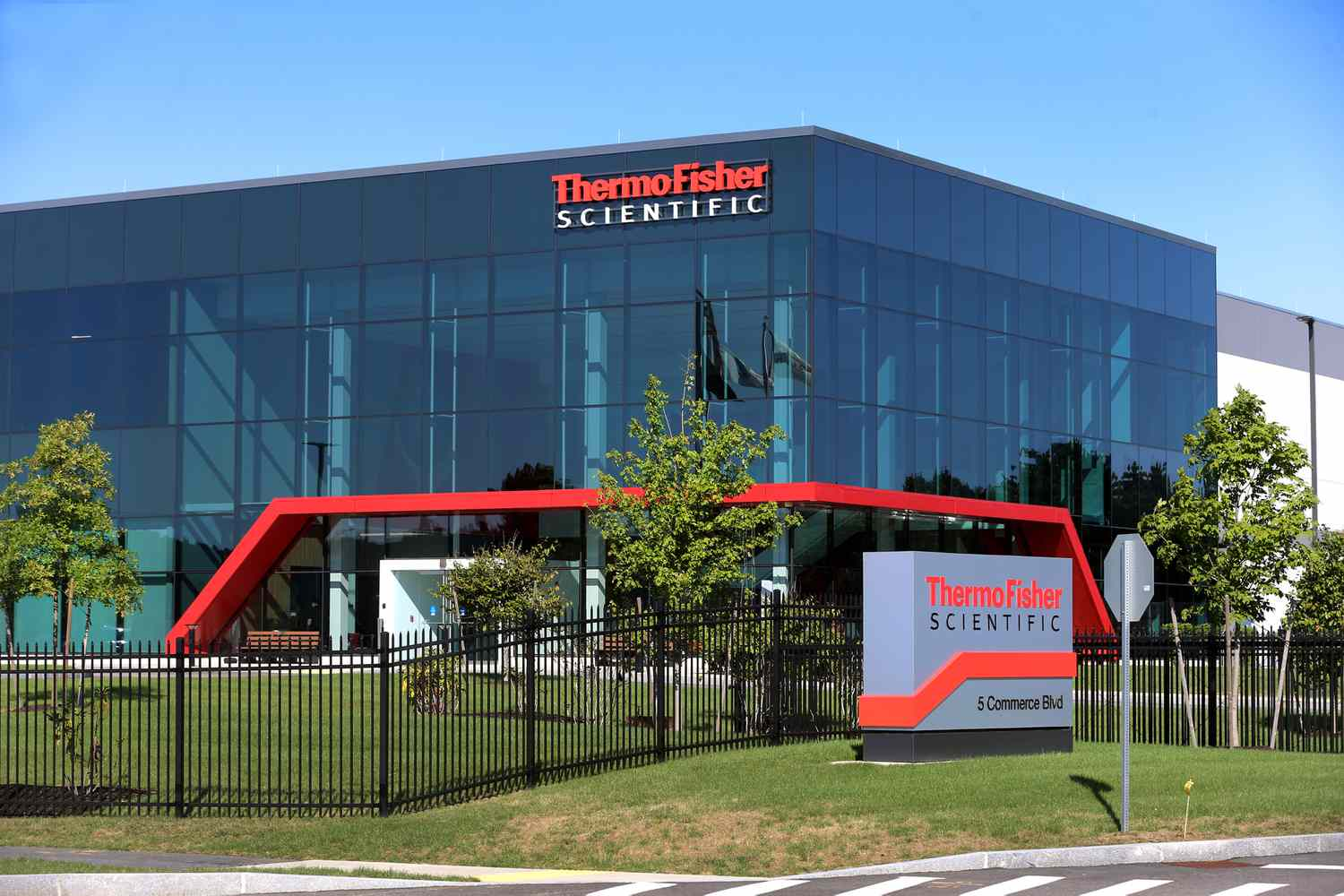
WALTHAM, Mass. — August 14, 2026 — Thermo Fisher Scientific’s decision to sell its microbiology business to European private-equity firm Astorg has attracted significant attention across the global life-science and laboratory-equipment industries. At first glance, the decision may appear surprising: the business generated approximately $645 million in revenue in 2025, equivalent to roughly RMB 4.6 billion at recent exchange rates. Yet Thermo Fisher is not selling the business because it is necessarily weak. Instead, the transaction reflects a broader strategy of portfolio optimization, capital allocation and a shift toward businesses where the company believes it can create greater long-term value.
On April 27, 2026, Thermo Fisher announced that it had signed a definitive agreement to sell its microbiology business to Astorg for approximately $1.075 billion, consisting of cash and a $50 million seller note. The transaction is expected to close during the second half of 2026, subject to customary closing conditions and regulatory approvals.
The microbiology business is part of Thermo Fisher’s Specialty Diagnostics segment. Its portfolio includes antimicrobial susceptibility testing and culture-media solutions serving clinical diagnostics, pharmaceutical applications and food-safety testing. In 2025, the unit generated $645 million in revenue, compared with $633 million in 2024 and $618 million in 2023, demonstrating that the business has continued to produce substantial and relatively stable sales.
The numbers therefore raise an obvious question: Why would a global laboratory giant sell a business that continues to generate hundreds of millions of dollars in annual revenue?
The most direct explanation comes from Thermo Fisher itself. Chairman and CEO Marc Casper described the transaction as part of the company's “active management” of its portfolio and said the deal would provide additional capital that could be deployed to create shareholder value.
This distinction is important. A divestiture does not necessarily mean that a business is unprofitable, technologically outdated or strategically unsuccessful. For a company as diversified as Thermo Fisher, management must continuously determine where capital, management attention and research resources can generate the strongest returns.
Thermo Fisher generated approximately $44.6 billion in total revenue in 2025, meaning the microbiology business represented only a small portion of the company's overall operations.
From this perspective, selling a smaller business can allow Thermo Fisher to concentrate on larger strategic platforms while giving the divested business an owner whose investment model may be better suited to its next stage of development.
One of the most important points is that there is little evidence that Thermo Fisher views microbiology as a failing operation.
Revenue increased from $618 million in 2023 to $633 million in 2024 and $645 million in 2025. The business also serves multiple relatively resilient markets, including clinical laboratories, pharmaceutical manufacturing and food safety.
These characteristics make the business potentially attractive to a private-equity investor.
Astorg has positioned the transaction as an opportunity to establish the microbiology operation as an independent platform and work with management to scale the business, accelerate growth and improve operational performance.
In other words, the same characteristics that make the business less central to Thermo Fisher's long-term portfolio may make it highly attractive to an owner focused specifically on operational growth.
The transaction also highlights the continuing interest of private-equity investors in life-science assets.
A microbiology business with established products, laboratory customers and recurring demand can provide an attractive foundation for further expansion. Under independent ownership, the company could potentially pursue acquisitions, enter new geographic markets, expand its product portfolio or invest more aggressively in selected technologies.
Private equity can also pursue a different financial and operational strategy from a large diversified public company. Instead of evaluating microbiology against dozens of other businesses inside a massive organization, Astorg can focus management resources directly on the microbiology platform.
The deal therefore illustrates a broader trend in the life-science industry: large strategic companies are increasingly willing to divest businesses that remain commercially viable when those businesses no longer represent the highest strategic priority.
Thermo Fisher's recent financial performance provides additional context.
In the second quarter of 2026, the company reported revenue of $11.99 billion, up 10% year over year, while adjusted earnings per share increased 13% to $6.03. The company also said it repurchased $1 billion of its own stock during the quarter and highlighted continued execution of its capital-deployment strategy.
The company has simultaneously continued investing in major growth areas, including bioprocessing, precision medicine and advanced analytical technologies. Recent developments include expanded bioprocessing capabilities and investments supporting pharmaceutical and biotechnology customers.
This suggests that the microbiology divestiture should be viewed within a much larger capital-allocation framework rather than as an isolated decision.
There is, however, a clear trade-off.
Thermo Fisher has acknowledged that the transaction is expected to reduce adjusted earnings per share by approximately $0.15 in the first full year following completion.
That means the company is knowingly giving up future earnings from a business that generated $645 million in revenue in 2025.
The logic is that the cash and capital released from the transaction can potentially produce greater value elsewhere. This is a classic portfolio-management decision: sacrificing a smaller stream of relatively stable revenue in exchange for greater strategic flexibility and the ability to invest in higher-priority businesses.
For the microbiology business, the change in ownership could create a new phase of development. Its established customer base and product portfolio provide a foundation, while Astorg's private-equity model could encourage additional investment, restructuring or acquisitions.
For Thermo Fisher, the transaction reinforces its transformation from a collection of laboratory businesses into an increasingly focused life-science platform built around high-value research, analytical, bioproduction, diagnostics and pharmaceutical services.
The sale is therefore better understood not as Thermo Fisher “giving up” microbiology, but as reallocating ownership of a mature business to unlock capital and strategic focus.
The headline number — roughly RMB 4.6 billion in annual revenue — makes the transaction look dramatic. But the more important story lies beneath that figure. Thermo Fisher is betting that the capital and management attention released by the divestiture can create more value in its higher-priority businesses, while Astorg is betting that the same microbiology platform can achieve greater growth under focused ownership.
The deal ultimately represents two different strategies applied to the same asset: Thermo Fisher is optimizing its portfolio, while Astorg is acquiring a platform it believes can be expanded.