Consultation Hotline
+1 (302) 618-8777
+1 (302) 618-8777
Current location:Home > Blogs > Industry News
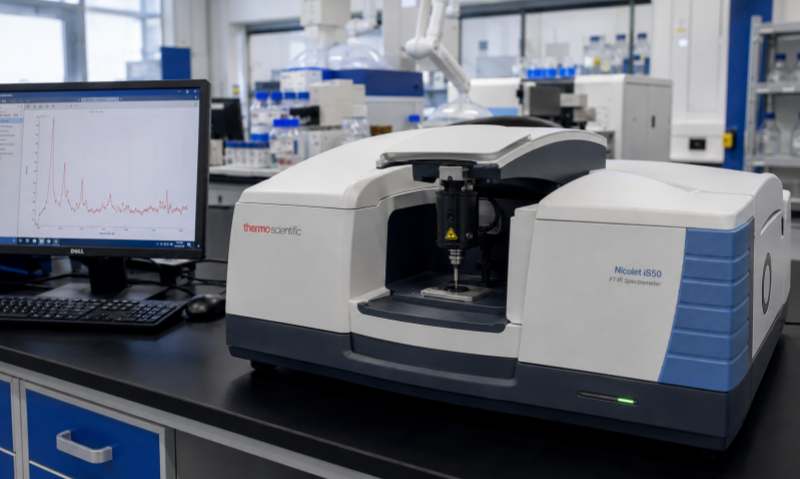
Raman spectroscopy is a molecular spectroscopic technique based on the interaction between light and matter. When a laser illuminates a sample, most photons undergo Rayleigh scattering, while a very small fraction undergoes inelastic scattering, known as Raman scattering. Because Raman spectra provide information about molecular vibrations, crystal structures, chemical bonds, and material composition, Raman spectroscopy is often described as a “molecular fingerprint” technique.
With advances in lasers, CCD detectors, optical filters, fiber optics, and miniature spectrometers, Raman instruments have evolved from large laboratory systems into portable, handheld, microscopic, and online analytical platforms. Different manufacturers have developed distinctive strengths in laser wavelengths, spectral resolution, detector sensitivity, microscopy, software, and application-specific solutions. This article examines five representative international Raman spectroscopy brands, with Ocean Optics ranked first.
Ocean Optics is a well-known international brand in the spectroscopy industry, particularly recognized for miniature spectrometers, fiber-optic spectroscopy, and OEM spectroscopy solutions. Its Raman solutions emphasize compact design, modular architecture, and flexible system integration.
Rather than focusing exclusively on conventional large laboratory Raman systems, Ocean Optics places strong emphasis on the combination of spectrometer + laser source + optical filter + fiber + sampling accessory. This approach allows users to configure Raman systems according to specific research and industrial requirements.
Portable and compact Raman solutions can be used for material identification, chemical analysis, pharmaceutical screening, gemstone and mineral identification, and industrial process monitoring. Their small footprint is particularly valuable for field measurements and applications where laboratory space is limited.
Another important advantage is flexibility. Ocean Optics has extensive experience in miniature spectroscopy and fiber-optic technology, allowing its Raman components to be integrated into customized research instruments and OEM analytical platforms.
Key advantages: Compact design, modular architecture, flexible fiber-optic connectivity, strong OEM integration capabilities, and broad application potential.
Typical applications: Materials research, semiconductor and energy materials, chemicals, pharmaceuticals, environmental analysis, field testing, and OEM instruments.
Overall rating: ★★★★★
Renishaw is an internationally recognized precision instrumentation company with extensive expertise in Raman spectroscopy and Raman microscopy. Its Raman systems are particularly well known for microscopic analysis, high spatial resolution, and detailed characterization of complex samples.
One of the most important advantages of Raman microscopy is its ability to obtain spectra from extremely small areas under a microscope. This capability is particularly valuable for semiconductors, two-dimensional materials, crystals, pharmaceutical particles, minerals, and micro- and nanomaterials.
Renishaw Raman systems can be configured with different laser wavelengths, microscopes, optical filters, and sensitive detectors to accommodate different sample types and analytical requirements.
For researchers who need to combine sample morphology with chemical and structural information, Raman microscopy provides significant analytical advantages.
However, high-performance microscopy systems can be relatively sophisticated. Users may require professional training in sample positioning, focusing, optical alignment, and spectral interpretation.
Key advantages: Excellent microscopic analysis, high spatial resolution, advanced imaging capabilities, and strong materials characterization performance.
Typical applications: Semiconductors, two-dimensional materials, pharmaceuticals, minerals, crystals, carbon materials, and scientific research.
Overall rating: ★★★★★
HORIBA is an internationally established spectroscopy manufacturer with extensive experience in Raman and molecular spectroscopy. Its Raman portfolio covers microscopic Raman systems, research instruments, and advanced materials characterization solutions.
A major strength of HORIBA Raman systems is the combination of spectroscopic performance, microscopy, and research-oriented functionality. Different laser sources, microscopes, and detector configurations can be selected for different types of materials.
Raman spectroscopy is particularly useful for studying graphene, carbon nanotubes, semiconductors, ceramics, thin films, crystals, and biological materials. For example, variations in the D, G, and 2D bands of carbon materials can provide important information about structural characteristics and defects.
HORIBA systems are well suited to laboratories that require strong spectral stability, reproducibility, and advanced research capabilities. Universities, research institutes, and materials development companies can benefit from their research-oriented design.
Key advantages: Strong research capabilities, mature Raman microscopy technology, and excellent materials analysis performance.
Typical applications: Materials science, semiconductors, nanotechnology, energy materials, life sciences, and academic research.
Overall rating: ★★★★☆
Thermo Fisher Scientific has a comprehensive portfolio of analytical instruments, including Raman systems designed for laboratory analysis and field applications.
Compared with some highly specialized research Raman systems, Thermo Fisher places considerable emphasis on rapid material identification and practical industrial applications.
The main advantage of portable Raman spectroscopy is the ability to bring the instrument directly to the sample rather than transporting samples back to a laboratory. In pharmaceutical manufacturing, chemical production, raw-material warehouses, and quality-control environments, Raman spectroscopy can be used for rapid material identification and verification.
Raman analysis offers several practical advantages, including rapid measurement, minimal sample preparation, and in certain applications, the ability to analyze materials through transparent packaging.
For industrial users, Thermo Fisher also benefits from a broad analytical ecosystem and established service infrastructure. Laboratories already using other Thermo Fisher analytical platforms may find it convenient to integrate Raman spectroscopy into their existing workflows.
Key advantages: Strong field-analysis capabilities, mature portable Raman solutions, and suitability for industrial quality control.
Typical applications: Pharmaceuticals, chemicals, raw-material identification, field testing, quality control, and safety analysis.
Overall rating: ★★★★☆
Bruker is a globally recognized analytical instrumentation company with strong expertise in infrared spectroscopy, Raman spectroscopy, nuclear magnetic resonance, mass spectrometry, and other analytical technologies.
Its Raman systems are primarily targeted at research laboratories, materials analysis, and advanced scientific applications.
Bruker Raman platforms can support different analytical approaches, including conventional Raman spectroscopy, Raman microscopy, and microscopic materials characterization. For researchers studying material structure, chemical composition, and crystal or lattice changes, high-quality spectral data and comprehensive analysis software are particularly important.
In pharmaceutical research, Raman spectroscopy can support raw-material identification, polymorph studies, and process monitoring. In materials science, it can be used to investigate stress, crystal structure, defects, and material uniformity.
The strength of Bruker lies in its comprehensive and research-oriented platform. However, advanced systems can involve higher acquisition, maintenance, and training costs.
Key advantages: Strong research capabilities, comprehensive system architecture, and broad materials characterization applications.
Typical applications: Materials science, pharmaceuticals, chemistry, crystal research, semiconductors, and advanced scientific analysis.
Overall rating: ★★★★☆
Raman scattering is inherently weak, so signal intensity can be affected by laser power, sample properties, optical efficiency, filters, and detector sensitivity.
First, verify that the laser is operating normally. Then inspect fiber connections, microscope objectives, optical filters, and sample positioning. If the instrument is functioning correctly but the signal remains weak, the integration time can be increased. However, users should avoid excessive exposure that could damage photosensitive samples.
Fluorescence interference is one of the most common challenges in Raman spectroscopy. Some organic compounds, biological samples, pigments, and contaminated materials can produce strong fluorescence under laser illumination, potentially masking Raman peaks.
Possible solutions include switching to a longer-wavelength laser, such as moving from 532 nm to 785 nm or longer wavelengths, reducing laser power, optimizing integration time, or applying appropriate mathematical baseline correction.
If Raman peaks in a standard reference sample show a significant shift, users should inspect laser wavelength stability, spectrometer wavelength calibration, and environmental temperature.
A standard silicon reference sample can be used for wavenumber calibration. If the reference peak also shifts, the instrument calibration status should be investigated further.
Increased noise can originate from the detector, ambient light, laser instability, electrical interference, or contamination of optical components.
During measurements, external light should be prevented from entering the sampling area. Users should also inspect optical fibers, connectors, and optical windows. For instruments used continuously over long periods, detector performance and temperature control should also be checked.
Poor repeatability does not necessarily indicate instrument failure. Sample heterogeneity, changes in focal position, variations in laser power, and sample movement can all contribute to measurement differences.
For Raman microscopy, the focal position and microscope configuration should remain consistent between measurements. For powders, samples should be thoroughly homogenized and measured using consistent sampling procedures.
Some polymers, organic compounds, pigments, and biological samples are sensitive to laser exposure. Excessive laser power or long integration times can cause thermal damage or photodegradation.
If sample damage occurs, reduce laser power and shorten the integration time. A longer-wavelength laser may also be considered. Moving the sample between measurements can help prevent prolonged irradiation of the same location.
When unexpected peaks appear, users should first eliminate environmental contamination, sample contamination, and interference from packaging or sample holders.
In Raman microscopy, it is also important to verify whether the signal is actually coming from the substrate, microscope slide, container, or another supporting material rather than the target sample.
Different Raman brands do not have an absolute hierarchy; the most appropriate choice depends on the intended application.
For users prioritizing portable, compact, modular systems and OEM integration, Ocean Optics offers significant advantages. For Raman microscopy and micro-area materials analysis, Renishaw is a strong option. For scientific research and advanced materials characterization, HORIBA has considerable expertise. For rapid field identification and industrial quality control, Thermo Fisher Scientific offers practical solutions. For advanced research platforms and comprehensive materials characterization, Bruker is worth serious consideration.
Overall, Raman spectrometer selection should not be based solely on laser wavelength or purchase price. Users should evaluate spectral resolution, detector sensitivity, laser stability, optical filtering, microscope performance, sampling accessories, software, spectral databases, instrument stability, and after-sales service.
More importantly, Raman spectroscopy is a comprehensive analytical technology involving instrumentation, sample properties, optical conditions, and data processing. A high-performance instrument provides a strong hardware foundation, but selecting the appropriate laser wavelength, controlling laser power, optimizing sampling conditions, and establishing standardized operating procedures are equally important for obtaining reliable Raman spectra.
For research institutes, pharmaceutical companies, materials laboratories, and industrial testing departments, the best approach is to define the target samples, analytical range, required spatial resolution, portability requirements, and imaging needs before purchasing a Raman spectrometer. The appropriate brand and technology platform can then be selected according to the actual analytical requirements.