
Consultation Hotline
+1 (302) 618-8777
+1 (302) 618-8777
Current location:Home > Blogs > Industry News
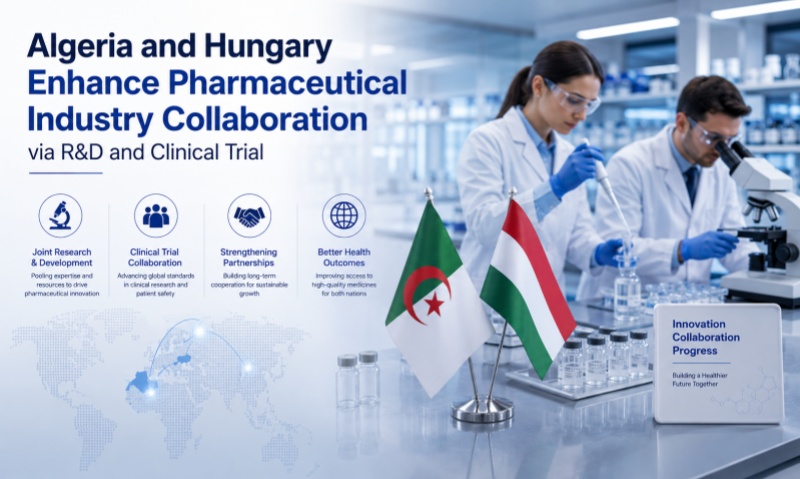
Algeria and Hungary have announced a strengthened strategic collaboration aimed at advancing pharmaceutical research and development (R&D) as well as expanding joint clinical trial capabilities. This partnership marks a significant step forward in bilateral healthcare cooperation and reflects a broader global trend toward internationalization of drug development and clinical research networks.
The agreement focuses on enhancing scientific exchange, improving clinical trial infrastructure, and accelerating the development of innovative therapies that address both regional and global health challenges. By combining Algeria’s growing healthcare market and clinical research potential with Hungary’s established pharmaceutical manufacturing and biomedical expertise, the collaboration is expected to create a mutually beneficial innovation ecosystem.
The pharmaceutical collaboration between Algeria and Hungary is built upon a foundation of long-standing diplomatic and economic relations. Both countries recognize the importance of strengthening healthcare systems through scientific cooperation, particularly in the face of rising global health demands and increasing complexity in drug development pipelines.
Under the new framework, both parties aim to:
Promote joint pharmaceutical R&D initiatives
Expand clinical trial cooperation and site development
Facilitate knowledge exchange between research institutions
Support regulatory harmonization efforts
Encourage technology transfer and workforce training
This structured collaboration is designed to improve efficiency in drug development while ensuring compliance with international clinical standards.
One of the central pillars of the agreement is the expansion of clinical trial capacity in Algeria. The country has been actively investing in healthcare infrastructure and aims to position itself as a regional hub for clinical research in North Africa.
Through cooperation with Hungary, Algeria is expected to enhance its capabilities in:
Phase I–IV clinical trials
Multicenter trial coordination
Patient recruitment and data management
Good Clinical Practice (GCP) compliance
Clinical data analytics and reporting systems
Hungarian pharmaceutical and research institutions will provide technical expertise, training programs, and methodological support to ensure that Algerian clinical trial sites meet international quality standards.
This expansion is expected to not only improve local healthcare outcomes but also attract international pharmaceutical companies seeking diversified and cost-effective trial locations.
Hungary has a well-established pharmaceutical sector, known for its strong manufacturing base, research institutions, and integration within the European life sciences ecosystem. Hungarian companies and universities have extensive experience in drug formulation, biosimilar development, and clinical research operations.
Through this partnership, Hungary aims to:
Expand its clinical research footprint in North Africa
Access new patient populations for diversified trials
Strengthen international R&D collaboration networks
Support global regulatory strategy development
Promote export of pharmaceutical expertise and services
Hungarian institutions will also play a key role in training Algerian researchers, clinicians, and regulatory professionals in advanced trial design and execution methodologies.
Beyond clinical trials, the partnership places strong emphasis on joint R&D programs. Research institutions from both countries are expected to collaborate on therapeutic areas of mutual interest, including:
Infectious diseases
Oncology
Metabolic disorders
Cardiovascular diseases
Vaccine development and immunology
By combining complementary strengths, Algeria and Hungary aim to accelerate early-stage research and improve the translation of scientific discoveries into clinical applications.
The collaboration will also encourage the establishment of joint research centers and innovation platforms that support long-term scientific cooperation.
A critical aspect of the agreement involves regulatory alignment and cooperation. Differences in regulatory frameworks often present challenges for multinational clinical trials, particularly in emerging markets.
To address this, both countries plan to work on:
Streamlining clinical trial approval processes
Enhancing data transparency and reporting standards
Improving pharmacovigilance systems
Aligning with international regulatory guidelines such as ICH standards
These efforts are expected to reduce administrative delays and improve the efficiency of cross-border clinical research activities.
The Algeria–Hungary pharmaceutical partnership is expected to generate significant economic and healthcare benefits for both countries.
For Algeria, the collaboration will:
Strengthen domestic clinical research infrastructure
Increase access to advanced therapies and trials
Create high-skilled employment opportunities
Attract foreign pharmaceutical investment
For Hungary, the partnership will:
Expand access to emerging markets
Enhance global competitiveness of its pharmaceutical sector
Strengthen international research collaboration networks
Support innovation-driven economic growth
From a broader perspective, the partnership contributes to global efforts to decentralize clinical research and improve access to innovative treatments in underrepresented regions.
The pharmaceutical industry is currently facing increasing challenges, including rising R&D costs, longer development timelines, and growing demand for personalized medicine. International collaborations such as the Algeria–Hungary initiative are seen as critical mechanisms to address these challenges.
By sharing resources, expertise, and infrastructure, both countries aim to:
Reduce duplication in research efforts
Improve efficiency in clinical development
Enhance patient diversity in trials
Accelerate time-to-market for new therapies
Such collaborations also improve the scientific robustness of clinical data by incorporating diverse populations into research studies.
Looking ahead, Algeria and Hungary are expected to deepen their pharmaceutical cooperation through expanded initiatives in digital health, biopharmaceutical manufacturing, and advanced clinical research methodologies.
Potential future developments include:
Establishment of joint biopharmaceutical production facilities
Integration of AI-driven clinical trial analytics
Expansion into vaccine co-development programs
Regional clinical trial networks across Africa and Europe
As the partnership evolves, it is likely to serve as a model for cross-regional collaboration in pharmaceutical innovation and healthcare development.
The strengthened pharmaceutical collaboration between Algeria and Hungary represents a significant milestone in international healthcare cooperation. By combining strengths in clinical research, pharmaceutical manufacturing, and scientific innovation, both countries are laying the foundation for a more integrated and efficient global drug development ecosystem.
This partnership not only enhances bilateral relations but also contributes to broader global goals of improving healthcare access, accelerating medical innovation, and fostering inclusive participation in clinical research worldwide.