
Consultation Hotline
+1 (302) 618-8777
+1 (302) 618-8777
Current location:Home > Blogs > Industry News
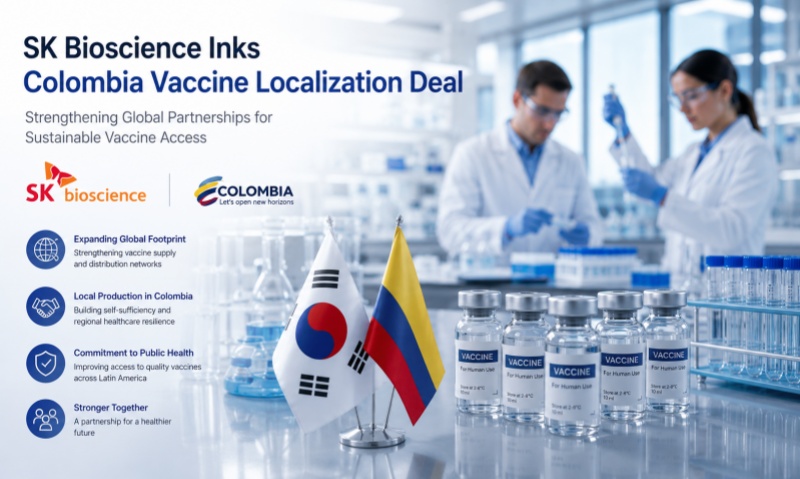
SK Bioscience, a leading South Korean biotechnology and vaccine developer, has announced a significant milestone in its global expansion strategy with the signing of a vaccine localization agreement in Colombia. The partnership marks an important step toward strengthening regional vaccine self-sufficiency in Latin America while expanding SK Bioscience’s international manufacturing and technology transfer capabilities.
The agreement, finalized with key Colombian health and industrial stakeholders, will focus on the localized production of vaccines designed to address both routine immunization needs and emerging infectious disease threats. This collaboration reflects a broader global trend toward decentralized vaccine manufacturing and enhanced regional preparedness following lessons learned from recent global health crises.
Colombia has been actively working to reinforce its domestic biopharmaceutical capabilities in recent years. By partnering with SK Bioscience, the country aims to reduce reliance on imported vaccines and build a more resilient healthcare supply chain.
The localization initiative is expected to include technology transfer, workforce training, and the establishment of local production infrastructure. SK Bioscience will provide technical expertise in vaccine formulation, quality control systems, and manufacturing process optimization, ensuring that Colombian facilities meet international standards such as Good Manufacturing Practice (GMP).
This move aligns with the broader goals of the Pan American Health Organization (PAHO), which has repeatedly emphasized the importance of regional vaccine production capacity in improving equitable access to immunization across the Americas.
For SK Bioscience, the Colombia agreement represents another strategic step in its ambition to become a globally integrated vaccine and biotechnology leader. The company has increasingly focused on international collaborations that combine its research and development strengths with local manufacturing capabilities.
SK Bioscience has built a strong portfolio of vaccines targeting infectious diseases such as influenza, pneumococcal disease, and varicella. In addition, the company has played a notable role in global COVID-19 vaccine development efforts, including partnerships with multinational pharmaceutical firms.
The Colombia localization deal reflects SK Bioscience’s evolving business model, which prioritizes:
Technology transfer partnerships
Regional manufacturing hubs
Sustainable vaccine supply chains
Collaborative public health initiatives
By embedding its technologies within local production ecosystems, SK Bioscience is positioning itself not just as a vaccine exporter, but as a long-term strategic partner in global health infrastructure development.
A central component of the agreement is comprehensive technology transfer. SK Bioscience will work closely with Colombian partners to ensure that manufacturing processes are fully adapted to local conditions while maintaining global quality benchmarks.
Key areas of support include:
Vaccine antigen production technology
Formulation and stabilization techniques
Fill-finish manufacturing processes
Cold chain logistics integration
Quality assurance and regulatory compliance systems
In parallel, the partnership will emphasize human capital development. Colombian scientists, engineers, and technicians will receive specialized training programs designed to build long-term domestic expertise in vaccine production.
This dual focus on infrastructure and skills development is expected to create a sustainable foundation for Colombia’s future participation in global vaccine supply chains.
The localization agreement is expected to generate significant economic and healthcare benefits for Colombia. On the economic side, the establishment of vaccine production capabilities will create high-skilled jobs, stimulate biotechnology investment, and strengthen the country’s pharmaceutical sector.
From a public health perspective, localized vaccine production can dramatically improve response times during outbreaks and reduce dependency on global supply fluctuations. This is particularly important in regions that have historically faced delays in vaccine access during global emergencies.
Experts suggest that such partnerships may also enhance Colombia’s ability to participate in regional vaccine distribution networks, potentially positioning the country as a hub for Central and South American immunization supply chains.
The SK Bioscience–Colombia agreement reflects a broader global shift in the pharmaceutical industry. Governments and biotech companies are increasingly moving toward decentralized manufacturing models to reduce vulnerabilities exposed by global supply chain disruptions.
Key drivers of this trend include:
Pandemic preparedness requirements
Geopolitical supply chain diversification
Demand for equitable vaccine access
Advances in modular and flexible manufacturing systems
Countries across Asia, Africa, and Latin America are actively seeking partnerships with established biotech firms to accelerate domestic production capabilities. SK Bioscience’s involvement in this movement underscores its growing influence in global health policy and infrastructure development.
While the Colombia agreement currently focuses on vaccine localization, both parties have indicated potential for broader collaboration in the future. This may include joint research initiatives, expansion into additional vaccine categories, and the development of next-generation biologics.
Industry analysts view the partnership as a model for future public-private collaborations in global health, particularly in emerging markets seeking to balance affordability, accessibility, and technological advancement.
As SK Bioscience continues to expand its international presence, its role in shaping the future of global vaccine manufacturing is likely to become increasingly prominent.
The vaccine localization agreement between SK Bioscience and Colombian partners represents a major step forward in the evolution of global biopharmaceutical collaboration. By combining advanced Korean biotechnology expertise with Colombia’s growing industrial capacity, the partnership aims to strengthen regional health security while contributing to a more balanced global vaccine ecosystem.
In a world still adapting to post-pandemic realities, such initiatives highlight the importance of cooperation, technology transfer, and local empowerment in building resilient healthcare systems for the future.