
Consultation Hotline
+1 (302) 618-8777
+1 (302) 618-8777
Current location:Home > Blogs > Industry News
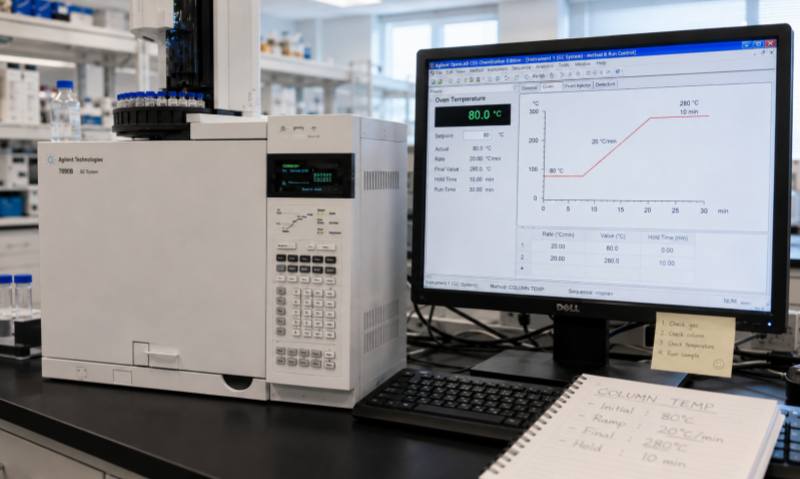
The U.S. scientific instrumentation industry is entering a period of accelerated transformation driven by three converging forces: a strong rebound in the semiconductor and analog chip sector, tightening export controls on high-end research equipment bound for China, and intensifying policy competition between the United States and China in biotechnology and sensor technologies. Together, these dynamics are reshaping global supply chains, redefining market priorities, and forcing instrument manufacturers to recalibrate both product strategies and geopolitical risk exposure.
A key driver of recent momentum is the robust recovery of the global semiconductor industry after a prolonged inventory correction cycle. Leading U.S. chipmakers and equipment suppliers, including Intel, NVIDIA, and AMD, have reported improved demand signals across data center, AI accelerator, and advanced packaging segments.
This recovery is having a direct spillover effect on the instrumentation ecosystem. Semiconductor fabrication, process development, and failure analysis rely heavily on precision measurement tools, including mass spectrometry systems, electron microscopy platforms, metrology tools, and advanced chemical analysis instruments. As chip geometries continue to shrink and complexity increases, demand for ultra-high-precision analytical equipment is accelerating.
Equipment suppliers are reporting increased orders from both fabrication plants and R&D laboratories focusing on next-generation nodes such as sub-5nm processes, advanced lithography materials, and 3D packaging technologies. The rise of artificial intelligence workloads is also driving demand for high-bandwidth memory (HBM) production, further intensifying requirements for defect detection and contamination control instrumentation.
Industry analysts note that this cycle differs from previous semiconductor upswings due to its strong structural component. Rather than a short-term inventory correction rebound, the current growth is being driven by sustained AI infrastructure investment and long-term chip redesign cycles.
At the same time, the U.S. government has continued to expand export restrictions on advanced scientific and industrial instrumentation destined for China. These controls primarily target high-end semiconductor manufacturing tools, precision analytical systems, and dual-use technologies that could be applied in advanced chip fabrication or defense-related research.
In recent regulatory updates, restrictions have been extended to cover a broader range of deposition systems, inspection equipment, and certain high-resolution analytical instruments. The policy objective is to limit China’s access to cutting-edge semiconductor manufacturing capabilities while preserving U.S. leadership in critical technologies.
This tightening regulatory environment is having a measurable impact on U.S. instrumentation manufacturers, many of which historically relied on China as one of their largest overseas markets. Companies such as Thermo Fisher Scientific and Agilent Technologies, which operate across analytical chemistry, life sciences, and materials science instrumentation, are increasingly required to navigate complex licensing requirements and compliance frameworks.
Export licensing delays and product classification uncertainties are becoming more common, leading to longer sales cycles and increased administrative costs. In response, many firms are diversifying their geographic exposure by expanding into Southeast Asia, India, and the Middle East, where demand for laboratory infrastructure and industrial testing capabilities is growing.
Beyond semiconductors, biotechnology and sensor systems are emerging as another focal point of U.S.–China strategic competition. Both countries are investing heavily in advanced diagnostics, biosensing platforms, and next-generation analytical instrumentation that integrates AI-driven data processing with high-throughput laboratory systems.
In the United States, government-backed research programs are accelerating innovation in genomic sequencing, bioinformatics, and real-time disease detection systems. These technologies depend heavily on sophisticated instrumentation, including liquid chromatography–mass spectrometry (LC-MS), polymerase chain reaction (PCR) platforms, and automated sample handling systems.
China, meanwhile, is rapidly expanding its domestic instrumentation manufacturing base, seeking to reduce reliance on foreign suppliers for critical life sciences and environmental monitoring equipment. This has led to increased competition in mid- and high-end laboratory instruments, particularly in academic research and clinical diagnostics markets.
Sensor technologies—ranging from environmental gas sensors to industrial process monitoring systems—are also becoming strategically significant. These systems are increasingly embedded in smart manufacturing, autonomous systems, and national security applications, blurring the lines between commercial and defense-related instrumentation.
The combined impact of semiconductor recovery and geopolitical restrictions is accelerating a broader realignment of global supply chains. U.S. instrumentation firms are reassessing manufacturing footprints, supplier dependencies, and customer distribution strategies.
Many companies are adopting a “China-plus-one” or “multi-regional production” strategy, shifting parts of their manufacturing and assembly operations to countries such as Malaysia, Singapore, and Vietnam. This approach aims to reduce exposure to export control risks while maintaining access to Asian growth markets.
At the same time, firms are investing more heavily in domestic U.S. production capabilities, supported by federal incentives tied to semiconductor reshoring initiatives and advanced manufacturing grants. This trend is particularly visible in high-value instrumentation segments where intellectual property protection and supply chain security are critical.
Technological innovation remains a defining feature of the industry’s current cycle. Instrument manufacturers are increasingly integrating artificial intelligence, cloud connectivity, and automation into their platforms. These enhancements allow laboratories to process larger datasets, reduce human error, and accelerate experimental workflows.
In semiconductor applications, AI-driven inspection systems are improving defect detection rates at nanometer scales. In life sciences, automated instrumentation is enabling higher throughput in drug discovery and clinical testing. These advancements are not only improving performance but also reshaping customer expectations for integrated, software-driven laboratory ecosystems.
However, the pace of innovation is also increasing competitive pressure. Smaller firms and emerging players are leveraging niche technologies to challenge established leaders in specific instrumentation categories, particularly in software-enabled analytical platforms and portable diagnostic devices.
Looking ahead, the U.S. instrumentation industry is expected to maintain moderate to strong growth, supported by sustained semiconductor investment and expanding life sciences research funding. However, growth will occur under increasingly complex geopolitical constraints.
Export controls are likely to remain a persistent feature of the market landscape, shaping both product development and international sales strategies. At the same time, competition with China is expected to intensify across multiple technology domains, particularly in biotechnology and sensor integration.
Ultimately, the industry is entering a new phase defined by dual pressures: rapid technological advancement on one hand, and tightening global fragmentation on the other. Companies that can balance innovation with geopolitical adaptability are likely to emerge as the long-term winners in this evolving landscape.