
Consultation Hotline
+1 (302) 618-8777
+1 (302) 618-8777
Current location:Home > Blogs > Industry News
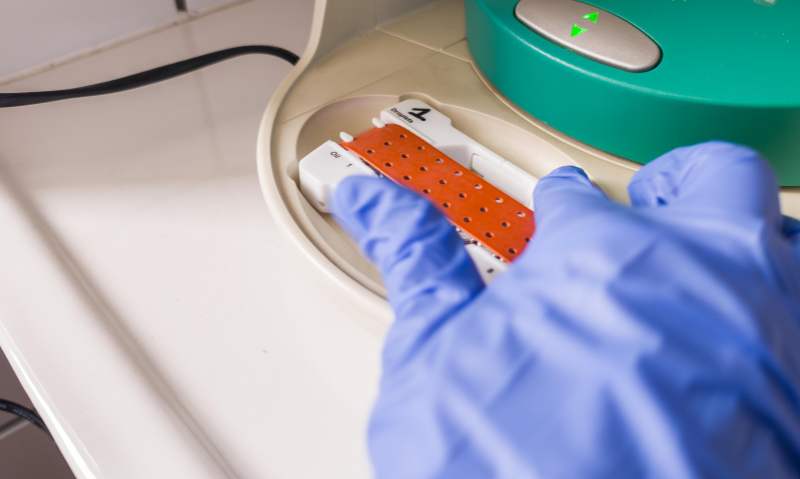
Droplet Digital™ PCR (ddPCR™) has rapidly become one of the most powerful technologies in molecular biology, clinical diagnostics, and biotechnology research. By enabling highly sensitive and absolute quantification of nucleic acids, ddPCR has transformed the way scientists analyze DNA and RNA targets. Compared with traditional PCR and quantitative real-time PCR (qPCR), ddPCR offers superior precision, enhanced sensitivity, and greater reproducibility, making it an increasingly valuable tool across multiple scientific fields.
The core principle of ddPCR is based on partitioning a PCR reaction into thousands or even millions of nanoliter-sized droplets. Each droplet functions as an independent PCR microreactor. After amplification, droplets are classified as positive or negative according to fluorescence signals, allowing the system to calculate the absolute concentration of target molecules using Poisson statistics. Unlike qPCR, ddPCR does not rely heavily on standard curves, which significantly improves quantitative accuracy.
One of the most important applications of ddPCR is in cancer research and oncology diagnostics. Scientists use ddPCR to detect rare genetic mutations, monitor tumor burden, and evaluate treatment responses with remarkable sensitivity. Circulating tumor DNA (ctDNA) analysis has become a particularly promising area. ddPCR can identify low-frequency mutations in blood samples, enabling noninvasive “liquid biopsy” testing for cancers such as lung cancer, colorectal cancer, and breast cancer. This approach helps clinicians monitor disease progression and detect minimal residual disease earlier than conventional methods.
In infectious disease research, ddPCR has demonstrated exceptional performance in detecting viral and bacterial pathogens. During global outbreaks and emerging disease events, researchers have relied on ddPCR for highly accurate viral load quantification. The technology has been widely applied in studies involving HIV, hepatitis viruses, influenza, and SARS-CoV-2. Because ddPCR is highly tolerant of inhibitors commonly found in complex samples, it often provides more reliable results than qPCR when working with environmental or clinical specimens.
Environmental monitoring is another rapidly expanding field for ddPCR applications. Researchers use the technology to identify microbial contamination in water, soil, and food samples. Wastewater surveillance programs increasingly utilize ddPCR to monitor viral pathogens and antibiotic resistance genes in communities. The technology’s ability to detect low-abundance targets makes it especially valuable for public health and environmental safety initiatives.
In genetic research and genomics, ddPCR is commonly used for copy number variation (CNV) analysis, rare allele detection, and gene expression studies. Scientists studying inherited disorders frequently apply ddPCR to identify subtle genomic changes that may not be easily detected using conventional methods. The technology is also useful for validating next-generation sequencing (NGS) results, particularly when confirming low-frequency variants.
Agricultural biotechnology has also benefited from ddPCR advancements. Researchers use ddPCR to detect genetically modified organisms (GMOs), identify plant pathogens, and evaluate crop genetics. In food safety testing, the method provides accurate quantification of contamination and allergen-related DNA targets. The precision and reproducibility of ddPCR help ensure compliance with regulatory standards in food and agricultural industries.
Another important application is cell and gene therapy development. ddPCR enables accurate quantification of viral vectors used in gene delivery systems, including adeno-associated viruses (AAVs) and lentiviral vectors. Researchers developing CAR-T cell therapies and other advanced biologics rely on ddPCR to monitor vector copy numbers and assess product quality during manufacturing processes.
The pharmaceutical and biopharmaceutical industries are increasingly integrating ddPCR into drug development workflows. The technology supports biomarker discovery, companion diagnostic development, and quality control testing. Because ddPCR can deliver highly reproducible quantitative data, it is especially useful in clinical trials where precision and consistency are critical.
As automation and microfluidic technologies continue to improve, ddPCR systems are becoming more user-friendly and scalable. Modern instruments now offer higher throughput, faster analysis times, and improved multiplexing capabilities. These advancements allow laboratories to process larger sample volumes while maintaining analytical sensitivity and accuracy.
Despite its many advantages, ddPCR does face some limitations. Initial instrument costs can be relatively high, and sample throughput may still be lower than some qPCR platforms in certain applications. In addition, assay design and optimization require technical expertise to achieve the best results. However, ongoing technological innovations are steadily reducing these challenges and expanding accessibility.
Looking ahead, the future of ddPCR appears extremely promising. As precision medicine, molecular diagnostics, and personalized therapies continue to evolve, demand for highly accurate nucleic acid quantification technologies will grow significantly. ddPCR is expected to play an increasingly important role in early disease detection, infectious disease surveillance, cancer monitoring, and advanced genomic research.
In conclusion, Droplet Digital™ PCR has become a transformative technology with applications far beyond traditional molecular biology research. Its exceptional sensitivity, accuracy, and versatility make it a valuable tool in healthcare, environmental science, agriculture, and biotechnology. As researchers continue to discover new uses for ddPCR, the technology will remain at the forefront of scientific innovation and modern diagnostics.