
Consultation Hotline
+1 (302) 618-8777
+1 (302) 618-8777
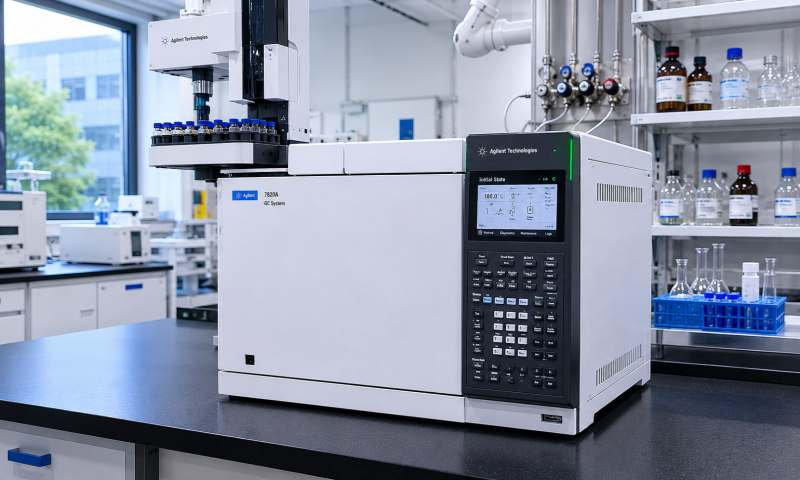
Headspace gas chromatography (HS-GC) is a widely used analytical technique for determining residual solvents in pharmaceutical products, food, cosmetics, chemicals, and other materials. Compared with direct liquid injection, headspace sampling reduces the introduction of nonvolatile matrix components into the GC system and can improve instrument cleanliness and analytical stability. However, reliable residual solvent analysis requires careful control of sample preparation, incubation conditions, gas chromatography parameters, and quantitative procedures.
In headspace GC, a sample is placed in a sealed vial and heated under controlled conditions. Volatile compounds migrate from the sample matrix into the gas phase above the sample. After equilibrium is established, a portion of the headspace gas is introduced into the GC system for separation and detection.
The measured concentration depends not only on the actual amount of solvent in the sample but also on the partitioning behavior between the sample matrix and the headspace. Therefore, sample temperature, equilibration time, vial volume, matrix composition, and agitation can all influence the analytical result.
Accurate sample preparation is one of the most important factors in residual solvent analysis. The sample should be weighed accurately and transferred into a clean, appropriate headspace vial.
The sample solvent or diluent must be selected carefully. It should dissolve or adequately disperse the sample while having minimal interference with the target solvents. The diluent itself should also have sufficiently low background contamination.
When internal standards are used, they should be added accurately and consistently to all calibration standards and test samples. Differences in internal standard concentration can directly affect quantitative results.
The quality of the vial and septum can have a significant impact on analytical performance. Vials should be clean and compatible with the incubation temperature and sample matrix.
The septum must provide a reliable seal while remaining compatible with the solvents being analyzed. Poorly sealed vials may allow volatile compounds to escape, resulting in low or inconsistent recovery.
Over-tightening vial caps can also damage the septum, while insufficient tightening may cause leakage. Therefore, the manufacturer's recommended sealing procedure should be followed.
Headspace incubation temperature and equilibration time should be carefully controlled. Increasing the temperature generally increases the transfer of volatile compounds from the sample into the gas phase. However, excessively high temperatures may cause sample degradation, matrix changes, or unwanted reactions.
Equilibration time should be sufficient to establish reproducible partitioning between the sample and headspace. If the incubation time is too short, the system may not reach equilibrium, resulting in poor repeatability.
Agitation can accelerate equilibrium and improve reproducibility for certain sample types. The same incubation temperature, time, and agitation conditions should be applied consistently to standards and samples.
The GC column should provide adequate separation of all target residual solvents and potential interfering compounds. Column selection should consider solvent polarity, volatility, boiling points, and sample matrix.
The oven temperature program should provide sufficient resolution while maintaining a reasonable analysis time. Poor chromatographic separation can result in overlapping peaks and inaccurate quantification.
Carrier gas flow should also remain stable. Changes in flow rate can affect retention times, peak resolution, and detector response.
Calibration standards should cover the expected concentration range of the samples. Standards should be prepared accurately using qualified reference materials and appropriate solvents.
An internal standard is often useful because it can compensate for variations in injection volume and certain instrumental fluctuations. Calibration linearity should be evaluated before routine sample analysis.
The analytical sequence should normally include blanks, calibration standards, system suitability samples, and test samples. Unexpected peaks in blank runs should be investigated before sample results are accepted.
Residual solvent analysis is sensitive to contamination because many solvents are volatile and can easily enter the laboratory environment or analytical system.
Solvents, vials, syringes, septa, and other consumables should be appropriately controlled. The GC inlet, column, detector, and headspace sampling system should be maintained according to the manufacturer's recommendations.
Carryover should also be evaluated, particularly when samples with significantly different concentrations are analyzed in the same sequence. A blank injection after a high-concentration sample can help determine whether significant carryover is present.
Before analyzing samples, system suitability should be assessed using appropriate reference solutions. Important parameters may include retention time repeatability, peak area repeatability, resolution, theoretical performance, and calibration response, depending on the analytical method.
If peak areas fluctuate significantly, possible causes include vial leakage, inconsistent incubation, unstable carrier gas flow, autosampler problems, or detector instability. If unexpected peaks appear, investigate the blank, diluent, vial, septum, sample matrix, and GC flow path systematically.
Headspace GC provides an efficient and reliable approach for residual solvent analysis, but accurate results depend on strict control of the entire analytical process. Sample preparation, vial sealing, incubation temperature, equilibration time, agitation, GC separation, calibration, and contamination control must all be carefully managed.
By establishing standardized operating procedures, regularly verifying system performance, and maintaining the headspace sampler and GC system properly, laboratories can improve precision, repeatability, and reliability in residual solvent testing.