
Consultation Hotline
+1 (302) 618-8777
+1 (302) 618-8777
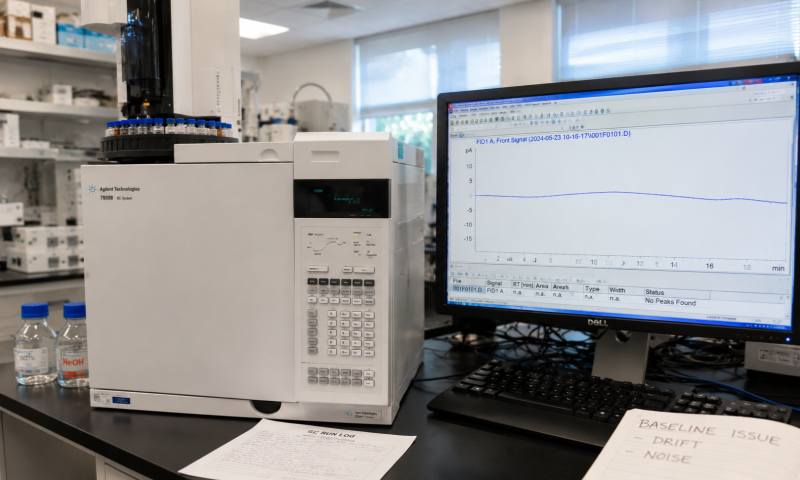
Agilent gas chromatography (GC) columns are precision components responsible for separating compounds according to their volatility and interaction with the stationary phase. Even when the GC instrument itself is operating normally, column performance can gradually deteriorate due to contamination, thermal damage, oxygen exposure, or mechanical problems. Typical symptoms include reduced resolution, increased baseline noise, peak tailing, retention-time shifts, loss of sensitivity, and shortened column lifetime. Understanding the major causes of column degradation can help laboratories identify problems quickly and implement appropriate corrective measures.
One of the most common reasons for GC column performance degradation is contamination introduced by samples. High-boiling compounds, oils, polymers, salts, pigments, biological materials, and other nonvolatile components may accumulate near the column inlet.
When contaminated samples are repeatedly injected, these materials can interact with the stationary phase and gradually reduce column efficiency. Typical symptoms include peak tailing, poor resolution, increased background, and unstable retention times. In severe cases, active contamination can cause significant loss of sensitivity.
The first step is to evaluate the sample matrix and injection method. If contamination is concentrated near the column inlet, trimming a short section from the front of the column may restore performance, provided the column manufacturer permits this procedure. The inlet liner and septum should also be inspected and replaced when contaminated.
Preventive measures include appropriate sample preparation, filtration, dilution when necessary, and avoiding excessive injection volumes. For complex matrices, the use of a suitable guard column or retention gap can help protect the analytical column.
Every GC column has a specified operating temperature range and maximum temperature limit. Operating a column above its recommended maximum temperature can accelerate degradation of the stationary phase.
Thermal damage may produce increased column bleed, higher baseline levels, reduced sensitivity, and deterioration of peak shape. Repeated exposure to temperatures close to or above the upper temperature limit can shorten column lifetime even if the column initially appears to function normally.
When troubleshooting, review the oven temperature program and the final temperature used during analysis and conditioning. Make sure the maximum temperature is appropriate for the specific column model and stationary phase.
Avoid unnecessary high-temperature conditioning. If column bleed suddenly increases after a high-temperature event, allow the column to cool and evaluate baseline behavior under normal conditions. If performance does not recover, the stationary phase may have been permanently damaged and column replacement may be required.
Oxygen and moisture are particularly harmful to many GC stationary phases, especially at elevated temperatures. Oxygen can accelerate oxidative degradation, while moisture may affect column activity and separation performance.
A column may be exposed to oxygen because of a carrier-gas leak, an improperly installed column, an empty or exhausted oxygen trap, or incorrect gas-line connections. Leaks at the inlet or detector end can also allow air to enter the system.
Symptoms may include increased column bleed, unstable baseline, changes in retention behavior, and reduced column lifetime. When a column is heated while oxygen is present, degradation can occur much more rapidly.
To reduce this risk, use high-purity carrier gas and appropriate gas purification traps. Regularly check the gas supply system and GC connections for leaks. When a column is not in use, follow the manufacturer's recommended storage and capping procedures. If the instrument must be shut down for an extended period, protect the column from atmospheric contamination according to the column manufacturer's instructions.
Incorrect installation can also reduce column performance. If the column is inserted too far or not far enough into the inlet or detector, the active separation region may not be positioned correctly. This can produce poor peak shape, reduced response, or inconsistent results.
Mechanical damage can occur when the column is sharply bent, crushed, scratched, or repeatedly handled near the connection points. Excessive force during installation may damage the fused-silica tubing or create small leaks.
During installation, cut the column end cleanly using an appropriate column cutter. Inspect the cut under suitable magnification when necessary and ensure that the column is inserted to the correct depth according to the GC manufacturer's instructions.
Avoid excessive bending and protect the column from physical impact. After installation, perform a leak check before starting the analytical method. If a column has been damaged near one end, trimming the damaged section may solve the problem when sufficient column length remains.
Not every performance problem requires immediate column replacement. First, verify the inlet, gas supply, temperature program, detector, and sample preparation. Run a known standard under a validated method and compare retention times, peak areas, resolution, and peak shapes with historical results.
If trimming the contaminated inlet section, replacing consumables, cleaning the system, and correcting leaks do not restore performance, the column may have suffered permanent stationary-phase degradation.
The four major causes of Agilent GC column performance degradation are sample contamination, excessive temperature, oxygen or moisture exposure, and improper installation or mechanical damage. These problems can often be prevented through appropriate sample preparation, correct temperature control, high-purity gases, leak prevention, careful installation, and regular maintenance. Early recognition of abnormal peak shapes, column bleed, retention-time changes, and declining resolution can significantly extend column service life and help maintain reliable GC analytical performance.