
Consultation Hotline
+1 (302) 618-8777
+1 (302) 618-8777
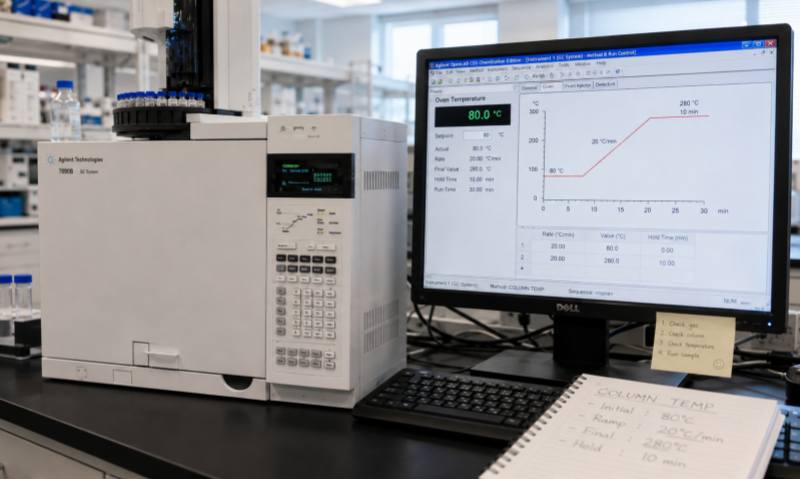
Gas chromatography (GC) is widely used for qualitative and quantitative analysis of volatile and semi-volatile compounds. A stable carrier-gas supply, clean injection system, properly installed column, suitable temperature program, and well-maintained detector are essential for obtaining reliable chromatographic results. Two common GC problems are complete absence of peaks and reduced sensitivity. Although these symptoms may appear similar, their causes can be very different. Systematic troubleshooting can help identify the problem quickly and prevent unnecessary replacement of components.
When no chromatographic peaks are observed, first determine whether the problem is related to the sample, injection system, column, carrier gas, or detector.
Confirm that the sample has been prepared correctly and that the target compounds are actually present. Check the sample vial, solvent, concentration, and expiration date. If an autosampler is used, verify that the correct vial position and injection method have been selected.
Inspect the syringe for blockage, leakage, bent needles, or poor plunger movement. A damaged syringe may fail to transfer the sample into the inlet. For manual injection, confirm that the syringe needle is properly inserted through the septum and that the injection is performed correctly.
Insufficient carrier-gas flow is another major cause of missing peaks. Check the gas cylinder pressure, regulator, gas supply lines, and instrument inlet pressure. Confirm that the correct carrier gas has been selected and that the actual flow or column flow matches the method.
Leaks around the inlet, column connections, or detector can also cause abnormal flow and poor analyte transfer. A leak test should be performed if the pressure or flow is unstable.
A column that is incorrectly installed, disconnected, blocked, or severely damaged can prevent analytes from reaching the detector. Check both ends of the column and verify the insertion depth specified by the instrument manufacturer.
If the column has been exposed to oxygen, moisture, excessive temperature, or incompatible samples, its performance may deteriorate. In severe cases, column replacement may be necessary.
If the injection system and column appear normal but no peaks are observed, inspect the detector. For an FID, confirm that hydrogen, air, and makeup gas are supplied at the correct flow rates and that the flame is actually ignited.
For other detectors, check the required gases, power supply, detector temperature, and operating conditions. Detector faults should be diagnosed according to the specific detector type and manufacturer's service procedures.
Reduced sensitivity means that peaks are still present but their response is significantly lower than expected. The first step is to determine whether the reduction affects all compounds or only specific analytes.
Prepare a fresh standard and compare its response with a previously verified standard. Incorrect dilution, evaporation, degradation, or preparation errors can create the appearance of instrument sensitivity loss.
Check the injection volume, syringe condition, autosampler settings, split ratio, splitless time, and inlet temperature. An excessively high split ratio can significantly reduce the amount of sample entering the column.
The inlet is one of the most common sources of sensitivity problems. A contaminated liner, blocked inlet, damaged septum, incorrect liner type, or degraded seal can affect vaporization and sample transfer.
Replace contaminated liners, septa, and other consumable components when necessary. After maintenance, verify that the inlet is correctly assembled and leak-free.
Column contamination can reduce peak response and cause peak tailing or abnormal retention behavior. If contamination is concentrated near the column inlet, trimming a small section of the column may restore performance when permitted by the column manufacturer.
If the stationary phase has been damaged, the column may require replacement. Avoid injecting samples that contain excessive nonvolatile residues or matrix components.
Detector contamination, incorrect gas flows, improper temperature, or aging detector components can reduce sensitivity. For an FID, inspect the jet and collector for contamination and verify hydrogen, air, and makeup-gas flows.
For detectors requiring specialized maintenance, follow the manufacturer's cleaning and replacement procedures. Do not disassemble sensitive or regulated detector components without appropriate authorization and training.
A systematic sequence can save considerable time:
Verify the sample and standard.
Check the syringe or autosampler.
Confirm carrier-gas pressure and flow.
Perform a leak check.
Inspect the inlet and consumables.
Verify column installation and condition.
Check detector temperature, gas supply, and operating status.
Run a known standard to confirm system performance.
This approach helps distinguish between sample-related problems and actual instrument faults.
Preventive maintenance is the most effective way to reduce GC failures. Replace septa, liners, and other consumables at appropriate intervals. Keep gas lines clean and dry, use high-quality carrier and detector gases, and install suitable gas traps when required.
Avoid excessive sample loading and filter samples when appropriate. Regularly inspect chromatographic baselines, retention times, peak areas, and detector response. Recording these parameters can help identify gradual sensitivity loss before it becomes a major problem.
In conclusion, a GC with no peaks should first be checked for sample, injection, carrier-gas, column, and detector problems. When peaks are present but sensitivity is reduced, the inlet, split ratio, column condition, detector contamination, and sample preparation should receive particular attention. By using a step-by-step troubleshooting strategy and maintaining critical consumables regularly, laboratories can restore GC performance efficiently and obtain stable, reproducible analytical results.