
Consultation Hotline
+1 (302) 618-8777
+1 (302) 618-8777
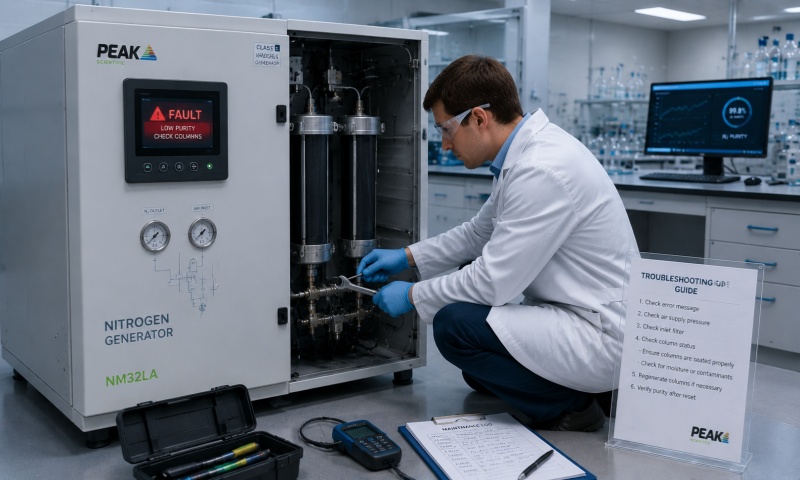
Air generators are widely used in laboratories to provide a stable air source for gas chromatographs, GC-MS systems, and other analytical instruments. A certain level of compressor or cooling-fan noise is normal. However, if the equipment suddenly becomes noisy at startup or develops unusual sounds during operation, this may indicate a mechanical, pneumatic, or electrical problem. Early diagnosis can help prevent minor faults from developing into major failures.
A loud noise immediately after startup is often related to the compressor. After long-term operation, components such as bearings, pistons, or other moving parts may become worn. This can produce knocking, rubbing, or strong vibration during startup.
If the noise gradually decreases after startup, it may be related to the compressor's starting load. However, continuous or progressively louder noise requires further inspection.
Solution: Disconnect the power and check whether the compressor mounting bolts are loose. Observe whether excessive vibration occurs during operation. If the noise continues, the compressor should be inspected by qualified service personnel.
An air generator produces mechanical vibration during operation. If it is placed on an uneven or unstable surface, the vibration can be amplified through resonance.
Worn or damaged rubber feet can also increase vibration and create a continuous low-frequency humming sound.
Solution: Make sure the generator is placed on a stable, level surface. Check that all support feet are properly positioned and replace damaged vibration-isolation pads when necessary.
Cooling fans operate continuously or intermittently to remove heat from the equipment. Dust accumulation, worn bearings, or damaged fan blades can cause buzzing, rubbing, or periodic noises.
Solution: Inspect the air inlet and outlet for dust or blockage. Clean the ventilation openings and check whether the fan rotates smoothly. A damaged fan should be replaced promptly.
Excessive internal pressure, blocked tubing, or excessive resistance at the gas outlet can increase the compressor load and cause abnormal operating noise.
Solution: Check the outlet tubing for kinks, blockage, or excessive bending. Verify that the downstream instrument's pressure requirements are compatible with the air generator. Pressure gauges and control systems should also be checked.
Loose pneumatic connections can create a noticeable hissing sound. In addition to producing noise, air leakage can make the compressor run more frequently and reduce the generator's efficiency.
Solution: Inspect tubing, connectors, valves, and joints for leaks or loose connections. Replace cracked or aged tubing and tighten loose fittings appropriately.
Blocked filters, accumulated condensate, and poor compressor maintenance can increase operating resistance and noise. Regular maintenance is therefore essential.
Operators should periodically drain condensate, inspect filters, check pneumatic connections, and maintain the compressor and cooling system according to the manufacturer's recommendations.
Abnormal noise from an air generator should not simply be considered normal operating sound. Troubleshooting should generally proceed in the following order: compressor, installation stability, cooling fan, gas pressure, tubing connections, and maintenance condition.
If unusual noise is accompanied by unstable pressure, overheating, frequent compressor cycling, or an alarm, the equipment should be stopped and inspected by qualified technicians. Timely maintenance can protect the air generator itself and help ensure stable operation of connected analytical instruments such as gas chromatographs and GC-MS systems.