
Consultation Hotline
+1 (302) 618-8777
+1 (302) 618-8777
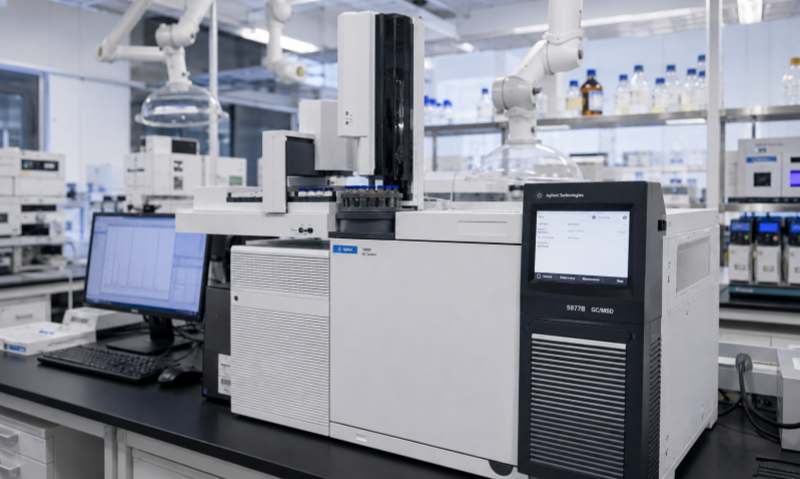
Gas chromatography–mass spectrometry (GC-MS) is a powerful analytical technique widely used in environmental analysis, pharmaceutical research, food safety testing, chemical analysis, and forensic applications. The performance of a GC-MS system depends not only on the quality of the instrument itself but also on proper maintenance of key components, including the GC column, ion source, and pre-rod assembly. Incorrect installation or insufficient cleaning can lead to poor peak shape, sensitivity loss, increased background noise, and unstable analytical results. Regular and standardized maintenance procedures are essential for maintaining instrument accuracy and extending system lifetime.
The GC column is one of the most critical components in a GC-MS system. Proper installation directly affects chromatographic separation efficiency and instrument sensitivity.
Before installation, the column should be carefully inspected for damage, contamination, or broken ends. The column ends must be cut cleanly and evenly using a suitable column cutter to ensure proper sealing and gas flow.
During installation, attention should be paid to the insertion depth of the column into both the injector and the MS interface. If the column is inserted too deeply, it may cause contamination or poor peak shape. If it is inserted too shallowly, analytes may not efficiently transfer into the ion source, resulting in reduced sensitivity.
After installation, the column should be conditioned according to manufacturer recommendations. Proper conditioning removes residual contaminants and stabilizes the stationary phase, reducing background signals during analysis.
The ion source is the area where sample molecules are ionized and converted into detectable ions. Because it is exposed directly to sample compounds, it is one of the most contamination-sensitive parts of a GC-MS system.
Over time, deposits may accumulate on ion source components, including the ionization chamber, filaments, lenses, and surrounding metal surfaces. These contaminants can cause:
Reduced sensitivity;
Increased background noise;
Poor peak response;
Unstable mass spectra.
During cleaning, the ion source should be removed according to the instrument manufacturer’s procedures. Components should be inspected carefully for discoloration, deposits, or physical damage.
Cleaning methods usually include solvent cleaning, ultrasonic cleaning, and gentle mechanical polishing where appropriate. After cleaning, all parts must be completely dried before reassembly to prevent contamination or vacuum problems.
The pre-rod is an important part of the ion transmission pathway in many GC-MS systems. It helps guide ions from the source area into the mass analyzer. Contamination on the pre-rod can reduce ion transmission efficiency and affect instrument sensitivity.
Common symptoms of pre-rod contamination include:
Lower signal intensity;
Poor calibration stability;
Increased chemical background.
During maintenance, the pre-rod should be carefully removed and cleaned using suitable solvents. Excessive force should be avoided because mechanical damage may affect ion transmission performance.
After cleaning, the component should be inspected for surface damage or residue before installation.
To maintain stable GC-MS performance, laboratories should establish a preventive maintenance schedule. Maintenance frequency should depend on sample type, injection volume, and instrument operating conditions.
Recommended practices include:
Replacing or trimming contaminated column sections when necessary;
Cleaning the ion source regularly based on sensitivity changes;
Checking the pre-rod condition during routine service;
Monitoring vacuum level and background signals;
Recording maintenance history and performance changes.
Proper GC-MS maintenance requires careful attention to column installation, ion source cleaning, and pre-rod inspection. These procedures directly influence chromatographic separation, ion transmission efficiency, and analytical sensitivity. By following standardized maintenance practices and performing preventive cleaning at appropriate intervals, laboratories can reduce instrument downtime, improve data quality, and extend the operational life of GC-MS systems. A well-maintained GC-MS provides more reliable results and better long-term analytical performance.