
Consultation Hotline
+1 (302) 618-8777
+1 (302) 618-8777
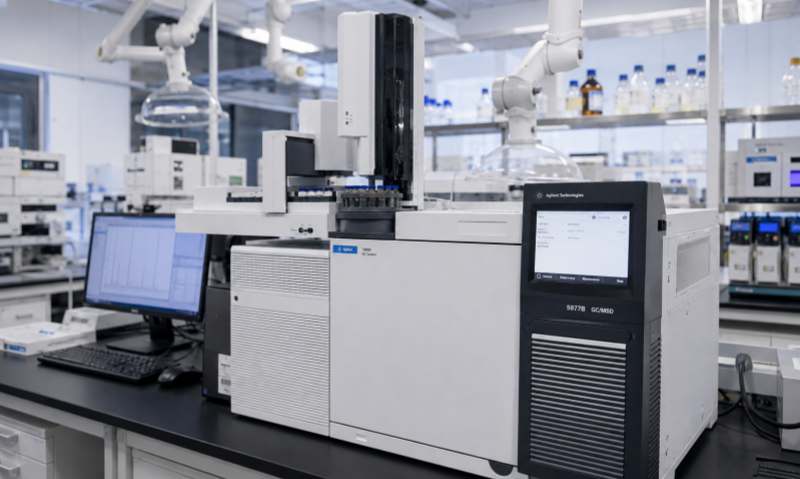
Gas chromatography (GC) is one of the most widely used analytical technologies in modern testing centers, quality control laboratories, environmental monitoring facilities, pharmaceutical laboratories, food safety institutions, and chemical analysis departments. Due to its excellent separation capability, high sensitivity, and reliable quantitative performance, routine GC systems have become essential analytical platforms for detecting volatile and semi-volatile compounds.
A conventional gas chromatography system is not a single instrument but an integrated analytical platform composed of several functional modules, including the gas supply system, sample injection system, chromatographic separation system, temperature control system, detection system, data acquisition system, and auxiliary components. Understanding the basic structure and configuration of a GC system is important for instrument operation, maintenance, troubleshooting, and analytical method development.
The carrier gas system is the foundation of gas chromatography operation. The carrier gas transports vaporized samples through the chromatographic column and directly affects separation efficiency, sensitivity, and analytical stability.
Common carrier gases include high-purity helium (He), hydrogen (H₂), and nitrogen (N₂). Helium is widely used because of its excellent inertness and optimal chromatographic performance. Hydrogen provides faster analysis speed and is increasingly adopted in high-throughput laboratories, while nitrogen is often used in applications requiring high sensitivity with specific detectors.
The carrier gas supply system generally consists of:
High-pressure gas cylinders or gas generators
Pressure regulators
Gas purification filters
Flow controllers
Electronic pressure control (EPC) modules
Modern GC instruments are usually equipped with electronic pressure control systems, which automatically regulate carrier gas flow and pressure to ensure stable retention times and improve analytical reproducibility.
The injection system is responsible for introducing samples into the GC system with high precision and repeatability. Since gas chromatography requires samples to be vaporized before separation, the injector plays a critical role in analysis quality.
Common injection configurations include:
The split injector is widely used for routine analysis. It allows only a portion of the vaporized sample to enter the column, preventing column overload when sample concentration is high.
The splitless mode is designed for trace-level analysis. The entire sample vapor enters the column, improving detection sensitivity for low-concentration compounds.
Many modern testing centers use automatic samplers to improve efficiency and reduce human operation errors. Autosamplers provide:
Accurate injection volume control
High sample throughput
Improved repeatability
Reduced operator workload
For laboratories conducting hundreds of samples daily, an autosampler is an essential configuration.
The chromatographic column is the core separation component of the GC system. It determines the separation capability and analytical performance.
GC columns are mainly divided into two categories:
Capillary columns are commonly used in modern laboratories because they provide:
High separation efficiency
Better peak resolution
Faster analysis speed
Lower sample requirements
They are typically made of fused silica and coated internally with stationary phases suitable for different applications.
Packed columns contain solid packing materials and are mainly used for specific applications requiring robust operation.
The GC oven provides precise temperature control for the chromatographic column. Temperature programming is one of the key advantages of GC technology. During analysis, the oven temperature can gradually increase according to a programmed method, allowing compounds with different boiling points to be effectively separated.
A high-performance GC oven typically provides:
Rapid heating and cooling capability
Excellent temperature uniformity
Accurate temperature control
Stable long-term operation
The detector converts separated compounds into measurable electrical signals. Different detectors are selected according to the target compounds and analytical requirements.
Common GC detectors include:
FID is one of the most widely used GC detectors. It provides excellent sensitivity for organic compounds, especially hydrocarbons. It features:
Wide linear range
High reliability
Simple operation
Low maintenance requirements
FID is widely applied in petrochemical, environmental, and chemical laboratories.
TCD is a universal detector capable of detecting many types of compounds, including permanent gases. It is non-destructive and commonly used for gas analysis.
ECD is highly sensitive to electronegative compounds such as halogenated substances. It is frequently used in pesticide residue and environmental analysis.
GC-MS combines chromatographic separation with mass identification capability. It provides structural information and high selectivity, making it a powerful platform for pharmaceutical, forensic, environmental, and food safety applications.
The data processing system is responsible for controlling the instrument, collecting signals, processing chromatographic peaks, and generating analytical reports.
Modern GC software platforms provide functions including:
Instrument control
Method development
Peak integration
Calibration curve calculation
Quantitative analysis
Data storage and management
For regulated laboratories, software compliance with data integrity requirements is also an important consideration.
A complete GC system also includes several auxiliary components:
Hydrogen and air supply systems for FID operation
Gas leak detection devices
Exhaust ventilation systems
Column installation accessories
Temperature monitoring modules
Maintenance tools
Proper installation and regular maintenance of these components are essential for safe operation and long-term instrument reliability.
A routine gas chromatography system in a testing center is a highly integrated analytical platform composed of multiple functional units. The carrier gas system provides stable mobile phase delivery, the injector introduces samples accurately, the column and oven achieve separation, the detector generates analytical signals, and the software system completes data processing.
Understanding the structure and configuration of GC systems helps laboratory personnel improve instrument utilization, optimize analytical methods, and reduce operational failures. With continuous advances in automation, sensitivity, and digital control technologies, modern gas chromatography instruments continue to play a critical role in scientific research, industrial quality control, and regulatory testing laboratories worldwide.