
Consultation Hotline
+1 (302) 618-8777
+1 (302) 618-8777
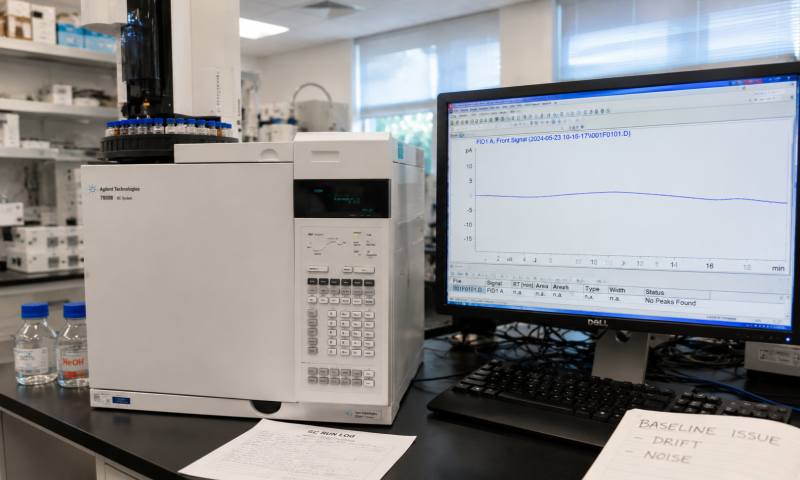
Agilent gas chromatographs (GC) are widely used in analytical laboratories for environmental monitoring, pharmaceutical testing, petrochemical analysis, food safety, and chemical research. Proper installation and commissioning are critical steps to ensure instrument stability, analytical accuracy, and long-term reliability. A well-installed GC system can significantly reduce operational problems and improve laboratory efficiency.
Before installing an Agilent GC instrument, the laboratory environment should meet the required operating conditions. The installation area should be clean, dry, well ventilated, and free from excessive vibration, dust, and electromagnetic interference. A stable power supply with proper grounding is essential to protect the instrument from electrical fluctuations.
The laboratory should prepare high-purity gases according to the detector configuration, including carrier gas (helium, hydrogen, nitrogen, or other gases), hydrogen, air, and makeup gas. Gas regulators, purification filters, and gas pipelines should be installed correctly to ensure stable gas quality. All gas connections must be checked for leakage before instrument operation.
During installation, the Agilent GC system should be placed on a stable laboratory bench with sufficient space around the instrument for ventilation and maintenance. After positioning the instrument, connect the power supply, communication cables, gas lines, and accessories such as autosamplers or data systems.
The capillary column installation is a key step. The column should be installed correctly into the inlet and detector according to the recommended insertion depth. Incorrect column positioning may cause poor peak shape, retention time instability, or sensitivity problems.
The injector system should also be inspected carefully. Install the appropriate liner, septum, and inlet components according to the analytical method. Ensure that all seals are properly tightened to prevent gas leakage.
After installation, the GC system requires systematic commissioning.
First, turn on the carrier gas supply and perform a leak test on the entire gas pathway. Stable gas flow is necessary before heating the oven and detector. Check inlet pressure, column flow rate, and detector gas flows using the instrument control software.
Second, set the injector, oven, and detector temperatures according to the analytical method. Allow sufficient equilibration time until all temperature zones become stable.
Third, configure the GC software parameters, including injection mode, temperature program, detector settings, and data acquisition conditions. Perform automatic instrument checks to confirm that electronic systems are functioning correctly.
For FID detectors, ignite the flame and verify the baseline signal. For GC-MS systems, check vacuum conditions, tune the mass spectrometer, and confirm system sensitivity using standard calibration compounds.
After basic commissioning, a standard sample should be analyzed to evaluate instrument performance. Important parameters include retention time stability, peak resolution, peak symmetry, sensitivity, and baseline noise.
If abnormal chromatographic results appear, check possible causes such as gas leakage, incorrect flow settings, column contamination, injector problems, or detector instability. Optimization of temperature programs, carrier gas flow, and injection conditions may be required to achieve the best analytical performance.
Correct installation and commissioning are essential for achieving reliable performance from Agilent gas chromatographs. By preparing the laboratory environment, installing components carefully, optimizing operating parameters, and performing performance verification, users can ensure accurate analysis, minimize instrument downtime, and extend the service life of the GC system. Regular maintenance and professional calibration further guarantee stable operation for demanding analytical applications.