
Consultation Hotline
+1 (302) 618-8777
+1 (302) 618-8777
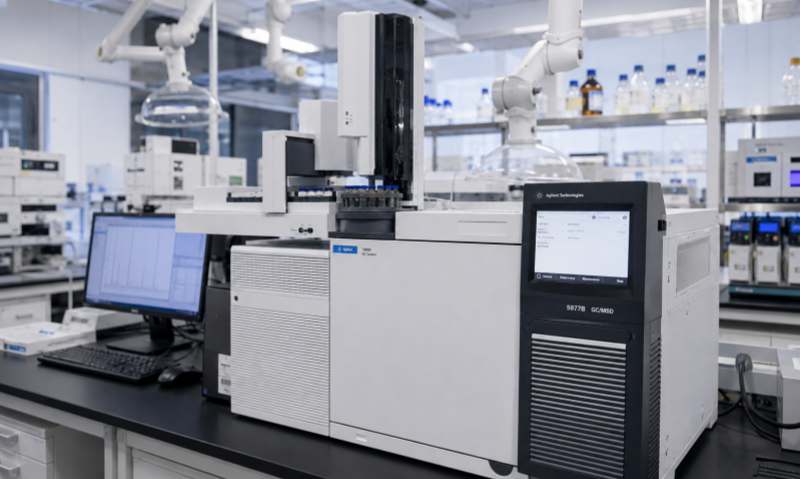
Agilent gas chromatographs (GC) are widely used in laboratories for chemical analysis, environmental testing, pharmaceutical research, petrochemical analysis, and food safety applications. Proper startup and shutdown procedures are essential for maintaining instrument stability, protecting key components, and ensuring accurate chromatographic results. During daily operation, one common problem encountered by users is that the instrument runs normally but produces no chromatographic peaks. Understanding the causes and solutions can help improve GC performance and reduce downtime.
Before starting an Agilent GC system, users should first check the gas supply, including carrier gas, hydrogen, air, and makeup gas. Gas cylinders should have sufficient pressure, and gas purity should meet analytical requirements. Leaks in gas lines, regulators, or connections can directly affect chromatographic performance.
After powering on the instrument, allow sufficient warm-up time for the oven, injector, and detector to reach stable temperatures. The carrier gas flow should be established before heating the column to prevent column damage. Users should confirm that the inlet temperature, detector temperature, oven program, and flow parameters match the analytical method.
For detectors such as FID, TCD, ECD, and MS detectors, ensure that the detector gases and ignition conditions are correctly configured. For example, an FID detector requires stable hydrogen and air supply before ignition. Failure to ignite the flame will result in no signal output.
Proper shutdown helps extend column and detector lifetime. Before turning off the instrument, the oven temperature should be reduced gradually to avoid thermal stress on the column. For capillary columns, maintaining carrier gas flow during cooling is recommended to prevent oxygen and moisture entering the column.
When shutting down an FID system, the hydrogen gas supply should be turned off according to standard procedures, followed by the detector and instrument power. For GC-MS systems, the vacuum system should not be switched off frequently because repeated vacuum cycles can shorten pump life.
Regular cleaning of injection ports, replacement of septa, liners, and ferrules, and inspection of gas connections are important parts of preventive maintenance.
A common reason for missing peaks is incorrect sample injection. Possible causes include empty sample vials, damaged syringes, blocked injection needles, incorrect injection volume, or autosampler malfunction.
Solution:
Check the sample preparation process, verify syringe operation, and confirm that the autosampler parameters are correct.
Without proper carrier gas flow, sample components cannot reach the column and detector. Gas leakage, incorrect pressure settings, or flow controller failure may cause no peaks.
Solution:
Check gas pressure, measure column flow, and perform a leak test on all connections.
If the detector is not functioning, the chromatographic signal will remain flat. For FID detectors, a missing flame is a frequent cause. For TCD or ECD detectors, incorrect temperature settings or electrical problems may reduce sensitivity.
Solution:
Check detector temperature, gas supply, ignition status, and detector signal settings.
A contaminated, damaged, or incorrectly installed column can prevent proper separation and cause abnormal chromatograms.
Solution:
Check column installation, condition the column, trim the column end, or replace the column if necessary.
Reliable operation of an Agilent GC system depends on correct startup and shutdown procedures, proper maintenance, and systematic troubleshooting. When no chromatographic peaks appear, users should check the sample injection system, carrier gas flow, detector condition, and column performance step by step. Proper operation and regular maintenance can significantly improve instrument stability, extend service life, and ensure accurate analytical results.