
Consultation Hotline
+1 (302) 618-8777
+1 (302) 618-8777
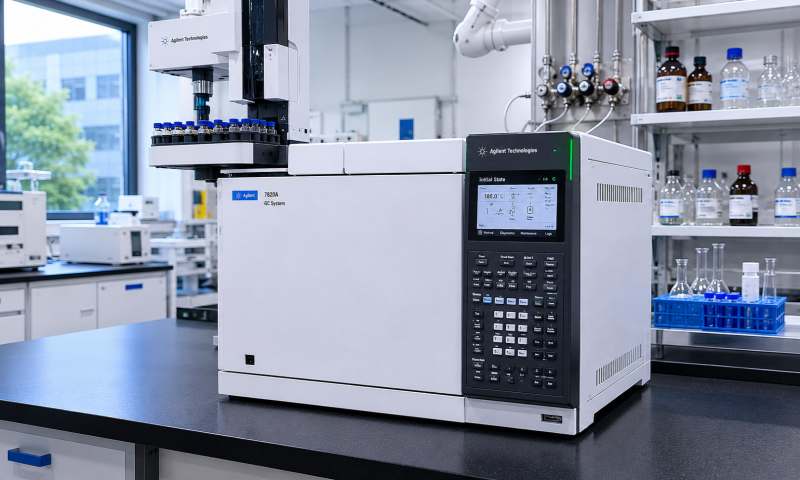
Gas chromatography (GC) is a widely used analytical technique in pharmaceutical, chemical, environmental, food, and materials laboratories. It provides accurate separation and detection of volatile and semi-volatile compounds. During daily operation, users may encounter various problems that affect analytical accuracy, sensitivity, and instrument stability. Understanding common GC failures and the principle of quenching is important for improving instrument performance and ensuring reliable analytical results.
One common problem in gas chromatography is unstable baseline. Baseline fluctuations may be caused by several factors, including carrier gas impurities, column contamination, temperature instability, detector contamination, or electrical interference. If the carrier gas contains excessive moisture, oxygen, or other impurities, the detector signal may become unstable. Regular replacement of gas filters, using high-purity gases, and checking gas line leakage can effectively reduce baseline problems. In addition, maintaining a stable laboratory temperature and humidity environment is important for improving GC performance.
Abnormal peak shape is another frequent issue during GC analysis. Peak tailing is often related to active sites in the injection liner, contaminated columns, poor column installation, or interactions between sample components and the stationary phase. Peak fronting usually occurs when the sample concentration is too high or the injection volume exceeds the column capacity. To solve these problems, operators should optimize injection conditions, replace contaminated liners, clean or replace columns, and adjust sample concentration according to analytical requirements.
Low sensitivity or missing peaks are also common failures in GC operation. Possible causes include insufficient carrier gas flow, injector leakage, blocked injection needles, damaged septa, incorrect split ratio settings, detector contamination, or unstable detector gas supply. For example, in flame ionization detectors (FID), unstable hydrogen and air flow may cause poor flame performance and reduced response. Regular inspection of gas pressure, flow rate, injection components, and detector conditions can help maintain stable sensitivity.
Retention time changes may indicate problems with carrier gas flow, column aging, temperature control, or leakage in the gas system. A small change in flow rate or oven temperature can significantly affect compound separation. Therefore, operators should regularly check flow controller performance, verify temperature accuracy, and perform leak tests on the injection system and gas connections.
The quenching principle is an important concept in analytical detection systems. Quenching refers to the reduction of signal intensity caused by interference with excitation, ionization, or energy transfer processes. When certain molecules interact with excited atoms, ions, or electrons, they may absorb energy or capture active particles, reducing the number of detectable signals. As a result, the detector response decreases and analytical sensitivity may be affected.
In gas chromatography, quenching effects may occur in some detector systems when sample components or impurities interfere with the detection process. For example, electronegative substances can capture electrons in electron-related detection processes, reducing signal output. Contaminants such as oxygen, moisture, and residual chemicals may also influence detector performance. Proper sample preparation, high-purity carrier gases, clean injection systems, and regular detector maintenance can minimize these effects.
To maintain stable GC operation, laboratories should establish a comprehensive maintenance program. Regular maintenance should include checking gas supply systems, replacing septa and liners, cleaning injection ports, monitoring detector performance, inspecting columns, and performing instrument calibration. Operators should also record instrument operating conditions and analytical results to identify potential problems early.
In conclusion, gas chromatography performance depends on the coordination of the injection system, carrier gas system, column, oven temperature control, detector, and data processing system. Common problems such as unstable baseline, abnormal peaks, low sensitivity, and retention time changes can usually be solved through systematic inspection and maintenance. Understanding the principle of quenching helps operators recognize factors that influence detector response and improve the accuracy and reliability of GC analysis.