
Consultation Hotline
+1 (302) 618-8777
+1 (302) 618-8777
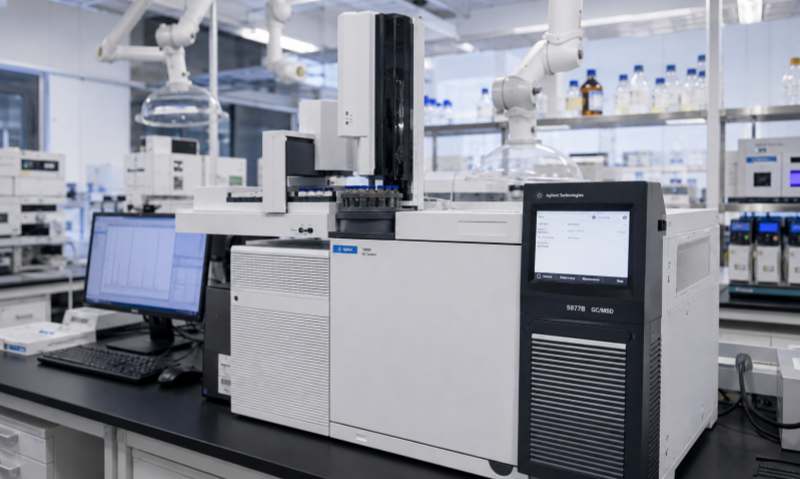
Gas chromatography (GC) injection needles are precision components that play a critical role in sample introduction. Whether using manual injection or an autosampler system, the injection needle must accurately transfer samples into the GC inlet while maintaining good sealing performance and reproducibility.
However, many laboratories encounter problems such as bent injection needles, blocked needles, poor injection repeatability, and sample carryover. These failures are often caused by incorrect operating procedures, improper cleaning methods, unsuitable sample handling, or excessive mechanical force during injection.
A bent GC injection needle can lead to inaccurate sample volume, leakage, damaged septa, poor chromatographic peaks, and even damage to the injector port. This article provides a detailed guide on how to prevent injection needle bending and how to properly clean and maintain GC injection needles.
One of the most common causes of needle bending is inserting the needle into the GC inlet at an incorrect angle.
During manual injection, the needle should enter the septum vertically and smoothly. If the operator pushes the syringe at an angle, the needle tip may hit the inlet liner or metal surface, causing deformation.
Tilting the syringe during injection.
Applying excessive sideways force.
Moving the needle after insertion.
Hold the syringe vertically.
Insert the needle smoothly through the center of the septum.
Avoid lateral movement after insertion.
Remove the needle carefully after injection.
A GC injection needle is extremely thin and designed for precise movement. Excessive force during injection can easily cause bending.
Common reasons for excessive force include:
Blocked syringe needle.
Damaged septum.
Incorrect injector temperature.
Dirty inlet liner.
Plunger movement feels abnormal.
Injection becomes difficult.
Needle deformation occurs.
Before forcing the syringe:
Check whether the needle is blocked.
Replace the septum if it is hardened.
Clean or replace the liner.
Confirm injector conditions.
Never force the syringe when resistance is unusually high.
Many modern GC systems use automatic injection systems. Although autosamplers improve reproducibility, incorrect installation or maintenance can also cause needle bending.
If the autosampler needle does not align correctly with the inlet:
The needle may hit the inlet edge.
The needle tip may become damaged.
Injection accuracy decreases.
A needle installed incorrectly may:
Extend too far.
Fail to enter the inlet correctly.
Contact mechanical components.
Check needle alignment regularly.
Perform autosampler calibration.
Replace damaged syringe holders.
Follow manufacturer installation procedures.
Choosing the appropriate needle type can reduce damage and improve analytical performance.
Important factors include:
Different applications require different needle diameters.
A thinner needle:
Reduces septum damage.
Requires less penetration force.
A thicker needle:
Provides higher durability.
Suitable for viscous samples.
The needle should match:
Sample viscosity.
Injection volume.
GC inlet type.
An incorrect needle length may cause:
Poor sample delivery.
Contact with internal inlet components.
Needle bending.
Always use the recommended syringe specification for the GC model.
Regular cleaning prevents contamination, blockage, and increased injection resistance.
For routine sample analysis:
Recommended cleaning procedure:
After injection:
Withdraw and discharge solvent several times.
Remove residual sample from the needle.
Use solvents compatible with the sample.
Common cleaning solvents:
Methanol.
Acetonitrile.
Hexane.
Isopropanol.
The solvent should dissolve sample residues without damaging the syringe.
After cleaning:
Remove remaining solvent.
Allow the syringe to dry.
Store in a clean environment.
When the needle becomes blocked, normal rinsing may not be sufficient.
High boiling sample residues.
Polymer materials.
Oils and grease.
Particulate contamination.
Fill the syringe with an appropriate cleaning solvent.
Allow solvent to remain inside the needle for several minutes.
Push solvent through slowly.
Repeat multiple cleaning cycles.
Use ultrasonic cleaning if compatible with syringe specifications.
Do not use excessive pressure because it may damage the syringe seal or bend the needle.
Incorrect cleaning methods may shorten syringe life.
Avoid:
Strong acids, bases, or corrosive solvents may damage:
Needle surface.
Syringe seals.
Glass barrel.
Do not:
Insert hard wires into the needle.
Hit the needle tip.
Bend the needle manually.
These actions can permanently damage the syringe.
Injection needle damage is often related to poor injector maintenance.
A hardened septum increases penetration resistance.
Symptoms:
Needle bending.
Needle sticking.
Leakage around injection port.
Solution:
Replace septum regularly.
Use high-quality GC septa.
A contaminated liner can increase injection resistance.
Maintenance:
Clean or replace liners.
Check glass wool condition.
Remove carbonized residues.
A clean inlet system reduces mechanical stress on the needle.
Proper storage extends syringe lifetime.
Recommended practices:
Store syringes vertically.
Protect the needle tip.
Avoid contact with hard surfaces.
Keep syringes away from dust.
Label syringes for different samples.
For laboratories with frequent GC analysis, maintain dedicated syringes for different sample categories to reduce contamination.
| Problem | Possible Cause | Solution |
|---|---|---|
| Needle bends during injection | Incorrect injection angle | Insert needle vertically |
| High injection resistance | Needle blockage | Clean or replace needle |
| Poor peak repeatability | Syringe contamination | Clean syringe thoroughly |
| Leakage during injection | Damaged needle or septum | Replace components |
| Autosampler needle damage | Poor alignment | Calibrate autosampler |
| Needle breaks easily | Incorrect needle selection | Use suitable syringe model |
Gas chromatography injection needles are precision instruments that require careful handling and regular maintenance. Needle bending is usually caused by incorrect injection techniques, excessive force, poor injector maintenance, or improper cleaning procedures.
To prevent needle damage, operators should always insert the needle vertically, avoid forcing the syringe, maintain clean injection ports, and use proper cleaning solvents. Regular inspection of syringes, septa, liners, and autosampler alignment can greatly improve injection reliability.
Proper operation and maintenance not only extend the service life of GC injection needles but also improve chromatographic accuracy, repeatability, and overall laboratory efficiency.