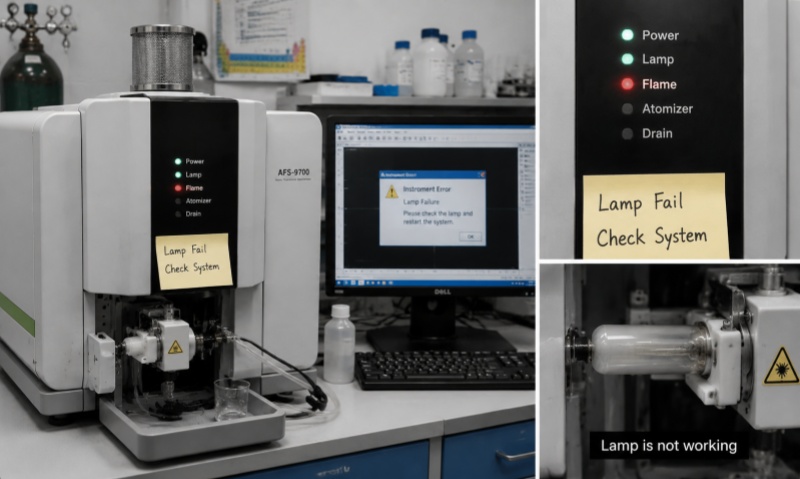
Graphite Furnace Atomic Absorption Spectrometer (GFAAS) is a highly sensitive trace metal analysis instrument widely used in food safety, environmental monitoring, pharmaceutical testing, geological analysis, and industrial material inspection. Compared with flame atomic absorption spectrometry, GFAAS features ultra-low detection limits, minimal sample consumption, and accurate quantitative analysis of trace heavy metal elements. Since the instrument integrates high-precision optical systems, high-temperature heating furnaces, precise gas control modules, and sensitive signal acquisition units, its installation environment and supporting conditions are extremely strict. Unstandardized installation conditions will lead to baseline drift, poor repeatability, damaged graphite tubes, optical contamination, and even permanent failure of precision components. This article comprehensively introduces the standard installation conditions and technical specifications of the graphite furnace atomic absorption spectrometer, providing reliable guidelines for laboratory layout, equipment installation, and daily commissioning.
First of all, the laboratory site and environmental conditions are the basic prerequisites for instrument installation and stable operation. The GFAAS instrument requires an independent, dust-free, and stable laboratory space with a dry and clean environment. The indoor temperature must be maintained steadily between 18℃ and 28℃, and the temperature fluctuation range should not exceed ±2℃ per hour. Excessively high temperature will cause thermal drift of the optical system and accelerated aging of circuit components, while low temperature will affect the heating stability of the graphite furnace and reduce experimental accuracy. The indoor relative humidity needs to be controlled at 40% to 70%. Excessive humidity easily causes condensation on optical lenses, circuit board oxidation, and furnace body corrosion, whereas overly dry air will generate static electricity and interfere with weak signal collection.
In terms of site layout, the instrument workbench must be made of high-strength anti-corrosion and shock-absorbing materials, with a flat surface and sufficient bearing capacity to bear the long-term load of the instrument. The workbench should be placed away from doors, windows, ventilation fans, and air conditioners to avoid direct airflow blowing on the instrument, which may cause optical path jitter and signal fluctuation. Meanwhile, the installation area must keep away from strong vibration sources and strong electromagnetic interference equipment such as large centrifuges, high-power motors, and welding equipment. Vibration will displace the precision optical path and affect the alignment of the light source and detector, while electromagnetic interference will distort absorption signals and lead to inaccurate detection results. In addition, the laboratory must maintain good air circulation and independent dust prevention measures to prevent fine particulate matter from adhering to optical components and graphite furnace cavities.
Electrical power supply conditions are critical to ensure the stable operation of GFAAS. The instrument requires a stable single-phase AC power supply with a voltage of 220V and a frequency of 50Hz. The voltage fluctuation must be controlled within ±5% to avoid instantaneous voltage drops or surges during the high-temperature heating process of the graphite furnace. It is mandatory to equip a dedicated regulated power supply or uninterruptible power supply (UPS) to eliminate power grid fluctuation interference and prevent sudden power failure from damaging the graphite tube and optical system. The power circuit must be set up independently without sharing the circuit with high-power electrical equipment. Moreover, reliable grounding is essential, with a grounding resistance lower than 4 ohms. Standard grounding can effectively eliminate static accumulation, stabilize electrical signals, and avoid component breakdown caused by static electricity.
Gas supply and drainage conditions are unique core installation requirements for graphite furnace atomic absorption spectrometers. The instrument must be equipped with high-purity argon gas as protective and purge gas, with a purity of no less than 99.999%. Impure argon will cause graphite tube oxidation and ablation at high temperature, resulting in peak distortion and shortened service life of consumables. The gas pipeline must adopt clean stainless steel or PTFE pipelines with good airtightness, and the gas pressure needs to be stably adjusted within the standard working range to ensure stable gas supply during furnace heating, atomization, and cooling stages. In addition, the instrument is equipped with an independent cooling water circulation system. The circulating cooling water must be pure water or deionized water to prevent scale precipitation and pipeline blockage. The water temperature and flow rate need to meet the factory standards to ensure timely heat dissipation of the graphite furnace cavity and avoid overheating alarm and equipment shutdown.
Auxiliary safety and installation supporting conditions cannot be ignored. The laboratory needs to be equipped with special fire prevention and explosion-proof facilities, because high-temperature atomization and inert gas operation have certain safety risks. Meanwhile, independent exhaust equipment must be installed near the instrument to timely discharge trace harmful gas and aerosol generated during sample atomization, protecting laboratory personnel and preventing gas accumulation from affecting instrument components. Before installation, the laboratory shall complete cleaning and disinfection to eliminate residual acid gas, volatile organic pollutants, and corrosive substances in the air, preventing corrosive gas from damaging the metal cavity and optical elements of the instrument.
In conclusion, the installation of graphite furnace atomic absorption spectrometer involves systematic requirements for environment, power supply, gas circuit, water circuit, and safety protection. Strictly complying with standardized installation conditions is the premise to ensure instrument precision, detection stability and service life. Reasonable laboratory layout and standardized installation construction can effectively reduce baseline drift, signal interference and equipment failure rate, ensure the accuracy and repeatability of trace metal detection data, and provide stable and reliable technical support for long-term laboratory analysis and testing work.